

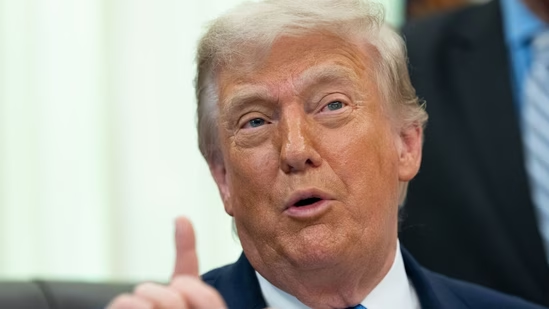
US President Donald Trump said an interim agreement aimed at reopening the Strait of Hormuz and ending the conflict with Iran would be signed on Sunday, but Tehran pushed back, indicating that differences remain over key issues, including management of the strategic waterway and compensation payments.
“The Deal is scheduled to get signed tomorrow, and immediately after it is signed, the Hormuz Strait is OPEN TO ALL,” Trump said in a social media post on Saturday, while claiming that Iran “no longer wants a Nuclear weapon.”
Follow here for live updates on US-Iran war
When will the US-Iran deal be signed?
Pakistan, which has been mediating between the two sides, is preparing for an electronic signing of the agreement, “followed by technical-level talks next week,” Pakistani Prime Minister Shehbaz Sharif said. The talks are expected to continue for up to 60 days and focus on Iran’s nuclear programme.
Trump said Iran would receive no money under the agreement, even as Tehran continued to demand compensation for war damage and access to Iranian assets frozen by the US following the 1979 revolution.
He also said that once other elements of the agreement are finalised, the US would “go in and get the Nuclear Dust,” his term for highly enriched uranium, and destroy it either in Iran or in the United States.
Also Read | Iran ‘booby-traps’ uranium sites, lays mines as US seeks handover in peace deal: Report
Mojtaba Khamenei’s approval still needed
Iranian Foreign Minister Abbas Araghchi, in remarks carried by state television on Friday, echoed expectations of a deal being signed.
However, a spokesperson later ruled out a signing on Sunday, according to state-run IRIB news. A European official familiar with the matter said the agreement still requires approval from Iranian Supreme Leader Mojtaba Khamenei.
Trump has repeatedly said that a breakthrough in the conflict, which began in February, was imminent, though no agreement has materialised so far. Washington’s main objectives are reopening the Strait of Hormuz to maritime traffic and curbing Iran’s nuclear programme.
Tehran, meanwhile, insists on retaining some control over the waterway and securing immediate access to its frozen funds.
A senior US official said the proposed agreement would ensure that Iran does not pursue a nuclear weapons programme while allowing it to maintain a civilian nuclear energy programme.
The deal would also require the removal of enriched nuclear material from the country and end the blockade of the Strait of Hormuz imposed by both sides. In return, the US would ease sanctions and allow Iran to reintegrate into the global economy, the official said.
The official added that some Iranian hardliners remain opposed to any breakthrough, while several of Trump’s hawkish Republican allies are also sceptical of a deal.
Araghchi said Iran’s sovereignty over the strait would be preserved under the proposed arrangement, adding that the framework governing Hormuz would differ from the past, when Tehran provided management services free of charge.