

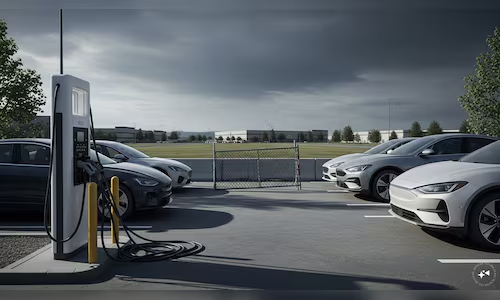
The research firm now expects EVs to make up 17% of US passenger vehicle sales by 2030, down from 27% in last year’s forecast and 48% in 2024’s projection.
Weaker US demand is expected to weigh on global sales. BloombergNEF projects electric passenger vehicle sales worldwide will reach 35.6 million by 2030 — some 3.4 million short of its previous forecast.
The downgrade reflects policy changes under the Trump administration and Republican lawmakers, who have moved to eliminate federal support for EV adoption.
Steps taken include weakening fuel-efficiency standards, revoking California’s EV sales mandate and scrapping the $7,500 federal tax credit for EV buyers.
Tariffs imposed by US President Donald Trump and rising global trade barriers have further squeezed automakers’ ability to price EVs competitively in the US market, according to Andrew Grant, head of intelligent mobility at BloombergNEF and co-author of the report.
“We did go in with kind of an expectation that the US might not be living up to the type of outlook that we’ve had in previous years,” Grant said.
In response, automakers have pulled back on EV ambitions. Production of at least 27 models — existing and planned — has been cut, cancelled or delayed over the past year. Stellantis, Ford, General Motors and Honda have collectively recorded around $64 billion in EV-related losses, the report noted.
China remains the world’s largest EV market, accounting for about 62% of global sales this year. However, growth is slowing there too, largely due to changes in subsidy programmes. EV sales in China are forecast to grow 10% this year, below the 16% rise seen in 2025 and the 39% surge recorded in 2024.
(With inputs from agencies)