

General News
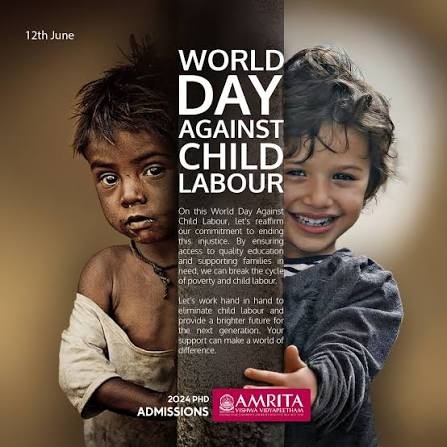
THE President, UNESCO Read and Earn Federation (UNESCO REF), Prince Abdulsalami Ladigbolu-Oranmiyan, has called for increased investment in education and child protection programmes as part of efforts to eradicate child labour.
Ladigbolu-Oranmiyan made the call in an interview with the News Agency of Nigeria (NAN) on Friday in Abuja to commemorate Nigeria’s Democracy Day and the International Day Against Child Labour.
He described education and child protection as critical components of national development and security.
He said that child labour remained a major challenge in Nigeria and other developing countries, depriving millions of children of access to education and opportunities for personal development.
According to him, children engaged in street hawking, mining and other hazardous activities are often exposed to vulnerabilities that could hinder their future contributions to society.
Citing figures from UNICEF, he noted that 10.2 millions of Nigerian children were out-of-school, while many others were involved in various forms of labour that affected their health, safety and educational prospects.
According to him, globally nearly 138 million children aged 5–17 are trapped in child labour.
“Of these, the International Labour Organisation estimates that 54 million are engaged in hazardous work that directly threatens their health and safety,” he said.
The UNESCO REF president said that addressing child labour required a coordinated approach involving government institutions, development partners, civil society organisations and local communities.
He urged the Federal Government to inject fresh ideas that synchronise the Ministries of Information, Culture and Humanitarian Affairs in designing programmes aimed at promoting child welfare, education and community development.
“Democracy is built on participation, inclusion, and opportunity. Yet child labour undermines these principles by silencing millions of voices before they can even be heard.
“Protecting children is not only a social responsibility but also an investment in the nation’s future.
“Nigeria’s greatest asset is its people, and efforts to safeguard children today will help build a more prosperous and stable society tomorrow,” he said.
Ladigbolu-Oranmiyan called for increased investment in education, including the provision of learning facilities, teacher development and improved access to quality schooling for vulnerable children.
He also advocated stronger social protection programmes for families facing economic hardship, noting that poverty remained one of the key drivers of child labour.
According to him, international organisations, donor agencies and development partners should continue to support Nigeria’s efforts through technical assistance, funding and collaborative initiatives to improve child welfare.
He stressed the need for community-based programmes that would empower families and local leaders to promote school enrolment and discourage practices that expose children to exploitation.
The UNESCO REF president further urged relevant authorities to strengthen the implementation of existing laws and policies designed to protect children from hazardous labour and other forms of exploitation.
He said that safeguarding children’s rights was essential to sustaining democratic values and ensuring inclusive national development.
“The eradication of child labour is not a distant goal – it is an urgent necessity. Nigeria must strengthen its laws, enforce accountability, and prioritise education as a national security strategy.”
Ladigbolu-Oranmiyan called on all stakeholders to work together to create opportunities that would enable every child to access education and realise their full potential.
According to him, the success of any democracy is reflected not only in its institutions but also in its ability to provide a secure and productive future for its younger generation. (NAN)
Tags: Child labour UNESCO