

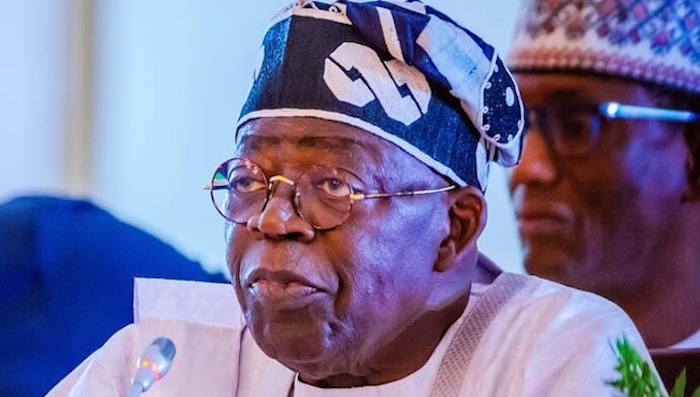
President Bola Tinubu has unveiled an ambitious maritime development agenda aimed at creating five million ocean-based jobs by 2035, while positioning Nigeria as a leading force in Africa’s blue economy and ocean governance.
Speaking through the Minister of State for Foreign Affairs, Sola Enikanolaiye, at the opening of the 11th Our Ocean Conference in Mombasa, Kenya, President Tinubu said Nigeria was committed to transforming its vast marine resources into engines of economic growth, employment and environmental sustainability.
The President disclosed that his administration had launched a National Blue Economy Action Plan focused on expanding fisheries, shipping, maritime tourism and renewable energy, with the goal of generating millions of jobs, particularly for youths and women.
“Nigeria has launched a National Blue Economy Action Plan to harness fisheries, shipping, maritime tourism and renewable energy as drivers of inclusive growth,” the President said, adding that the country was committed to creating “five million new ocean-based jobs by 2035.”
Tinubu noted that Nigeria’s 853-kilometre coastline and strategic position in the Gulf of Guinea place the country at the heart of Africa’s maritime future, stressing that ocean resources are critical to food security, trade, energy supply and livelihoods.
He said the establishment of the Federal Ministry of Marine and Blue Economy shortly after he assumed office in 2023 underscored the administration’s determination to unlock the economic potential of the nation’s waters.
The President also pledged stronger action against illegal, unreported and unregulated fishing, describing it as a major threat to food security and economic stability across Africa. He called for deeper continental cooperation, improved maritime surveillance and enhanced enforcement mechanisms to protect African waters.
On climate action, Tinubu announced Nigeria’s commitment to expand marine protected areas by 2030, restore half of the country’s degraded mangroves and champion a continent-wide campaign against single-use plastics. He urged greater international support to tackle marine pollution, warning that coastal communities remain highly vulnerable to environmental degradation.
Highlighting Nigeria’s role in regional security, the President said the country had strengthened maritime safety in the Gulf of Guinea through modern technology and enhanced naval capabilities, leading to a significant reduction in piracy incidents that once threatened commercial shipping and regional trade.
Tinubu further called for stronger partnerships among African coastal states, development finance institutions, private sector actors and civil society groups to mobilise sustainable financing for ocean-related projects.
Delivering what he described as Nigeria’s message to the international community, the President declared that “our ocean is our common heritage,” urging nations to work together to guarantee maritime security, environmental protection and shared prosperity for future generations.
The three-day conference brings together government leaders, international organisations, environmental experts and maritime stakeholders to discuss sustainable ocean management, climate resilience and the future of the global blue economy.
Michael Olugbode
Follow us on: