

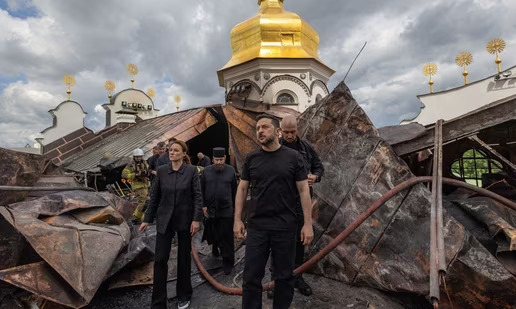
Ukrainians awoke on Monday to a familiar stench of kerosene, fire and blood. Russia’s latest attack, involving 611 drones and 70 missiles, focused on Kyiv. The capital’s ancient Pechersk Lavra monastery complex, a unesco World Heritage site, was hit by what local authorities described as a direct strike. Elsewhere the primary targets appeared to be military-production facilities and power infrastructure, but as usual some missiles landed in bedrooms. Eight residential blocks were hit. In Kyiv at least five people died and three dozen were injured. In Kharkiv, at least five emergency workers were killed in a deliberate “double-tap” strike. The deaths continue a grim trend: May was the deadliest month for Ukrainian civilians since 2022.
The intensifying air war is in part a reflection of Russia’s increasing difficulties on the ground. Since late 2025 Ukraine’s drone-fronted forces have been killing and seriously wounding Russian soldiers faster than the Kremlin can recruit them, slowing their advance to a crawl or, in some cases, even slightly reversing it. The near-stalemate is causing the war’s centre of gravity to shift from the trenches and towards the factories and supply lines behind it. Each side is responding using the tools it has.