

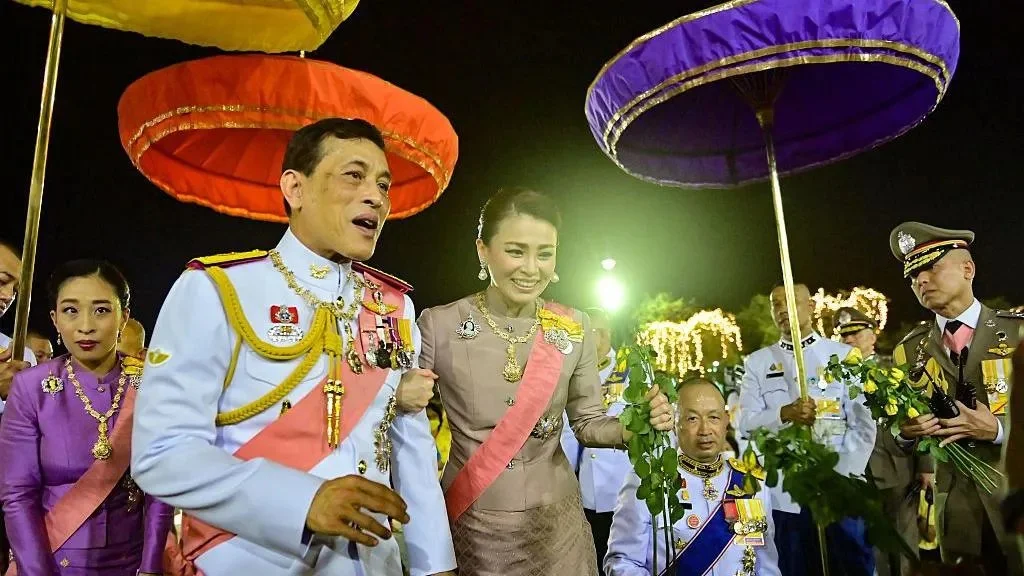
Thailand’s royal household has announced the death of Princess Bajrakitiyabha, one of the country’s most prominent royals, who died at the age of 47 after spending three years in a coma following a cardiac collapse.
Her passing marks the loss of one of the monarchy’s most accomplished and widely respected figures, who was widely regarded by many royalists as a potential successor to the throne.
In a statement issued on Friday, the palace said the princess died at 7:48 p.m. local time (12:48 GMT) yesterday at Chulalongkorn Hospital in Bangkok.
“The medical team provided the closest and most intensive care possible, but her condition continued to decline progressively,” the statement said.
Princess Bajrakitiyabha collapsed on December 15, 2022, while exercising her dogs, and doctors later attributed her condition to a severely irregular heartbeat caused by a mycoplasma infection that affected her heart.
Born on December 7, 1978, to King Vajiralongkorn and his first wife, Princess Soamsawali, Bajrakitiyabha built a distinguished career in law and public service. She earned postgraduate degrees from Cornell University in the United States and later worked at Thailand’s Attorney-General’s Office.
She also served as Thailand’s ambassador to Austria from 2012 to 2014, where she strengthened ties with the United Nations Office on Drugs and Crime (UNODC), before becoming the agency’s Ambassador for the Rule of Law in Southeast Asia.
Widely known for her advocacy on penal reform and the welfare of vulnerable women in prison, the princess was further thrust into the spotlight in 2021 when her father appointed her chief of staff of his private bodyguard unit and conferred on her the rank of general, fueling speculation about a possible future role in the monarchy.
Her death is expected to renew discussions about the future of the royal succession. Although Thai tradition has generally favoured a male heir, a 1974 constitutional amendment allows a woman to ascend the throne.
Many royal observers had viewed Bajrakitiyabha as the strongest candidate to succeed her father or to serve as regent for Prince Dipangkorn, whose suitability has often been the subject of speculation.
For now, however, the question of succession remains unresolved, with Thailand’s strict lese majeste laws severely limiting public discussion of the monarchy.