
Stakeholder Engagement Continues Ahead of FutureMap Academy and Clinic Commissioning in Hadejia

Stakeholder Engagement Continues Ahead of FutureMap Academy and Clinic Commissioning in Hadejia
FutureMap Foundation continues to deepen engagement with key stakeholders as preparations advance for the commissioning of the FutureMap Academy and Community Clinic in Hadejia, a transformative initiative designed to expand opportunities for education, innovation, healthcare, entrepreneurship, and youth development.
The initiative reflects FutureMap Foundation’s commitment to building platforms that empower young people with the skills, resources, networks, and support systems required to thrive in a rapidly evolving world. Through the integration of learning, research, innovation, technology, and community health, the Foundation aims to create an ecosystem that drives both human capital development and socioeconomic transformation.
The vision is supported by findings from a recent community survey, which revealed that 89.8 percent of respondents believe an innovation hub can help address existing social, educational, and economic challenges within the community. The survey also found that 75 percent of respondents have never participated in digital or technology training programmes, highlighting a significant gap in access to skills development opportunities. Furthermore, among unemployed respondents, 36.5 percent reported having searched for employment for more than three years, underscoring the need for practical interventions that improve employability, entrepreneurship, and economic participation.
The FutureMap Academy is being established as a multidisciplinary hub for education technology, health innovation, agricultural technology, entrepreneurship, leadership development, research, and future skills development. Complementing the Academy is a Community Clinic that will contribute to improving access to quality healthcare services while supporting health awareness, preventive care, and community wellbeing.
A key area of focus for the Community Clinic will be nephrology, with a particular emphasis on the prevention, early detection, diagnosis, and management of kidney-related diseases and conditions. The clinic is envisioned as a centre that combines quality healthcare delivery with innovation, leveraging modern technologies, data-driven approaches, and locally developed solutions to improve patient outcomes.
The focus on kidney health is informed by findings from a hospital-based needs assessment conducted at Hadejia General Hospital, which revealed a significant and growing burden of kidney disease within the area. The assessment found that more than 200 kidney disease cases are diagnosed annually, with 86 patients currently receiving dialysis care. At least 85 percent of cases are diagnosed late, while approximately 73 of the 86 dialysis patients presented with Stage 4 or Stage 5 kidney disease, significantly limiting treatment options and increasing health risks. Patients often experience waiting times of between two and six hours for dialysis treatment, while many families travel between 200 and 300 kilometres to access specialist care. Hospital records further indicate that 74 deaths have been recorded over several years due to kidney-related conditions, highlighting the urgent need for improved prevention, early detection, diagnosis, and treatment services.
The FutureMap Community Clinic aims to serve not only Hadejia but also communities across the Hadejia–Jama’are River Basin and surrounding areas, where access to specialist kidney care remains limited. Through screening programmes, preventive health education, early diagnosis initiatives, specialist referrals, and technology-enabled care, the Clinic seeks to reduce the burden of kidney disease and improve health outcomes across the region.
FutureMap Foundation also plans to leverage modern technologies and home-grown innovations developed through its Research and Development (R&D) Centre and Fabrication Laboratory to support healthcare delivery, diagnostics, patient monitoring, and community health interventions. By combining healthcare expertise with local innovation, the Foundation hopes to contribute to more accessible, affordable, and effective approaches to kidney disease prevention and management.
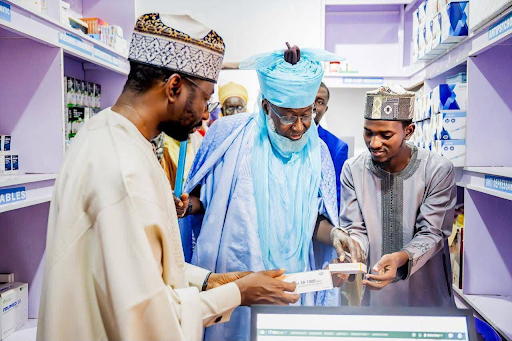
As part of ongoing preparations for commissioning, FutureMap Foundation recently hosted His Royal Highness, the Emir of Hadejia, on a tour of the Community Clinic facility.
During the visit, discussions focused on the growing burden of kidney disease within the region and the role the Clinic can play in strengthening prevention, early detection, diagnosis, and management of kidney-related conditions. The Emir was briefed on the Clinic’s vision to serve communities across Hadejia and the wider Hadejia–Jama’are River Basin, as well as its plans to leverage innovation and locally developed technologies to improve healthcare outcomes. The visit reaffirmed the importance of community leadership and stakeholder collaboration in advancing sustainable healthcare solutions for the region.
According to Dr. Shuaib Sani Shuaib, Executive Director of FutureMap Foundation, the initiative represents a long-term investment in people, ideas, and opportunities.
“The FutureMap Academy and Community Clinic are more than physical facilities. They are platforms for developing innovators, researchers, entrepreneurs, professionals, and future leaders who can create solutions for their communities and compete globally. Our goal is to build an institution that bridges education, innovation, healthcare, research, and enterprise while expanding opportunities for young people to learn, create, and lead. We are particularly excited about the opportunity to combine healthcare expertise with local innovation to improve kidney health outcomes and address some of the most pressing challenges facing our communities,” he said.
Dr. Shuaib noted that the Academy is designed to go beyond conventional skills training by creating an environment where young people can acquire practical skills, conduct research, build innovative solutions, access mentorship, develop enterprises, and collaborate across disciplines to address real-world challenges.
Planned facilities include a Research and Development (R&D) Centre, Fabrication and Prototyping Laboratory, Innovation and Startup Incubation Hub, Digital Learning Studios, Collaborative Co-working Spaces, Training and Conference Facilities, Maker Spaces, Entrepreneurship Support Centre, Community Learning Labs, multimedia and content creation facilities, mentorship and career development programmes, a Community Clinic, and spaces designed to foster collaboration between innovators, researchers, healthcare professionals, educators, entrepreneurs, and industry leaders.
As preparations for commissioning continue, FutureMap Foundation has intensified engagements with institutions and organizations whose expertise, networks, and experience can contribute to the long-term success and sustainability of the initiative.
Among these engagements is an upcoming strategic engagement with the Directorate of Research, Innovation and Partnerships (DRIP) at Bayero University Kano. The engagement will explore opportunities for collaboration in research, innovation, entrepreneurship, talent development, knowledge exchange, research commercialization, and strategic partnerships. It reflects a shared interest in strengthening the connection between academic research, innovation ecosystems, and real-world impact.
The Foundation has also engaged with the Innovation Support Network (ISN) through the Future Tech Fellowship, creating opportunities to connect emerging talent with Nigeria’s broader innovation ecosystem. The engagement reflects a shared commitment to nurturing innovators, entrepreneurs, and future leaders by strengthening access to mentorship, networks, resources, and innovation-driven learning experiences.
In addition, FutureMap Foundation has continued to engage technology communities such as Google Developer Groups (GDG), whose community-driven approach to technology education, innovation, and developer capacity building aligns closely with the Academy’s vision of creating pathways for learning, experimentation, collaboration, and problem-solving.
Recognizing the importance of healthcare as a critical component of human capital development, the Foundation has also engaged with the National Primary Health Care Development Agency (NPHCDA) and its healthcare partner, EHA Clinics. These engagements seek to explore opportunities for collaboration in community health, preventive care, health innovation, kidney health awareness, health education, and improving access to quality healthcare services, particularly for underserved populations.
These engagements build on previous strategic conversations with national institutions responsible for shaping Nigeria’s education, health, and digital transformation agenda. Among them was an engagement with the Federal Ministry of Education and the National Information Technology Development Agency (NITDA), led by the Honourable Minister of Education, Dr. Maruf Tunji Alausa, and the Director-General and Chief Executive Officer of NITDA, Malam Kashifu Inuwa Abdullahi.
The discussions focused on strengthening pathways for skills development, innovation, research, digital literacy, and youth empowerment while exploring collaborative approaches to preparing young Nigerians for emerging opportunities across multiple sectors. The engagement reinforced the importance of partnerships in expanding access to quality learning opportunities and building a workforce equipped for the future.
Collectively, these engagements reflect FutureMap Foundation’s belief that sustainable impact is achieved through collaboration and that no single institution can address the complex challenges of youth development, innovation, healthcare, education, and economic transformation alone.
The upcoming commissioning of the FutureMap Academy and Community Clinic represents an important milestone in the Foundation’s mission to advance human capital development and create opportunities for young people and communities through education, healthcare, innovation, research, entrepreneurship, and technology.
As stakeholder engagement continues, FutureMap Foundation remains focused on translating dialogue into action and building a centre of excellence that can serve as a catalyst for innovation, talent development, improved wellbeing, and inclusive socioeconomic growth in Hadejia, Jigawa State, Northern Nigeria, and beyond.