

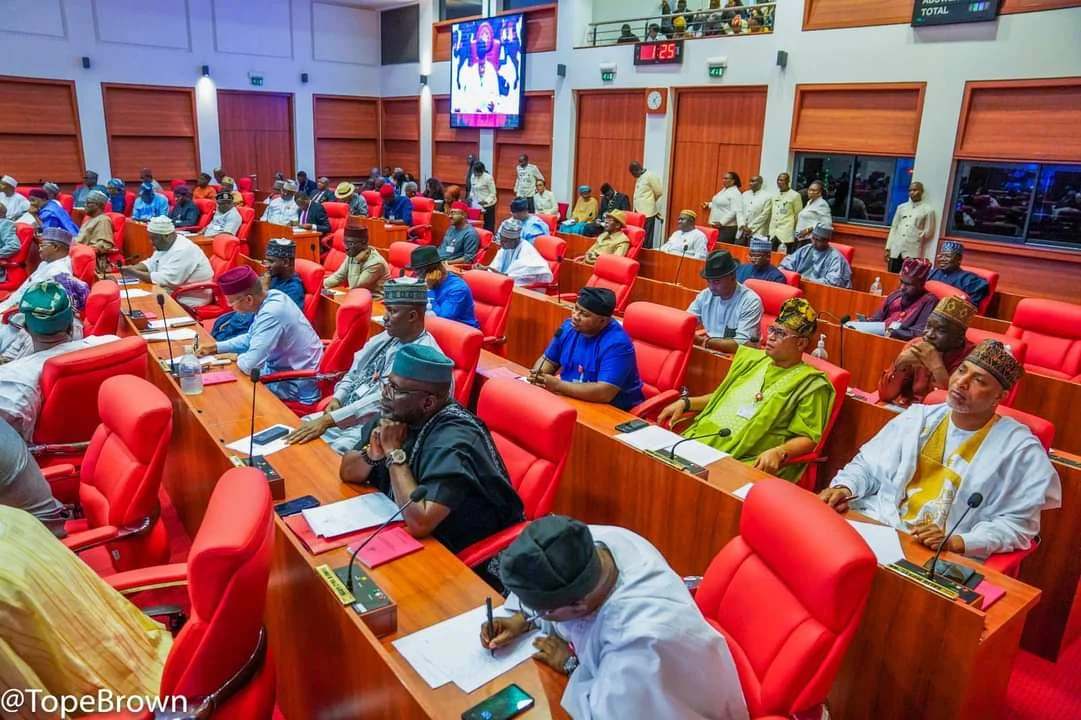
The Senate has approved a three-month extension for the implementation of the capital component of the 2025 budget, shifting the deadline from June 30, 2026, to September 30, 2026, in order to allow government agencies additional time to complete ongoing projects and fully utilise released funds.
The decision was taken during Thursday’s plenary after senators emerged from a closed-door executive session where concerns over project execution, funding absorption, and budget performance were extensively reviewed.
Lawmakers explained that the extension was necessary to prevent disruptions to critical infrastructure projects, ensure the efficient use of public resources, and avoid delays in payments linked to capital expenditures already captured in the budget.
Providing further clarity, Senate Chief Whip Tahir Monguno noted that a significant portion of funds released to Ministries, Departments and Agencies (MDAs) remains unspent due to procurement bottlenecks, administrative delays, and implementation challenges affecting several projects across the country.
He warned that allowing the implementation window to lapse could result in the abandonment of key projects, wastage of already committed public funds, and disruption of ongoing government interventions.
According to him, extending the timeline would strengthen budget performance, improve fund utilisation, and support broader economic development goals, stressing that the decision was in the national interest and aimed at ensuring value for money.
Backing the proposal, Chairman of the Senate Committee on Appropriations, Senator Solomon Adeola, explained that the extension applies specifically to the capital component of the 2025 Appropriation Act.
He recalled that during the budget process, there was an expectation that 30 per cent of implementation would be achieved by March 31, 2026, while the remaining 70 per cent would roll over into the 2026 fiscal cycle.
However, he noted that the target was not met, leading to an earlier extension of the implementation deadline to June 30, 2026.
Adeola further explained that although some payments had been made, outstanding obligations still needed to be settled, necessitating another extension to September 30, 2026, by which time the remaining 30 per cent is expected to be fully implemented while components transferred into the 2026 budget would commence execution.
Also supporting the motion, Senator Victor Umeh stressed the importance of sustaining momentum on projects under the 2025 Appropriation Act, describing the extension as necessary to ensure continuity in implementation.
The resolution was eventually adopted after lawmakers overwhelmingly approved the proposal through a voice vote presided over by Senate President Godswill Akpabio.
Earlier, senators had extended plenary beyond the usual adjournment time to conclude deliberations before proceeding to vote on the motion.
Speaking after the approval, Akpabio said the extension would prevent disruptions in project execution and ensure that outstanding payments are completed without interruption.
He noted that, without the extension, implementation would have stalled midway, potentially affecting ongoing government interventions.
Akpabio thereafter directed that the Senate’s resolution be formally transmitted to the Executive for immediate implementation.