

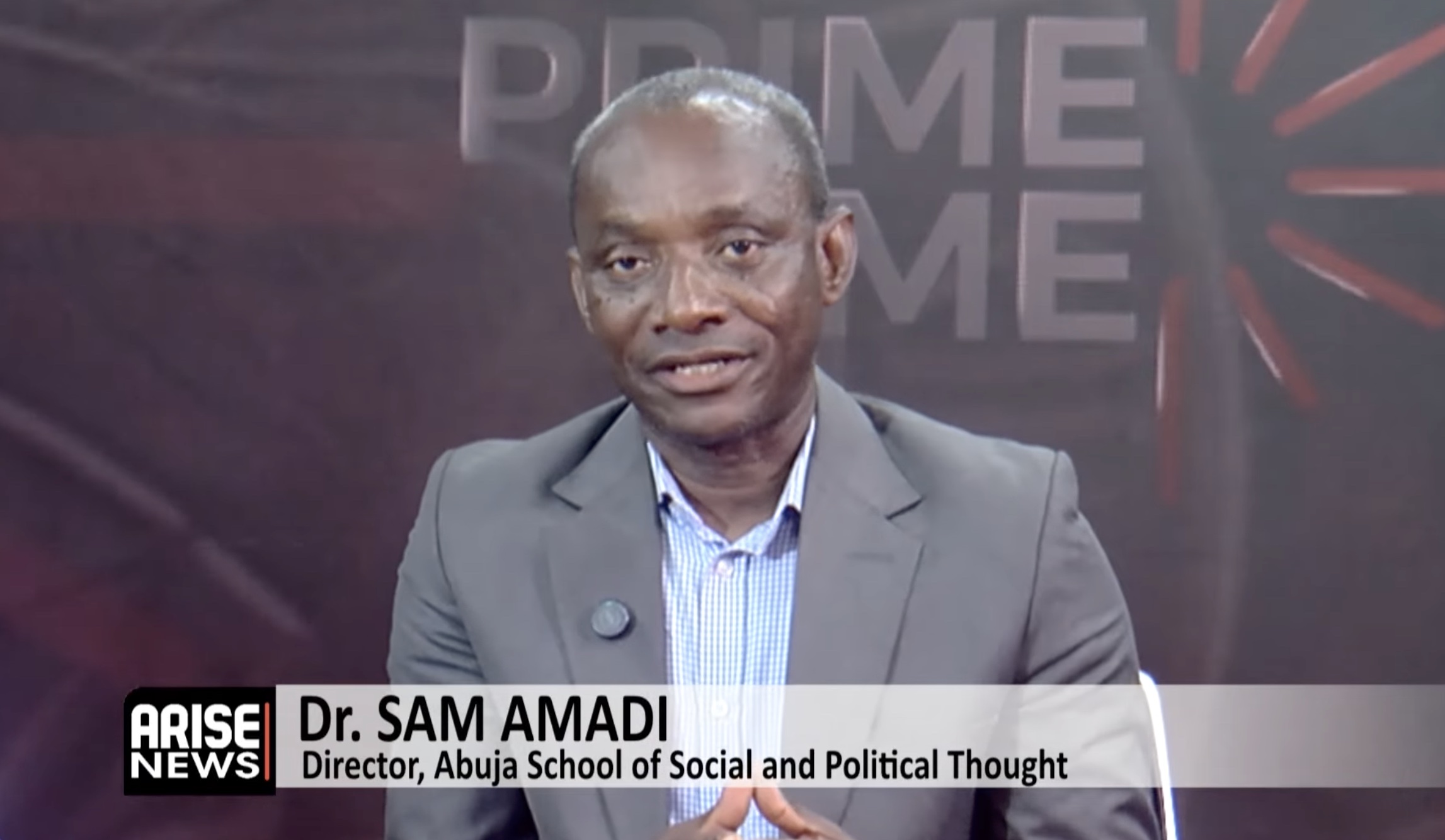
The Director, Abuja School of Social and Political Thought, and a Professor of Law, Dr. Sam Amadi, has raised concern over the worsening insecurity in Nigeria, saying the situation has gone beyond acts of terrorism and now reflects deeper structural problems within the state. According to him, the crisis points to signs of state failure rather than isolated security challenges.
“Basically, the point is not that there is a terror attack or that states are now victims or being confronted by non-state criminal actors. What happens is the real measure is how the state responds. Can they prevent it? Can they take out these guys? Can they rescue generals or civilians who are in captivity? In case we never get it done, the psychological trauma is that this is a weak state that is not just confronted by terrorists, but can’t even retrieve a general in captivity until he dies. It shows that the citizens themselves are in for worse than this,” he warned.
Speaking on the proposed anti-defection oath by the National Democratic Congress (NDC), Dr Amadi questioned its legality and implications, saying it reflects distrust of candidates and possible internal weakness within the party.
“I think apart from the fact that its constitutionality or legality as such, in terms of binding effect, is dubious, the psychology it creates is the sense in which the parties pushing this out could be considered as distrusting of politicians. And maybe in a deeper reading, it shows a kind of schizophrenic sense— you look like you’re frightened. It’s really a sign of a lack of trust in those who are taking the ticket and a sense of its own weakness. So I think it’s not good optics,” he stressed.
On Senator Natasha Akpoti-Uduaghan’s suspension document controversy, Dr Amadi said allegations of forged signatures were deeply damaging to the Senate’s credibility, and weaken public trust in its processes.
“I think very damaging again. It’s already damaged. But look whether it’s Natasha or whether it’s the question around the integrity of the process of a legislative house, it is one that should be taken seriously. So when you allege that signatures that created a legislative action were forged, prima facie—and again, we saw a document that shows that perhaps the senator herself participated in the report, in the hearing—the question then is: was her signature procured falsely? Forgery comes in again, creating all liability around parliamentary documents.
“How are we sure that the laws they have made carry that authenticity if the legal document they used to make a parliamentary decision is doubtful of its genuineness?
“Perhaps they need to really start by recreating the process, the procedure, and the institutional integrity of lawmaking, and then perhaps things will change. But this is really scandalous, it’s silly. So the point is, is there any way this can go lower? Is there any possibility of damaging an institution that’s already damaged in terms of public trust?”, he questioned.
Commenting on Diezani Alison-Madueke’s non-guilty verdict, Dr Amadi warned against media-driven convictions, saying it raises questions about the strength of anti-corruption cases and amounts to a formal clearance of the allegations.
“First, that we’ve had several incidents of press trials—or media trials, as we say—and public convictions before a court of law. I mean, corruption is both a crisis in this country as well as a political talking point, a political strategy document. So oftentimes we frame people as corrupt or criminal, and it actually has political undertones and also political strategy objectives. So that’s the first lesson: maybe not all that looks dark is really dark.
“The second would be that now we can say, the original anti-corruption institutions—do they really have a real case? Do they really try to create or build cases against those that are accused? Because the EFCC had actually almost branded her a criminal, it was conclusive. So the fact today is that those charges are not true. Now she’s probably going to come back to Nigeria sooner rather than later. And the question is: is she going to get some sense of public restoration? Is there going to be a sense of state explanation to say, ‘Okay, well, we probably blackmailed this woman, the evidence has proved that,’ or would there be new trials based on maybe other things?”, he quizzed.
Commenting on the FCT Minister, Nyesom Wike’s donation of houses to judges, Dr Amadi described it as a constitutional violation, saying it undermines judicial independence and amounts to executive influence over the judiciary.
“I think it is actually the violation of the constitution. First, by the way, there are three issues here — Three concepts are important for constitutional democracy.
“The first is the purpose of the judiciary, which is that the judiciary ultimately determines what’s right and wrong. All our rights are predicated on what the court finally determines. The second is the idea of independence, which has a structural aspect, and that’s why today, with the separation of powers, there shouldn’t be personnel interference between the executive and the judiciary. The third word is impartiality, which goes to behavioral aspects—judges are supposed to behave a particular way.
“Judges are not a class of mendicants, or some kind of displaced persons, or some kind of vulnerable community where the government says, ‘Look, we have these guys living under the bridge, we need to provide them immediate housing to sustain them.’ The logic then is, therefore, what is this logic now? If they needed to have housing, they have a budget. The Chief Justice of the Federation or the President of the Court of Appeal can put it in the budget, and the judiciary can build their own houses. So this is clearly a bribe.
“And finally, timing. So three things: structurally it violates constitutional due process, it’s the use of gifts to control (so state capture), and the point is, why do you do this in a year leading to an election? You give them houses. So I’m embarrassed that the President of the Court of Appeal could actually accept this. This really, nowhere in the world—I’ll just conclude—it doesn’t happen anywhere. It doesn’t happen,” he insisted.
Favour Odima
Follow us on: