

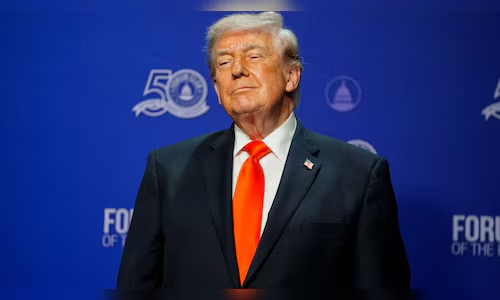
Speaking to reporters in the Oval Office, Trump said: “We hit them hard yesterday, and we’re gonna hit ’em again hard today… And we’ll see what happens with the deal.”
The latest warning came as tensions sharply escalated across West Asia, with Iran also launching attacks toward Gulf countries hosting US troops.
Iran fired missiles toward Bahrain, Kuwait and Jordan, marking one of the most serious regional escalations since the conflict began. The attacks came despite a fragile two-month ceasefire that has repeatedly come under strain.
Earlier this week, Iran and Israel also exchanged strikes.
Trump blamed Tehran for delaying peace negotiations and urged Iran to agree to a deal with Washington.
“We were really close to a deal but they keep tapping us along,” Trump said.However, the US President did not clarify whether American forces would also target major Iranian infrastructure, including bridges and utility facilities, as he had threatened earlier in the conflict.
Trump’s latest remarks highlighted the shifting US approach to the war. Just days earlier, he had suggested that a settlement could be reached quickly and that negotiations were making progress.
Despite weeks of bombardment by the US and Israel, Iran has continued to resist military pressure. Analysts say Tehran believes its strategic position near the Strait of Hormuz, one of the world’s most important oil shipping routes, gives it leverage in any future negotiations.
The Strait of Hormuz is a critical passage for global oil and natural gas supplies, and fears of disruption have already pushed energy prices sharply higher.
While both Washington and Tehran appear to be searching for a way to reduce tensions without appearing weak domestically, Israel has signalled broader objectives in the conflict.
Israeli Prime Minister Benjamin Netanyahu has continued to press for tougher action against Iran, including weakening its ruling establishment, dismantling its nuclear programme, and targeting the Iran-backed Hezbollah group in Lebanon. Those goals are likely to complicate any diplomatic efforts.
The conflict began on February 28, when the US and Israel launched attacks on Iranian targets. Since then, the fighting has shaken global markets, increased energy costs, and pushed up prices of food and other essential goods worldwide.
International benchmark crude oil prices climbed above $92 a barrel on Wednesday, more than 25% higher than before the conflict started.
(with agency inputs)