

TRANSPORTATION
THE Chartered Institute of Logistics and Transport (CILT) Nigeria, says Nigeria’s transport system requires urgent, predictive and integrated solutions across modes to boost efficiency and growth.
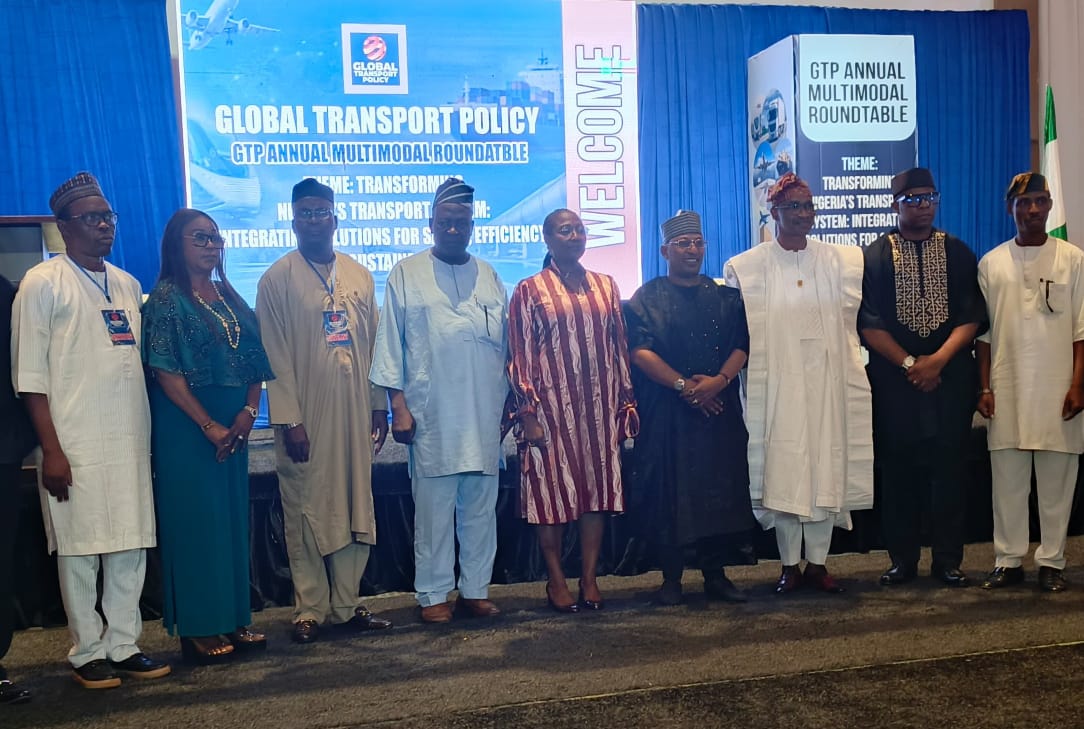
CILT’s Chairman of Council, Dr Boboye Oyeyemi, said this at the Global Transport Policy (GTP) 2026 Annual Multimodal Roundtable, on Wednesday in Lagos.
The roundtable had the theme, ‘Transforming Nigeria’s Transport System: Integrating Solutions for Safety, Efficiency and Sustainability’.
Oyeyemi said that focus had shifted to predictive transport safety, high-efficiency logistics reform and green transition.
He said that there was also focus on governance frameworks, financing models, futuristic mobility, and human capacity development as critical pillars for transformation.
“Nigeria, with no fewer than 240 million people, spans 923,000 square kilometres, boasts of 830 kilometres of coastline, and operates an extensive but fragmented transport network requiring urgent modernisation and coordination.
“The country’s road network exceeds 204,000 kilometres, yet only about 5,000 are federal roads, with states and local governments managing the majority under a complex governance structure.
“With more than 14 million drivers and rising population pressures, transport demand continues to surge, exposing deep inefficiencies and highlighting the urgency for a functional multimodal transport system nationwide,” he said.
He said that multimodal transport – integrating road, rail, inland waterways, and pipelines – remained poorly connected, with no true inter-state integration, worsening mobility challenges and economic inefficiencies.
Oyeyemi said that in spite of heavy investments in roads, bridges, rail, and ports, poor maintenance, weak institutions, lack of data, and accountability gaps had undermined performance and sustainability.
“Overloading of trucks, absence of weighbridges, and weak enforcement have accelerated infrastructure deterioration, with stationary heavy vehicles on bridges further increasing structural risks and failures,” he said.
He said that Nigeria invested heavily in transport assets and would need integration, intelligence and systems management to maximise returns and ensure efficient mobility.
He said that lack of policy continuity, data-driven planning, and integrated transport governance would make Nigeria’s transport sector to be constrained, limiting economic growth and increasing the cost of doing business.
Earlier, the Chairman of GTP, Dr Oluwasegun Musa, said that the theme of the event was apt.
According to him, data has shown that Nigeria loses N3.2 trillion yearly to inefficiencies, with logistics costs exceeding 42 per cent of gross domestic product.
He said that road dominance, weak rail usage and high fatalities still characterised the nation’s transport system.
Musa highlighted institutional gaps, including 18 per cent workforce digitisation and skills deficit.
He said that sustained investment in human capacity was essential to achieving resilient, technology-driven, and an efficient transport system.
He urged an integrated multimodal system, smart mobility adoption and stronger public-private partnerships.
“The roundtable must deliver actionable solutions for a safer and greener transport future,” he said
F.O
Tags: CILT Transport system