

Defence, Security
THE National Centre for the Control of Small Arms and Light Weapons (NCCSALW) says it is strengthening armoury security across government agencies to curb the proliferation of illicit weapons in Nigeria.
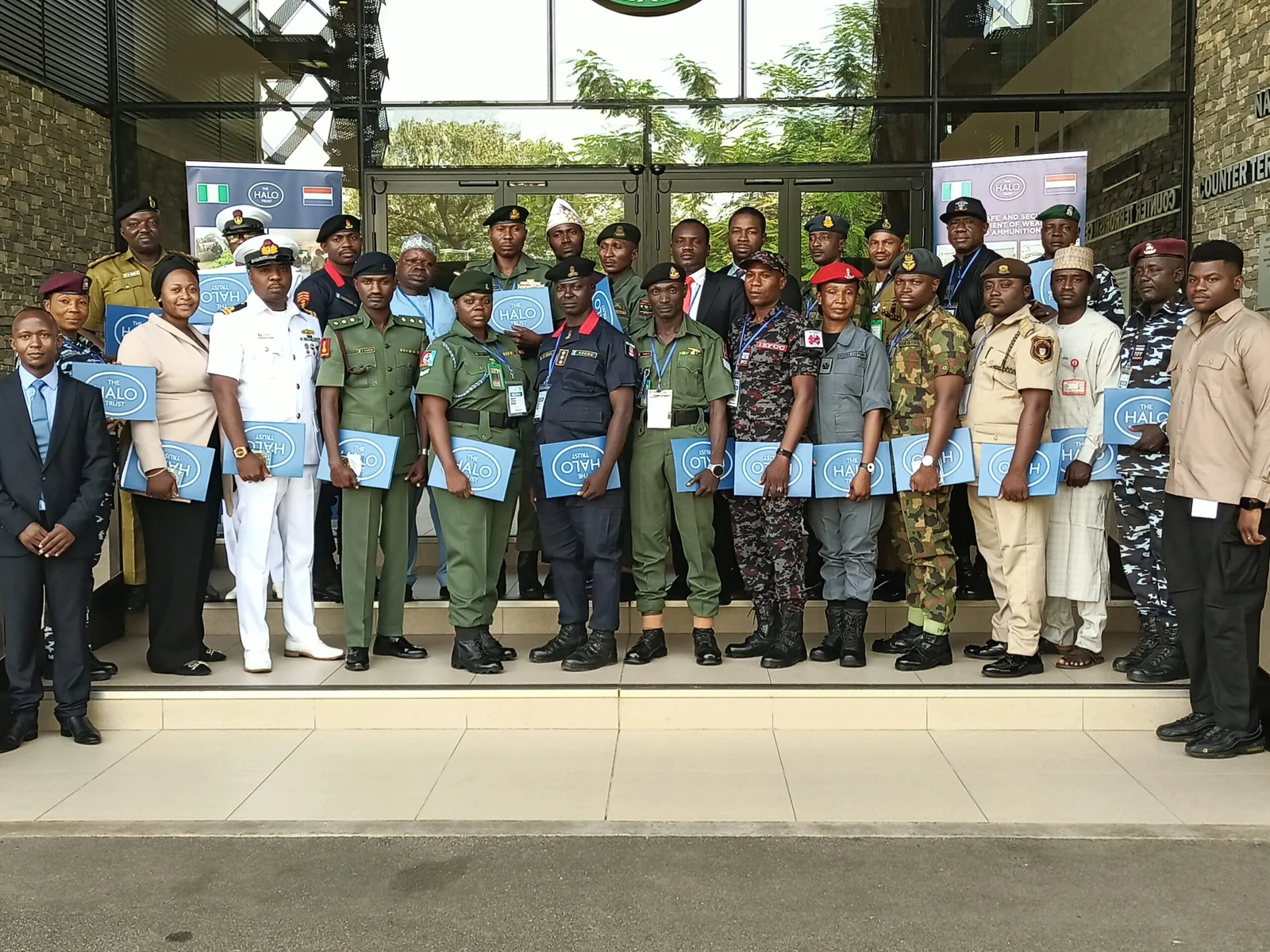
The Director-General of NCCSALW, Retired DIG Johnson Kokumo, said this in Abuja during the graduation of participants of the Physical Security and Stockpile Management (PSSM) programme.
Kokumo said the centre had trained 90 personnel drawn from 15 arms-bearing security agencies to improve weapons security and stockpile management nationwide.
He added that 45 participants completed the first batch between April and May, while another 45 personnel graduated in the second batch.
According to him, the programme is building a pool of skilled personnel capable of promoting safe weapons and ammunition management in line with international standards.
Kokumo said porous borders, illicit local arms production and leakages from government stockpiles remained major sources of illegal weapons in circulation.
He explained that the training was designed to address risks associated with theft, diversion, loss and poor management of weapons and ammunition.
“The participants are now better equipped to secure their armouries and strengthen accountability within their various organisations,” he said.
According to him, securing national stockpiles is critical to preventing theft, diversion and other forms of leakages from government armouries.
He said such leakages could undermine national security and frustrate efforts to promote peace, stability and public safety.
“There is no doubt that there have been instances where weapons and ammunition were stolen from government armouries.
“The National Centre has therefore put in place remedial measures to prevent such thefts and stop leakages from national stockpiles,” he said.
The director-general said participants acquired skills in risk assessment, inventory control, security planning, storage safety, surveillance systems, accountability procedures and emergency response.
He urged the graduates to serve as ambassadors of best practices by applying the knowledge gained and sharing it with colleagues.
The NCCSALW boss commended the National Security Adviser, Malam Nuhu Ribadu, for supporting the implementation of the programme.
He also appreciated The HALO Trust and the Kingdom of the Netherlands for supporting the design, funding and delivery of the training.
The Dutch Ambassador, Mr Bengt van Loosdrecht, represented by the Deputy Head of Mission, Ronald Sonnemans, said effective arms management was critical to reducing insecurity.
Loosdrecht said the programme would strengthen professionalism and promote internationally recognised standards for safe storage and accountability of weapons and ammunition.
He said improved weapons management would reduce the risks of diversion, theft, loss and illicit proliferation of arms.
According to him, the programme also promotes inter-agency cooperation and harmonisation of best practices among security institutions.
“It is rewarding to see trainers from the first cohort now serving as instructors for subsequent cohorts.
“This is a clear success story in building local capacity and ensuring sustainability through the train-the-trainer approach,” he said.
Earlier, the Country Director, HALO Trust in Nigeria, Mr Richard Goss, said the programme aligned with international ammunition management standards.
Goss said the training sought to strengthen weapons management and prevent unplanned explosions at ammunition storage facilities.
He urged participants to apply the knowledge gained to support sustainable weapons management systems across the country.
Navy Lt. V.A. Fali who spoke on behalf of participants said the four-week training programme had significantly enhanced their knowledge of armoury management, accountability, safety procedures, risk reduction measures and the management of small arms and light weapons.
Fali said the participants had also gained valuable insights into international best practices guided by the International Ammunition Technical Guidelines (IATG), MOSAIC standards and other arms control instruments, as well as effective instructional techniques through the Train-the-Trainers course.
He expressed appreciation to the NCCSALW, The HALO Trust, the Kingdom of the Netherlands and the National Counter Terrorism Centre for making the programme successful.
He assured that participants would apply the knowledge and skills acquired to improve safety, accountability and operational effectiveness within their organisations, while contributing to strengthened arms and ammunition management across the country.
The training was organised by NCCSALW in collaboration with The HALO Trust and funded by the Kingdom of the Netherlands. (NAN)
W.U
June 19, 2026
Tags: DIG Johnson Kokumo Lt. V.A. Fali Mr Bengt van Loosdrecht Mr Richard Goss