

By Omoyeni Ojeifo
The Federal Government has described the COVID-19 Response Mechanism as a major investment in Nigeria’s health sector, citing its role in sustaining essential healthcare services and strengthening national health security during the COVID-19 pandemic.
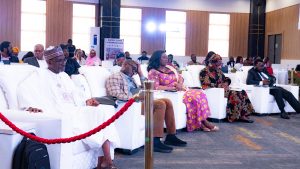
Persecondnews reports that Nigeria Health Watch convened the closeout meeting of the Global Fund-supported COVID-19 Response Mechanism grant on Thursday in Abuja to celebrate achievements recorded under the programme and capture lessons learned.
The meeting, themed “Celebrating Results, Capturing Lessons and Shaping the Future,” brought together government officials, development partners and health stakeholders to reflect on the intervention and discuss future health security investments in Nigeria.
Speaking at the event, the Coordinating Minister of Health and Social Welfare, Prof. Muhammad Ali Pate, represented by Dr. Vivian Okafor, said the COVID-19 Response Mechanism helped Nigeria strengthen critical health systems while sustaining HIV, tuberculosis and malaria services during the pandemic.
“For Nigeria, the C19RM grant became much more than an emergency response. It provided a strategic opportunity to strengthen critical health system functions while protecting essential HIV, tuberculosis, and malaria services,” he said.
According to him, investments under the programme strengthened surveillance systems, laboratory networks, oxygen infrastructure, supply chains, digital platforms and community structures, providing lasting benefits across the health sector.
“The COVID-19 pandemic challenged health systems across the world and reminded us that health security is not separate from national security, economic resilience, or sustainable development.”
The Minister noted that the key lesson from the intervention is that emergency investments should create lasting value through stronger institutions and sustainable systems capable of supporting future health security needs.
“The true legacy of this programme lies in stronger institutions, improved preparedness and stronger partnerships.”
In her remarks, the Director-General of the National Agency for the Control of AIDS (NACA), Dr. Temitope Ilori, said collaboration among government institutions, development partners, health workers and communities was critical to the successful implementation of the intervention nationwide.
“Beyond the infrastructure and systems strengthened through C19RM, one of its most important achievements has been the partnership that brought together government institutions, development partners, health workers and communities across the federation.”
Ilori said the grant supported major improvements in health infrastructure and workforce capacity.
“We worked with government agencies, development partners and communities to strengthen our health system, upgrade laboratories, expand oxygen infrastructure, train health workers and improve preparedness for future public health emergencies.”
Chairman of the Country Coordinating Mechanism (CCM), Dr. Tajudeen Ibrahim, said Nigeria recorded significant gains from the COVID-19 Response Mechanism and urged stakeholders to ensure investments made under the grant remain beneficial to citizens.
“Nigeria has benefited maximally from this investment. The concern now is how we sustain these gains and ensure that the infrastructure, systems and partnerships established continue benefiting Nigerians.”
In his speech, Global Fund representative, Dr. Jean Thomas Nouboussi, said the closeout meeting offered an opportunity to review achievements recorded under the grant while identifying lessons and priorities for future investments in health security nationwide.
“This meeting allows us to take stock of what has been accomplished, reflect on what must be sustained and scaled, and inform future investments in pandemic preparedness and resilient health systems in Nigeria.”
Dr. Obinna Ogbanufe, Lead Partner, Transition of Government Engagement, United States Centers for Disease Control and Prevention (US CDC), noted that investments made during the COVID-19 response significantly strengthened Nigeria’s preparedness capacity and improved the country’s ability to respond to public health threats.
“COVID-19 helped us strengthen our health systems. We strengthened laboratories, emergency operations centres and surveillance systems, and today Nigeria is better prepared to respond to disease outbreaks.”
Dr. Oniyire Adetiloye, Country Director, Jhpiego Nigeria, said stakeholders must build on investments made under the COVID-19 Response Mechanism to enhance preparedness and ensure Nigeria remains capable of responding effectively to future disease outbreak.
“The burden is now on all of us to sustain these gains, use the systems and structures established through C19RM, and ensure we do not start from scratch when future outbreaks occur,” Adetiloye said, represented by Project Director, Dr. Yemisi Ogundare.
Executive Director of Nigeria Health Watch, Vivian Ihekweazu, said the ultimate goal of investments made under the COVID-19 Response Mechanism was to ensure health services remained available to Nigerians and that patient care was not disrupted.
“Our focus is to ensure that health services are not disrupted and that Nigerians continue to receive the care they need, even during public health emergencies.”
Persecondnews reports that stakeholders at the meeting emphasized the need to sustain gains recorded under the grant through stronger domestic financing, institutional ownership and continued collaboration among government, development partners and communities across the country.