

Business
By Anthony Isibor
THE Nigerian Communications Commission, NCC, has commenced a fresh review of Mobile Termination Rates, MTR, as part of efforts to align interconnection charges with current realities in the telecommunications industry.
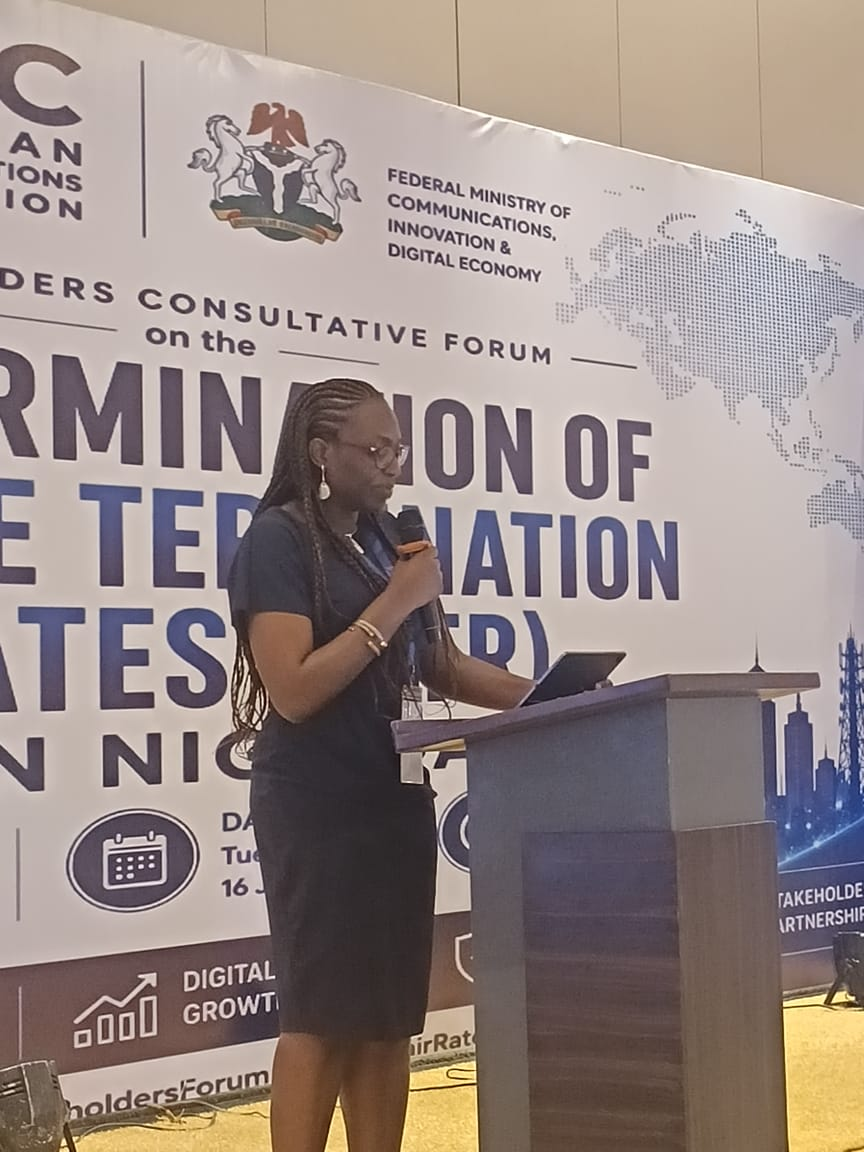
Speaking at a Stakeholder Consultative Forum on the consultancy study for the determination of mobile termination rates in Nigeria, Omotayo Mohammed, Head of Competition and Tariff at the NCC, stated the exercise is designed to ensure that the country’s regulatory framework keeps pace with developments in the sector and changing economic conditions.
Mohammed said that the review would assess existing national and international termination rates, examine retail price controls and asymmetry arrangements and establish a framework for integrating emerging operators into the telecommunications ecosystem.
She stated that the current interconnection rate regime was established through the Commission’s Interconnection Rate Determination issued in June 2018 and later amended in September 2022 through adjustments to mobile international termination rates.
According to her, the telecommunications sector has experienced significant changes since the last major review, including market expansion, evolving competitive dynamics, deployment of advanced technologies such as 5G and the entry of new industry players, including Mobile Virtual Network Operators MVNOs.
Mohammed also pointed to broader economic developments that have affected the cost of providing telecommunications services.
“The years since our 2018 determination have been marked by unprecedented and rapid changes. Changes in exchange rate regimes and inflation rates have substantially altered the cost structures associated with providing communication services in Nigeria,” she said.
She explained that the review was being conducted in line with Section 108 of the Nigerian Communications Act 2003, which empowers the Commission to ensure that telecommunications tariffs and charges remain reasonable, cost-reflective and non-discriminatory.
Mohammed said that the study would be based on three key objectives. These include developing an updated cost model for national and international termination rates that reflect current macroeconomic realities and network technologies, including 5G; reviewing retail pricing regulations and asymmetry arrangements to protect consumers and creating a sustainable framework for the seamless onboarding and interconnection of emerging operators such as MVNOs.
She stressed that the success of the exercise would depend on the quality and completeness of information provided by operators across the industry.
To support the process, global consulting firm, KPMG has been engaged by the Commission to conduct the study and coordinate data collection from operators and other stakeholders.
Mohammed urged telecommunications operators, international carriers, infrastructure providers and other licensees to cooperate fully with the consultants by providing timely and accurate information.
She explained that stakeholder contributions will help ensure that the cost model reflects operational realities across the industry and supports effective regulatory decision-making.
“The success of this study depends entirely on the accuracy and completeness of the data that underpins it. No regulatory cost model can be effective without relevant and credible input from our operators,” he said.
She added that findings from the consultation and subsequent engagements would be used by the NCC and KPMG to refine the study as it progresses.
Mohammed described the review as a collective effort aimed at building a resilient, competitive and investment-friendly telecommunications sector capable of supporting long-term industry growth and improving service delivery across the country.
A.I
June 16, 2026
Tags: NCC Nigerian Communications Commission Omotayo Mohammed