

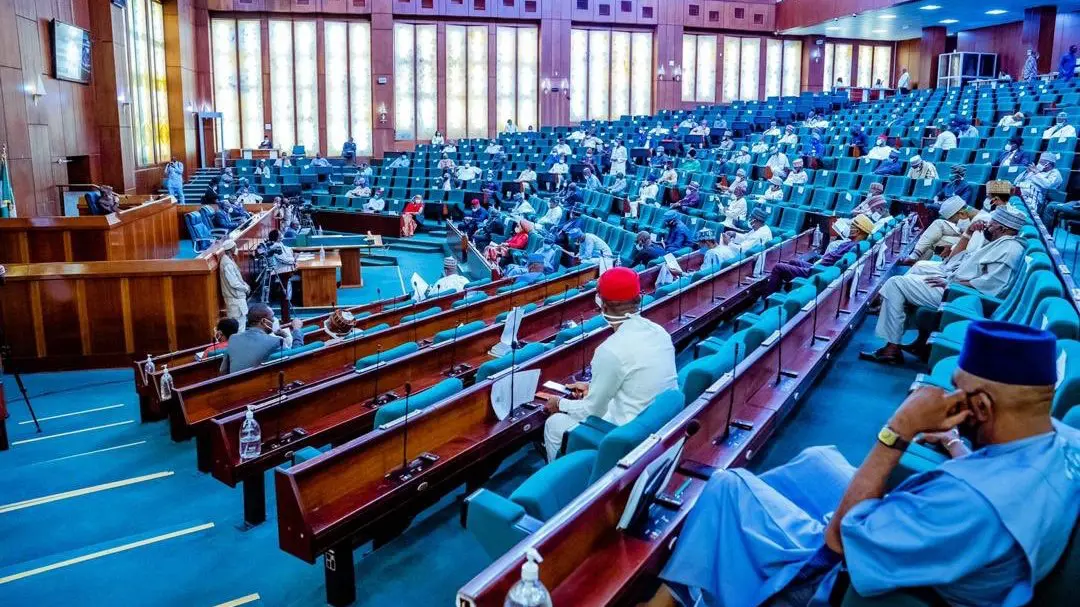
The National Assembly on Thursday took a significant step in the quest for the establishment of state police as both the Senate and House of Representatives demonstrated sufficient eagerness to amend the 1999 Constitution to pave the way for the decentralization of policing in the country.
This is as the House of Representatives passed the proposed legislation amid worsening security challenges across the country. The passing of the bill was sequel to voting by 290 out of the 360 members who attended the plenary.
The Speaker of the House, Tajudeen Abbas, announced to lawmakers that a faulty electronic system would not permit voting by electronic means and thereafter urged all members in the chamber to register their presence for the exercise.
The bill, sponsored by Kalu and 14 other lawmakers, passed second reading on February 20, 2024.
The proposed legislation seeks to transfer policing from the Exclusive Legislative List to the Concurrent Legislative List, thereby empowering states to establish and control their own police formations.
To achieve this, the proposed legislation seeks amendments to Sections 197, 214 and 215, among others, of the 1999 Constitution.
Speaking at the end of voting, Mr Abbas said, “In attendance for the exercise are 290 members, out of which 289 voted in favour of state police. One member voted against, and there’s no nay vote.”
Sponsored
Before the commencement of voting, attendance was verified and confirmed at 290 members, satisfying the constitutional requirement of a two-thirds quorum of the 360-member House.
The bill, which contains 18 clauses, amended Sections 214–216 and other relevant provisions of the Constitution of the Federal Republic of Nigeria, 1999 (As amended), was read for the Third Time and subsequently passed by the House. As a key component of the ongoing constitutional review process, it was prioritised for consideration and passage, while voting on other constitution alteration bills was deferred.
Speaking at the end of the exercise, Abbas said security is the foundation upon which every other aspiration of nationhood rests, stressing that “By passing this bill, the House has taken a decisive constitutional step towards creating a policing framework that is more responsive to local realities while remaining firmly anchored within the unity and sovereignty of the Federal Republic of Nigeria,” he stated.
Shortly before the commencement of voting, a mild drama played out when the member representing Birnin Gwari/Giwa Federal Constituency of Kaduna State, Bashir Zubairu Usman, raised a Point of Order. Granted the floor to speak, the African Democratic Congress lawmaker noted that the amendment to the 1999 Constitution, which the lawmakers were set to vote on, was only made available to them on Thursday.
“Mr Speaker, this document was only made available to lawmakers in the chamber today (Thursday), and we have yet to go through it. We cannot do justice to it because we have not gone through it,” he protested, but Abbas ruled him out of order, to the approval of the majority of the lawmakers present at plenary.
While Abbas was reading out the synopsis of the bill through Clauses one-18, loud voices screaming “Point of Order” could be heard from lawmakers, but the Speaker ignored them all.
SPONSORED