

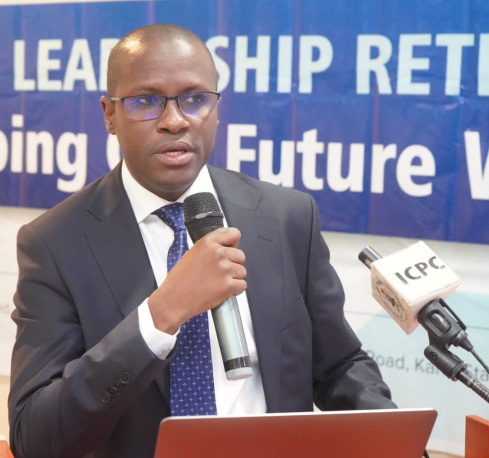
ICPC Boss Seeks Stronger Anti-Corruption Measures to Combat Wildlife Trafficking
Chairman of the Independent Corrupt Practices and Other Related Offences Commission (ICPC), Dr. Musa Adamu Aliyu (SAN), has called for a fundamental shift in the global response to wildlife trafficking, insisting that the crime should be treated as an organised financial crime rather than solely a conservation challenge.
Dr. Aliyu made the call while addressing delegates at the 35th Session of the Commission on Crime Prevention and Criminal Justice (CCPCJ) in Vienna, where he underscored the critical role corruption plays in sustaining illegal wildlife trade across borders.
According to the ICPC chairman, wildlife trafficking networks thrive because corruption creates an enabling environment that allows criminal actors to move illicit products, funds, documents and influence through legitimate systems.
“Wildlife trafficking survives not simply because criminal networks are sophisticated, but because corruption creates the enabling environment through which illicit actors move products, money, documents and influence,” he said.
He explained that traffickers often exploit weaknesses in governance structures through bribery at ports, manipulation of customs documentation and abuse of export permits to facilitate the movement of illegal wildlife products.
Dr. Aliyu described the challenge as a complex “ecosystem of vulnerabilities” involving transportation networks, financial systems and enforcement agencies, stressing that dismantling such networks requires a comprehensive and intelligence-driven approach.
In a major policy announcement, he disclosed that the ICPC has established a dedicated unit to investigate environmental crimes, a move he said reflects the Commission’s commitment to treating environmental offences with the same urgency traditionally accorded to money laundering and terrorism financing.
The ICPC chairman outlined three key pillars for effective investigations into wildlife trafficking: targeting the illicit products involved, tracing financial flows and suspicious transactions, and identifying corrupt officials and systems that facilitate the illegal trade.
He further advocated the deployment of advanced investigative tools, including link analysis, digital evidence exploitation and financial profiling, to expose and dismantle the criminal infrastructure behind wildlife trafficking operations.
Dr. Aliyu also highlighted the importance of international collaboration in combating environmental crimes, commending the Environmental Investigation Agency (EIA) UK for its partnership with the ICPC in strengthening institutional capacity and response mechanisms.
He concluded by calling for stronger corruption-risk prevention measures within customs, licensing and border management institutions, noting that integrity and cooperation remain critical to disrupting criminal networks.
“If corruption is the lubricant of wildlife trafficking networks, then integrity, intelligence and interagency cooperation must become the tools through which those networks are dismantled,” he stated.
The 35th Session of the Commission on Crime Prevention and Criminal Justice brought together policymakers, law enforcement agencies and anti-corruption experts from around the world to discuss strategies for addressing emerging global crime threats.
By TimesNG