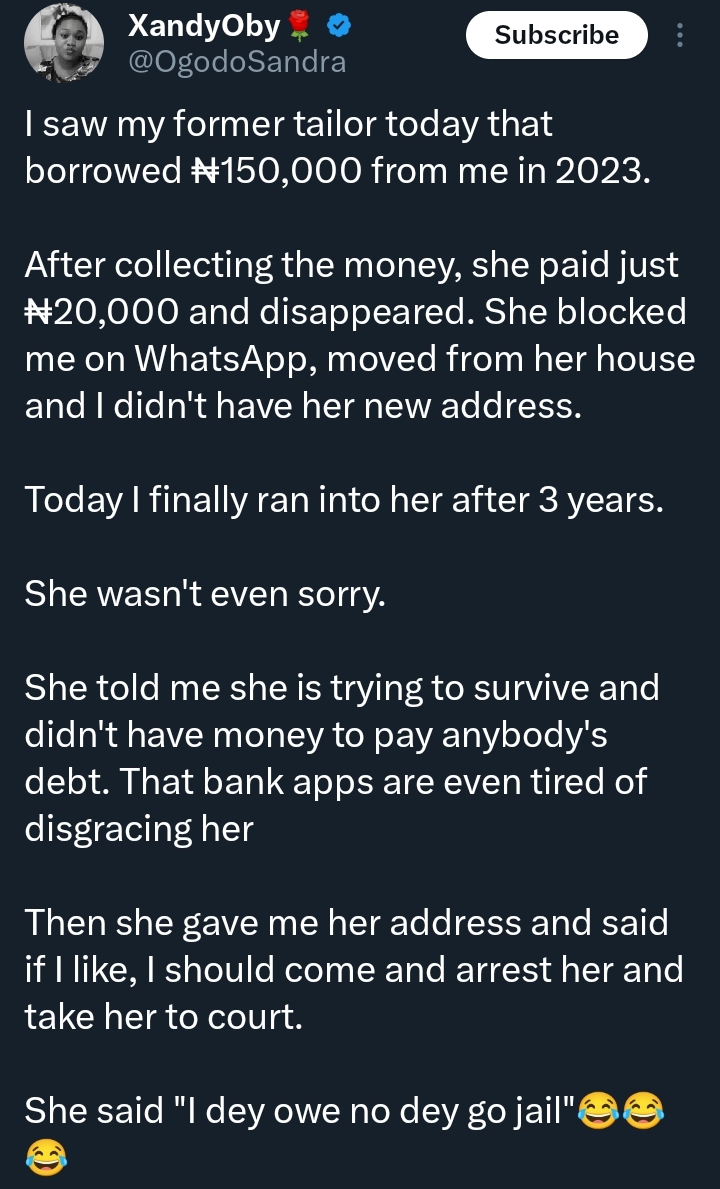
“I dey owe no dey go jail” — lady shares alleged nonchalant attitude displayed by her debtor


A viral social media post detailing a chance encounter between a creditor and her long-vanished debtor has ignited an intense online debate over accountability, the eroding culture of trust, and the legal realities of debt recovery in Nigeria.
The post, which has garnered thousands of reactions, highlights a growing frustration among everyday lenders who find themselves financially burned by people they once trusted.
A Disappearing Act over ₦150,000
According to the anonymous poster, the saga began in 2023 when she loaned ₦150,000 to her then-tailor.
Following an initial repayment of just ₦20,000, the debtor allegedly severed all ties—blocking the lender on WhatsApp, vacating her residence, and leaving no forwarding address.
For three years, the trail went cold. That was until a chance face-to-face encounter recently brought the two women together again.
However, instead of the remorse or excuses typically expected in such confrontations, the lender was met with absolute defiance.
“Survival” vs. Accountability
When confronted, the tailor reportedly showed zero contrition, citing the harsh economic climate as her justification.
“She told me she is trying to survive and didn’t have money to pay anybody’s debt,” the poster recounted, adding that the debtor casually admitted her financial state was so dire that loan apps “are even tired of disgracing her.”
In a bold display of non-chalance, the debtor went as far as providing her new address, dare-facing the lender to involve law enforcement or the judiciary.
The confrontation culminated in a brazen, pidgin-english declaration that has since become the focal point of online discourse: “I dey owe no dey go jail” meaning that owing a debt is not a jailable offense.