

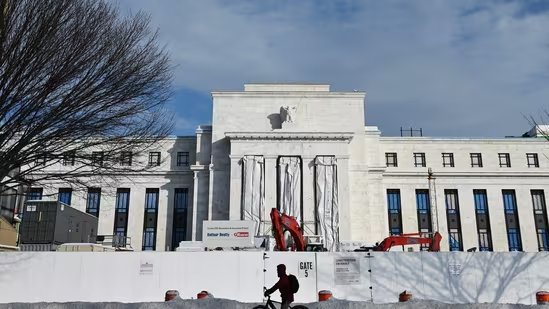
The Federal Reserve is expected to keep interest rates unchanged at its latest meeting. This is an important meeting because it is one of the first major meetings led by Fed Chair Kevin Warsh. Many investors are watching closely to understand how he plans to guide U.S. monetary policy.
Kevin Warsh’s Fed plans
Even though Warsh has promised a “regime change” at the Fed, experts do not expect him to make any major policy changes right away. Wall Street traders currently do not expect a Fed rate cut before the end of the year. In fact, market expectations suggest the next move could eventually be a rate increase. For everyday Americans, a stable interest-rate environment means there will likely be only small changes to savings accounts, checking accounts, loans, mortgages, and credit cards in the near future.
Savings account rates
The national average interest rate on checking accounts is only about 0.07%. That is why returns remain extremely low. Regular savings accounts are also paying relatively little interest. The national average savings rate has slipped to around 0.38%.
High-yield savings accounts continue to offer much better returns than traditional savings accounts. Many are paying around 3%, while some still offer rates near 4%, as noted Yahoo Finance. Consumers willing to compare banks and move their money can often earn significantly more interest through high-yield accounts.
Also read: What time will US Fed announce interest rate decision? What to expect from Kevin Warsh’s first FOMC meeting?
CDs and mortgage rates
Money market accounts have also seen only modest improvements. The national average rate is about 0.57%. People with larger cash balances, such as $10,000 or more, may benefit from shopping for high-yield money market accounts, which can still offer rates close to 4%. Certificate of Deposit (CD) rates have remained relatively stable in recent months. The national average rate on a 12-month CD is about 1.55%.
CD earnings depend on factors such as the size of the deposit and the length of time the money is locked up. Consumers who compare offers from different banks can often find CD rates that are much higher than the national average.
Earlier this year, mortgage rates fell to some of their lowest levels in three years. However, global events such as the conflict in the Middle East later pushed rates higher. Mortgage rates are influenced more by the bond market, especially the yield on the 10-year Treasury note, than by the Fed’s benchmark interest rate, as per Yahoo Finance.
Loans and credit cards
Even so, housing experts at the Mortgage Bankers Association and Fannie Mae expect mortgage rates to stay near 6% through 2027. This means homebuyers should not expect dramatically cheaper mortgages anytime soon. Personal loans have become slightly more affordable. The average personal-loan rate has fallen to around 11.4% after remaining close to 12% for nearly two years. Many advertised personal-loan offers are now in the 7% range, although actual rates depend on a borrower’s credit profile.
Credit cards remain one of the most expensive forms of borrowing. Average credit-card interest rates have risen sharply from roughly 15% in 2021 to about 21% today, as per the report by Yahoo Finance. Surprisingly, credit-card rates have not fallen much even after the Fed made rate cuts last year and the prime rate moved lower. People who carry balances from month to month are still paying very high interest charges on credit-card debt. Consumers who pay their credit-card balance in full every month avoid these interest costs completely.
Stock market impact
Corporate earnings, economic growth, inflation, consumer spending, and investor confidence can all have a major impact on stock performance. Investors should not focus only on Fed policy when making investment decisions.
People who want a more cautious investment strategy may prefer high-quality companies with strong track records across different economic conditions. Long-term investors are generally encouraged to remain patient and focus on steady growth instead of reacting to every Fed meeting, as noted by Yahoo Finance.
Overall, a Fed rate pause means Americans are unlikely to see major changes in savings rates, loan costs, mortgage rates, or credit-card interest in the immediate future.