

Opinion
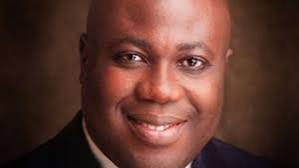
By Ifeanyi Igwebike Mbanefo
WITH writers and scientists now firmly engaged, our attention turned outward—to the wider cultural ecosystem that surrounded and sustained creative expression in Nigeria.
The ambition was simple, yet audacious: the Nigeria Prize for Literature and the Nigeria Prize for Science would not remain elite recognitions confined to winners and judges.
They would become national institutions—prizes that belonged, in spirit and in participation, to the country itself.
Science, by its nature, imposed certain limits.
Its practice is often solitary—the quiet intensity of the laboratory, the discipline of research, the long arc between discovery and dissemination.
Beyond lectures, interviews, and conferences, there were only narrow avenues for broad public engagement.
Literature, however, offered an entirely different landscape. Stories travel.
They could be read aloud, staged, debated, sung, danced, and transformed.
A book could escape the stillness of its pages and become a shared, living experience.
We resolved, therefore, that the prizes themselves must travel.
The award ceremony would remain the grand culmination—reserved for finalists and the eventual winner—but before that moment, we would take the shortlisted writers across the country.
In partnership with Jahman Anikulapo, whose creative energy and cultural intuition proved invaluable, we began to reimagine what literary engagement could look like.
What emerged was no longer a series of readings. It was a cultural movement in motion.
At Jahman’s urging, we expanded the format.
Literature would sit at the centre, but it would be surrounded—enriched—by music, theatre, dance, performance poetry, and visual expression.
We mapped a journey across Nigeria’s six geopolitical zones and began assembling what could only be described as a travelling cultural caravan.
That decision changed everything.
Our search for performers first led us to Bariga in Lagos, where we encountered Segun Adefila and the Crown Troupe of Africa.
I must confess that my initial reaction was one of hesitation.
When I saw Segun’s dreadlocks, I wondered how a conservative corporate audience might receive him.
The concern lingered long enough for me to quietly suggest to Jahman that we discontinue the audition.
Jahman resisted, calmly but firmly.
“Bros,” he said, “let them perform. We have come this far. The young people are already here. Give them a few minutes.”
Reluctantly, I agreed.
Within moments, my reservations dissolved.
What unfolded before us was not merely performance—it was transformation.
The stage came alive with rhythm, movement, and meaning. They drew from indigenous Yoruba theatre—masquerade traditions, music, poetry, satire—and fused it seamlessly with contemporary social commentary.
It was theatre as revelation.
In that instant, I understood what the tour could become. Crown Troupe embodied the very essence of our vision: literature not as text alone, but as experience—dynamic, communal, unforgettable.
From that day forward, they became an essential part of our journey.
Another significant encounter came through a young editor and cultural entrepreneur, Ebun Olatoye—later Ebun Olatoye-Feludu.
Ebun possessed a rare clarity of vision. Even at that early stage in her career, she demonstrated an instinct for talent that set her apart.
She saw possibility where others saw obscurity, and she advocated with quiet conviction.
One day, she introduced us to a young woman carrying a guitar.
Her name was Bukola Elemide.
The world would later come to know her as Aṣa.
At the time, she was performing for modest audiences, navigating the uncertain terrain of Lagos’s alternative music scene.
Ebun believed deeply that she belonged on the tour and argued persuasively on her behalf.
History would vindicate that belief.
Long before international acclaim and sold-out venues, Aṣa was one of the voices that shaped the emotional texture of our programmes.
Looking back, it remains remarkable how many future stars passed through those early stages, before the world came to recognise them.
We encountered many others—performance poets, musicians, storytellers—each bringing distinct cultural textures.
Among them was Segun Akinlolu, known widely as Beautiful Nubia.
Rooted in Yoruba oral tradition, folklore, and philosophy, his music carried both depth and dignity. With the Roots Renaissance Band, he demonstrated that modern artistic excellence need not abandon cultural inheritance; it could, instead, be strengthened by it.
As the tour expanded, so too did our network.
Across the country, we built alliances—with broadcasters, universities, cultural organisations, traditional institutions, and community leaders.
Each region contributed its own voice, its own rhythm, its own interpretation of the shared national narrative.
One of the most memorable stops was Enugu.
Working closely with Chief Kelvin Ejiofor, Prof. Richard Okafor and other giants, we mobilised an extraordinary coalition of stakeholders. The support of distinguished figures, including former Vice President Dr. Alex Ekwueme, elevated the programme further.
The response was overwhelming.
Enugu received us with an enthusiasm that was both affirming and humbling.
The halls were filled, the discussions were vibrant, and the audiences were deeply engaged.
Among those present was a young writer whose debut novel, Purple Hibiscus, had only just begun to attract attention.
Her name was Chimamanda Ngozi Adichie.
At the time, few could have foreseen the scale of her future influence.
The tours taught us a lasting lesson: talent resides everywhere. What is often missing is not ability, but visibility—an opportunity to be seen, heard, and affirmed.
As the influence of the prizes grew, we began to explore additional ways to celebrate Nigerian excellence beyond the awards themselves.
One such opportunity arose when Taiwo Obe proposed that we honour Dele Olojede, the first Nigerian recipient of the Pulitzer Prize.
The idea resonated immediately.
I had long believed that when a Nigerian achieved distinction on the global stage, it was both fitting and necessary that we celebrate such accomplishment at home.
After considerable persuasion, approval was secured. What followed was a remarkable afternoon at the MUSON Centre in Lagos.
The hall was filled with journalists, writers, civil rights advocates, and cultural leaders.
Chief Henry Odukomaiya chaired the occasion. The atmosphere was not merely ceremonial—it was deeply felt. It reflected a collective pride that transcended formality. On another occasion, we celebrated Prof. Dora Akunyili.
Dr. Chris Haynes, then managing director of NLNG, who arrived late, later wrote to apologise. More significantly, he acknowledged that he had underestimated the cultural and patriotic weight of the event.
His words affirmed that we were on the right path—anchoring the prizes firmly within the fabric of national life.
Encouraged, I proposed that Dele deliver the keynote address at that year’s Grand Award Night.
He accepted.
His lecture, Ask Nothing of God, provoked thoughtful reflection and sustained conversation long after the evening had ended.
By 2007, another moment of opportunity presented itself.
That year, Chimamanda Ngozi Adichie won the Orange Prize for Fiction for Half of a Yellow Sun, bringing global attention to Nigerian literature once again.
We extended two invitations.
The first was to host a special Olojede-type celebratory event in her honour in July.
The second was to invite her to deliver the keynote address at the October Grand Award Night.
She graciously accepted both.
Preparations commenced in earnest—logistics, travel, programme coordination. Expectations were high.
Then communication ceased.
Despite repeated efforts, we were unable to re-establish contact. The July celebration could not proceed as planned.
Faced with the prospect of a second uncertainty, we made a difficult but necessary decision: we began searching for an alternative keynote speaker for October.
We could not risk being unprepared twice.
It was at this point that an unexpected possibility emerged.
A senior aide to former President Ibrahim Babangida reached out. The former Head of State expressed interest in attending the Grand Award Night—and in delivering the keynote address.
The proposal immediately generated debate.
General Babangida remained one of Nigeria’s most consequential and controversial figures. His legacy inspired both admiration and criticism.
We were acutely aware that his participation would evoke strong reactions, particularly within literary and intellectual circles.
After careful deliberation, we chose to proceed.
Our reasoning was guided by principle: the space we were building had to remain open.
Agreement or disagreement could not become the basis for exclusion.
Before the event, I conveyed one request through his aide.
If he accepted the invitation, he should use the occasion to advocate an increase in the prize purse from $20,000 to $50,000.
At the time, international prizes were rising significantly in value, and it was important that the Nigeria Prize remain globally competitive.
Internally, however, support for such an increase was limited.
He listened.
On the night of the event, he fulfilled that request.
By the following Monday, directives had been issued: the prize would increase from US$20,000 to US$50,000.
It was a significant institutional milestone.
The tradition of inviting prominent national figures continued.
In 2009, Dim Chukwuemeka Odumegwu-Ojukwu delivered the keynote address.
His presence alone drew widespread attention.
In his lecture, What On Earth Are We Doing Here?, he reflected on history, identity, and reconciliation.
He spoke candidly about how his life had often been reduced to the narrative of the civil war, while its broader dimensions remained overlooked.
Most poignantly, he expressed a desire to be remembered as a man who stood for a united
Nigeria.
He prophetically, remarked that this may be his last major outing. It was.
The words lingered in the air.
In retrospect, the moment carried the quiet weight of a valediction.
The following year marked Nigeria’s Golden Jubilee.
To commemorate fifty years of independence, we organised a special recognition programme honouring fifty Nigerians whose work had shaped the nation’s intellectual and cultural landscape.
Among them were Wole Soyinka, Chinua Achebe, Christopher Okigbo, and Fela Anikulapo-Kuti—figures whose contributions had defined eras.
Dr. Chima Ibeneche, Managing Director, NLNG, delivered the keynote address, aptly titled Time to Say Yes to Nigeria.
It was a fitting culmination to a transformative decade.
Within that same period, the prize purse was increased once again—from US$50,000 to US$100,000—further establishing the Nigeria Prize among the most prestigious in the world.
What had begun as a corporate initiative had become something far more expansive.
The tent had widened.
And beneath it gathered writers and scientists, musicians and actors, poets and journalists, bankers, businessmen, statesmen and students—ordinary citizens and extraordinary minds—drawn together by a shared conviction: that excellence must be recognised, and that a nation is strengthened when it honours its finest voices.
To be continued…
***Ifeanyi Igwebike Mbanefo, CEO Museums and Monuments Academy, lives in Montreal Canada.
A.I
June 18, 2026
Tags: Ifeanyi Igwebike Mbanefo