

KEY POINTS
- The EU and GIZ have donated a 200kW solar PV system to the Standards Organisation of Nigeria.
- SON says the facility will be Nigeria’s first energy-performance testing centre of its kind.
- The agency expects to save the roughly N80m it spends yearly on diesel.
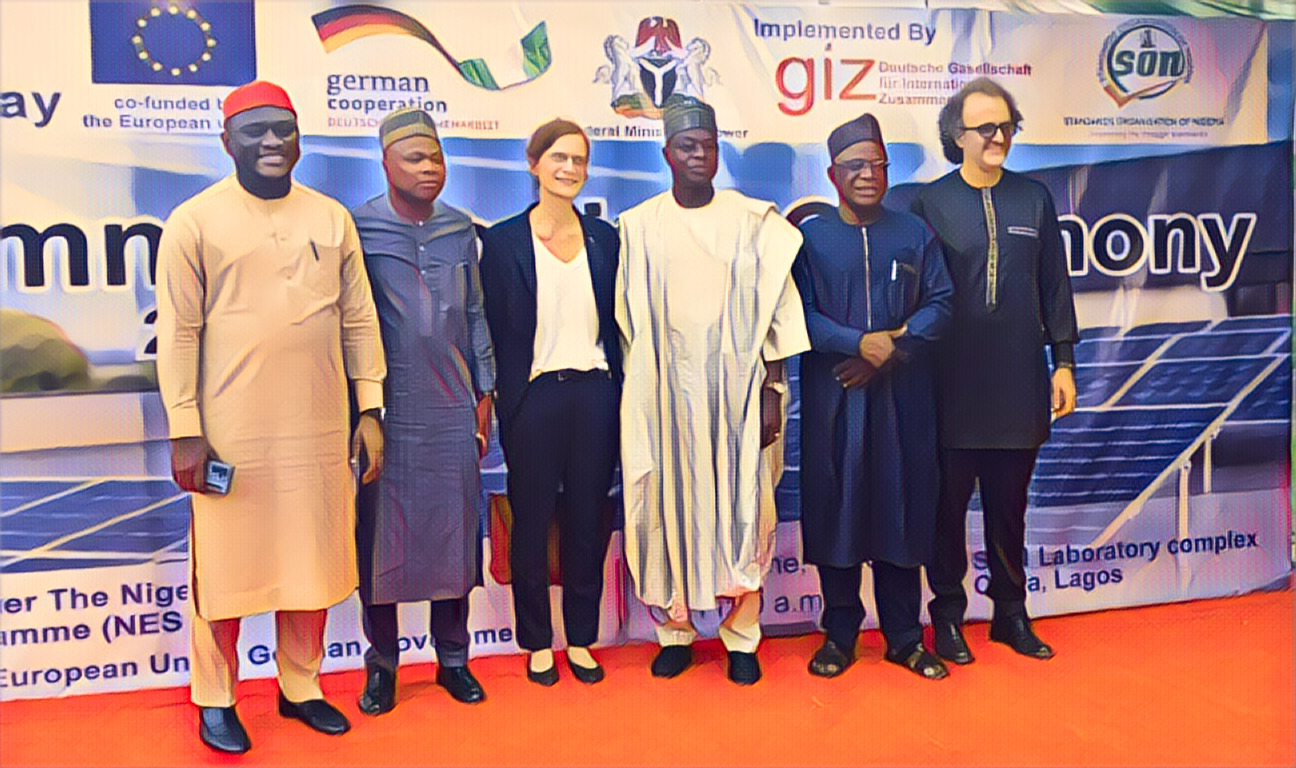
The European Union has donated a 200kW solar PV power system to the Standards Organisation of Nigeria. At the commissioning in Lagos, the Head of Cooperation at the EU Delegation to Nigeria and ECOWAS, Massimo De Luca, said the EU and Germany had worked closely with SON to deliver the project.
A partnership for clean energy
According to De Luca, the EU has supported SON to develop innovations that improve energy performance in Nigeria, and the donation reflects that continued partnership. Moreover, he described SON as a critical partner in domestic trade and reaffirmed the EU’s commitment to Nigeria’s energy transition.
Also speaking, the Head of Development at the German Embassy, Dr. Karin Jansen, said the commissioning reflects efforts to help businesses become more resilient. “We are building strong bridges between both countries, as this facility will help SON verify energy performance standards. It is also an opportunity to strengthen the next phase of Nigeria’s energy future,” she said.
Standards, savings and a regional first
Earlier, the Director-General of SON, Ifeanyi Okeke, described the project as another milestone in the agency’s longstanding partnership with the Nigerian Energy Support Programme. According to him, the collaboration began in 2018 with a Memorandum of Understanding between SON and GIZ for renewable energy and energy-efficiency standards.
Furthermore, Okeke said the partnership has since expanded beyond standards into laboratory infrastructure, conformity assessment, capacity building and support for emerging sectors such as electric mobility. With NESP’s support, he added, SON has developed Minimum Energy Performance Standards and energy labelling requirements for key appliances, paving the way for a mandatory labelling scheme.
Consequently, he said the initiative would empower consumers to make informed choices while ensuring that only energy-efficient products reach the market. “When fully operational, it will be the first facility of its kind in Nigeria and a reference testing centre for the West African sub-region,” he said.
Ultimately, Okeke pointed to significant savings for the agency. According to him, SON spends close to N80 million on diesel and about N6.7 million on electricity each year, costs the new system can offset. “As an agency that is not primarily revenue-generating, whatever money we can save will be very helpful,” he said, framing the solar facility as both an environmental and a financial gain.