

Business
By Anthony Isibor
THE Association of Telecommunications Companies of Nigeria, ATCON, has urged the Nigerian Communications Commission, NCC, to retain the current structure of asymmetric Mobile Termination Rates, MTRs, arguing that the measure remains critical for sustaining competition and protecting smaller telecom operators in the country.
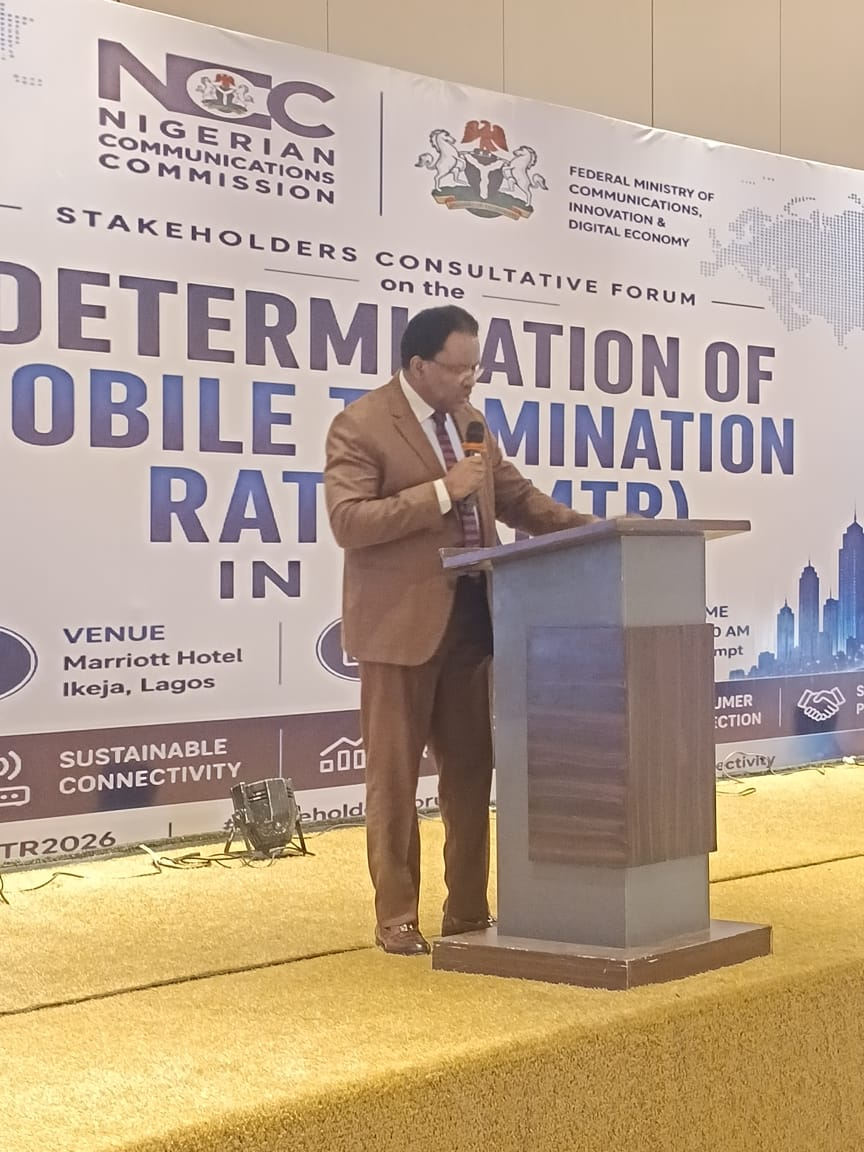
Speaking during the NCC’s stakeholders’ consultation on the review of Mobile Termination Rates, ATCON representative, Chidi Ibisi, stated l that the telecommunications industry has recorded remarkable growth since the liberalisation of the sector in 2001, but warned that operators are grappling with mounting economic pressures that threaten sustainability.
According to him, investments in Nigeria’s telecom sector have grown from about $500 million at the inception of liberalisation to over $75.6 billion as of March 2026.
He noted that the country now boasts of over 185.7 million mobile subscribers, including 153.15 million internet users, while data consumption has risen to over 1.42 million terabytes. The sector currently contributes 8.12 per cent to Nigeria’s Gross Domestic Product, GDP, and has a teledensity of 85.6 per cent.
“The sector is doing well, and we’re very glad that we’re playing a key role in the transformation of our economy,” Ibisi said.
While acknowledging NCC’s statutory mandate under Section 108 of the Nigerian Communications Act to regulate tariffs and charges, Ibisi stressed that telecom pricing policies must remain fair, cost-oriented and structured to attract continued investment.
He pointed to recent tariff adjustments approved by the regulator, noting that telecom operators are planning to invest over $1.38 billion in network capacity expansion, resilience improvements and service quality enhancement.
“Quality of service and quality of experience require significant investment,” he said.
The ATCON representative listed several challenges confronting operators, including interest rates above 33 per cent, foreign exchange volatility, inflationary pressures, rising costs of imported telecommunications equipment, diesel and transportation expenses.
He also highlighted increasing costs associated with repairing fibre-optic cables damaged during road construction activities, replacing stolen generators and batteries at telecom sites and securing rights of way for network deployment.
According to him, many states have yet to reduce Right of Way charges despite repeated calls from industry stakeholders, while multiple taxation remains a major burden on operators.
“The aforementioned significantly impact the capital and operating expenses of our members and their ability to maintain the high levels of investment required in this sector,” he said.
Ibisi argued that preserving cost-reflective Mobile Termination Rates is essential to support emerging operators and those with less than 10 per cent market share.
He specifically appealed to the NCC and consultants conducting the MTR review to carefully examine market realities before making any changes to the current asymmetrical framework.
“We respectfully recommend the retention of the current structure of asymmetric mobile termination rates,” he stated.
He added that ATCON believes asymmetrical rates remain relevant in promoting competition and ensuring the survival of smaller operators in a market dominated by larger players.
The association pledged its full cooperation and active participation in the ongoing review process, expressing confidence that the study would help strengthen the long-term sustainability of Nigeria’s telecommunications industry and support the country’s ambitions in digital economy.
A.I
June 16, 2026
Tags: Association of Telecommunications Companies of Nigeria ATCON Chidi Ibisi NCC Nigerian Communications Commission