

AMERICAN INTELLIGENCE agencies are used to analysing chaos, but in recent weeks they have endured a different type of uncertainty. First there was the resignation, announced on May 22nd, of Tulsi Gabbard, the director of national intelligence (DNI). Then came Donald Trump’s move to replace her with Bill Pulte, a housing official with no national-security experience who used his access to mortgage records to support probes of Mr Trump’s opponents. That prompted Democrats to declare that they would block the renewal of important spying powers until the president offered a better alternative.
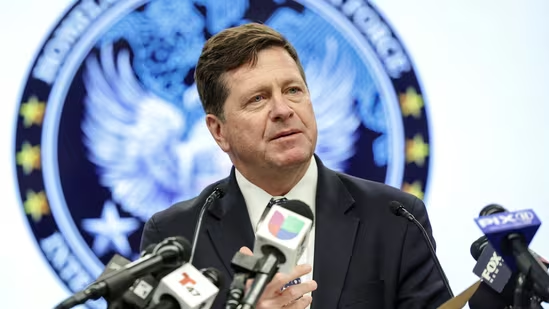
Mr Trump did so on June 11th, nominating Jay Clayton, the US attorney for the Southern District of New York (pictured). Mr Clayton, generally considered a more sober choice than Mr Pulte, has a Senate confirmation hearing scheduled for June 17th. But as is so often the case with Mr Trump, the hiring-and-firing theatrics obscure broader battles, on the scope of surveillance powers and the role of the DNI itself.