

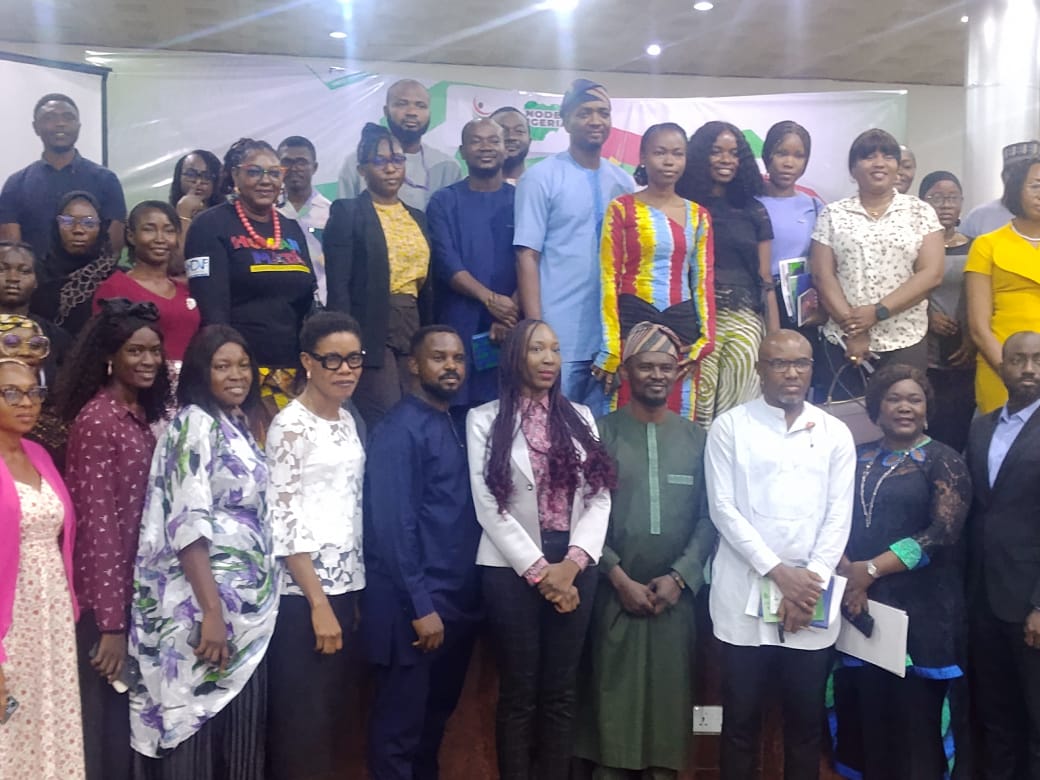


West Africa Civil Society Institute (WACSI) has launched a new report highlighting the deepening structural and financial challenges facing Nigeria’s civil society sector, warning that many organisations were caught in a cycle of fragility that threatens their long-term sustainability.

The publication, titled: “Trapped in Fragility: An Assessment of Civil Society Landscape in Nigeria,” was presented on Thursday in Abuja during a hybrid event.
The report was commissioned by WACSI’s Nigeria Node and produced in collaboration with the Nigeria Network of NGOs, NNNGO.
Findings from the survey of 693 civil society organisations showed that 86 per cent — about 596 organisations — operate without a written fundraising plan, while 76.3 per cent (approximately 529 organisations) have not conducted any formal programme evaluation in the past two years.
It stated that this reflects a sector that was active but structurally constrained in planning, measuring impact, and sustaining operations.
The report identified a reinforcing cycle of underfunding and weak institutional systems.
According to the report, chronic funding shortages prevent organisations from investing in core areas such as governance, staffing, financial management, and monitoring and evaluation.
“As a result, many struggle to demonstrate impact, further limiting their ability to attract funding. Human capital development also remains a major concern, with 60.2 per cent of organisations lacking dedicated budgets for staff training.
“In addition, more than 80 per cent of respondents reported lacking essential internal systems, including communications plans, IT policies, board manuals, and data protection frameworks.
“Governance gaps persist across the sector. About 64.7 per cent of organisations reported challenges in board development, while 61.5 per cent cited difficulties in strategic planning and board engagement, highlighting weaknesses in leadership and oversight structures.
“Access to funding remains one of the most significant constraints. The report showed that 67.8 per cent of organisations struggle to access government funding, while over 60 per cent face challenges securing support from foundations and corporate entities.
“This has led to a heavy reliance on limited funding sources and weak financial diversification.
“Digital vulnerability was another emerging concern. Over half of the organisations surveyed reported difficulties digitising financial and fundraising processes, while nearly half indicated weak preparedness for cyber threats,” it stated.
The study also found that 35.6 per cent of organisations had experienced phishing attacks, and 35.5 per cent reported ransomware incidents.
Notably, none of the organisations surveyed use automated data analytics tools, and 88.5 per cent lack donor management systems.
The report further highlighted regional disparities, noting a concentration of civil society organisations in southern Nigeria, while northern regions remain underrepresented despite significant humanitarian needs.
Faith-based organisations account for about 46 per cent of the mapped entities, while 15 per cent lack clearly defined thematic focus.
Despite these challenges, the report underscored the critical role of civil society in promoting democratic governance, accountability, and service delivery.
However, it warned that without urgent reforms, many organisations may remain in survival mode rather than evolving into sustainable institutions.
Speaking at the event, Board Chair, WACSI Node Nigeria, Mr. Oladayo Olaide, noted growing pressures on civic space, including arrests of activists under cybercrime laws and increasing threats from State actors.
According to him, several activists have been forced into exile, while some organisations have shut down following the detention of their leaders.
He added that civil society groups continue to play a vital role in electoral reforms, including advocacy for improved electoral laws, electronic transmission of results, and increased youth participation in politics.
However, Oladayo said that structural barriers such as high costs of political participation still limit broader inclusion.
Also speaking, Country Lead, WACSI Node Nigeria, Omolara Balogun, emphasised the need for long-term sustainability in the sector, noting that civil society must move beyond survival to institutional resilience.
She said the report highlights key gaps in governance, resource mobilisation, and technology adoption, adding that recent funding shocks — including the withdrawal of major international support — have worsened the situation.
According to her, civil society organisations must invest in stronger systems, including financial management, leadership development, and digital security, while donors should provide more flexible, long-term funding to support institutional growth.
Balogun also called for greater collaboration within the sector, urging organisations to break out of operational silos and leverage shared strengths to address common challenges.
On regulatory issues, the report identified complex and multi-layered registration processes as a major barrier, particularly for grassroots organisations.
It noted that requirements for formal registration often limit access to banking services and hinder operational effectiveness.
The report recommended coordinated action among stakeholders, including reforms to governance structures, improved fundraising strategies, enhanced staff development, and stronger digital capacity.
It also called on government to simplify regulatory processes and create a more enabling environment for civil society operations.
It concluded that while the challenges facing Nigeria’s civil society sector are significant, they are not insurmountable, stressing that coordinated efforts can drive a transition towards resilience, institutional strength, and long-term impact.