

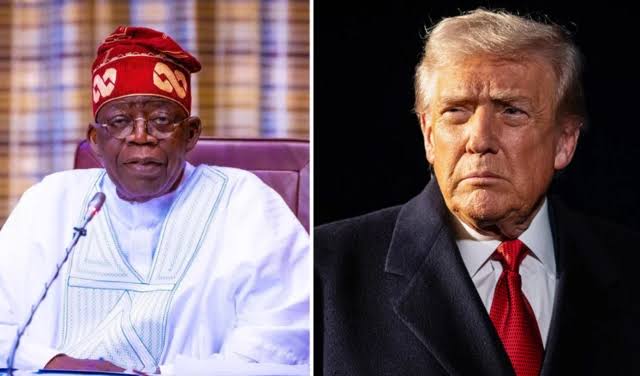
The United States House Committee on Appropriations has moved to impose a massive 50 percent cut on financial aid and developmental support to the Federal Government of Nigeria.
This decision, contained in the proposed National Security, Department of State, and Related Programs Appropriations Bill for 2027, comes as a direct response to the persistent insecurity and religious-targeted violence across the country.
Under the new legislative framework, billions of dollars in funding previously earmarked for Nigeria for the 2027 and 2028 fiscal years could be frozen.
The bill introduces a strict “conditional funding structure,” making future disbursements dependent on the Nigerian government meeting specific security benchmarks.
Lawmakers have made it clear that the flow of funds will only resume if the Secretary of State can certify that the country is taking “effective steps” to protect its citizens.
The legislation mandates that no funds under major aid categories can be released to Nigeria without the “regular notification procedures of the Committees on Appropriations,” effectively placing Nigeria on a high-level watch list.
This move aligns with a broader shift in American foreign policy under President Donald Trump to ensure that international spending is “consistent with relevant executive orders” and prioritizes American national interests.
A significant portion of the bill focuses on the protection of religious freedom. The committee expressed deep horror at the “continued persecution and slaughter, like the Palm Sunday massacre, of Christians” in Nigeria.
Consequently, the bill “holds foreign governments and bad actors accountable for persecuting people of faith, including by restricting assistance to Nigeria until measurable actions are taken to protect Christian communities suffering from religious violence.”
Beyond the aid cuts, the bill warns of personal consequences for foreign officials. Those designated as being from “Countries of Particular Concern”—or those who tolerate severe religious freedom violations—along with their family members, could face strict “visa restrictions.”
To ensure the Nigerian government shares the financial burden of these security challenges, the committee recommended a “matching amount” policy. This requires the Federal Government of Nigeria to provide a dollar-for-dollar match from its own budget for every dollar the US spends on aid programs within the country.
However, the US is not completely withdrawing its security presence. The committee directed that funds from a $235 million security sector pool be specifically used to “address violence perpetrated by Fulani ethnic militia and other instability in the Middle Belt region.” An additional $2 million was also recommended for “atrocity prevention” in these volatile areas.