

Washington:
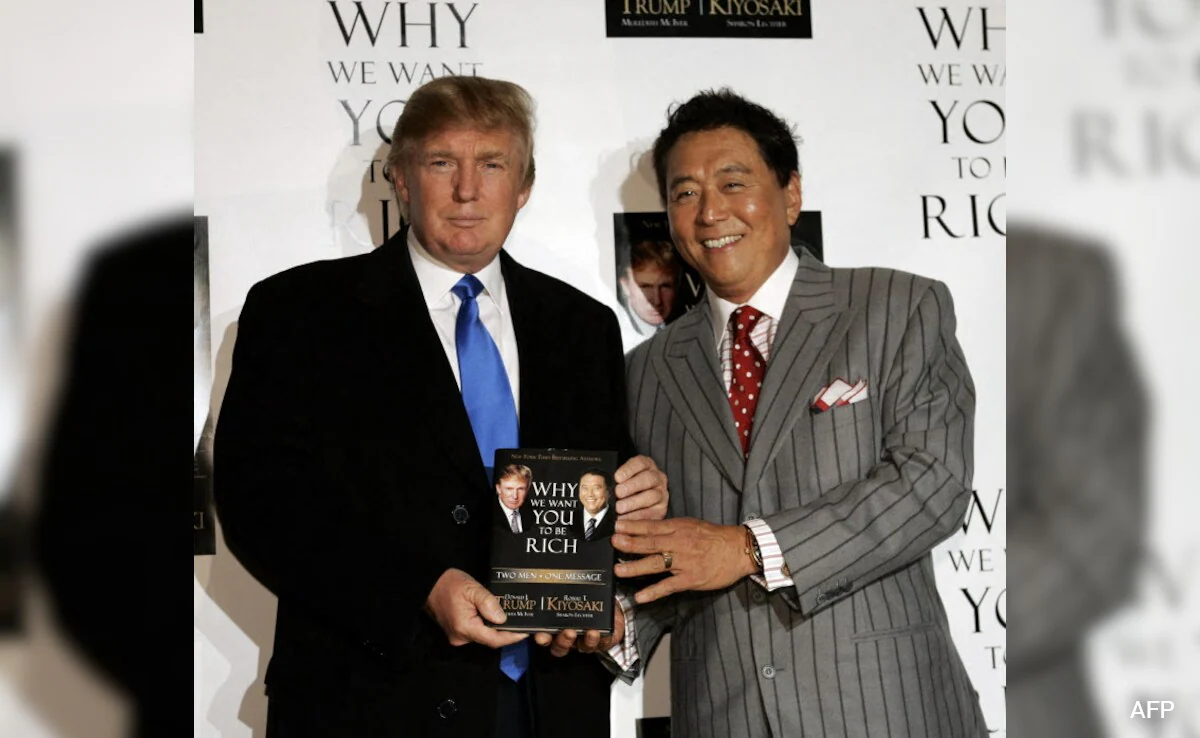
As Pakistan grapples with the economic impact of the Iran war, US industrialist and author of the financial literacy book ‘Rich Dad Poor Dad’, Robert Kiyosaki, pointed to the gaping holes in its propaganda-driven messaging on oil prices by contrasting it with stable fuel prices in India. In a Facebook post, Kiyosaki flagged Pakistan Petroleum Minister Ali Pervaiz Malik’s recent admission about Islamabad lacking even a day’s worth of strategic oil reserves.
Speaking on rising fuel prices in Pakistan during a television interview, Malik pointed out that India is relatively stable compared to Islamabad because of its strategic oil reserves and adequate forex reserves — two factors that absorbed the impact of the oil disruption amid blockades at the Strait of Hormuz.
“Pakistan is not India that can secure oil with one signature,” he said.
What Robert Kiyosaki Said
Kiyosaki pointed out that the reason for such a difference between the two countries is preparation. He said that when New Delhi was amping up its emergency reserves, Islamabad was busy telling the world that its oil supply was “secure and stable”. He even claimed there were long queues at petrol pumps in India.
But despite the tall claims, Kiyosaki pointed out that the impact of the global supply crunch was soon visible in Pakistan, with fuel prices soaring high. In early April, petrol prices witnessed a 43 per cent spike from around PKR 321 to PKR 458 per litre, while diesel rose even more sharply, from PKR 335 to PKR 520, a 55 per cent hike.
The fuel instability was met with massive protests in Pakistan, where businesses warned of collapsing supply chains, and the opposition labelled it a national emergency.
Across the border, Kiyosaki noted that the picture looked quite relaxed, with no fuel price hike even as crude prices climbed to a 4-year high, passing $120 per barrel. He pointed out that New Delhi survived the COVID-19 pandemic, the Russia-Ukraine war and now even the Iran conflict by absorbing the shock and not imposing any dramatic price hikes on consumers.
He argued India has built strategic petroleum reserves that, as even Pakistani officials acknowledged, allow emergency supplies to be released with “one signature” — enough for 60-70 days when combined with commercial stocks. India has also widened its oil supply network, leaning on Russia as a key source while bringing back shipments from Venezuela in 2026.
As one of the world’s largest refining hubs, India absorbed the shock internally. It also adjusted export duties on fuels to protect the domestic supply.
“Here is the difference between the two countries. India built strategic petroleum reserves. 60 to 70 days of emergency supply that can be released with one government decision, “one signature”, as Malik himself acknowledged. And this isn’t something that’s unique. The US has that, China has it, and a lot of the other countries keep strategic reserves,” Kiyosaki wrote.
According to the US author, India, like other global powerhouses, diversified its oil supply network years ago, leaning on Russia as a key source while also resuming shipments from Venezuela in 2026.
“India raised export duties on diesel and aviation fuel to protect the domestic supply. India is the world’s fourth-largest oil refining nation. It absorbed the shock before ordinary citizens felt it,” he said.
“Pakistan produces zero domestic oil. It relies entirely on imports. 90 per cent of those imports flow through the Gulf region – through the same routes the Iran war has disrupted. It has no strategic storage. It has an IMF agreement that it cannot breach. It has limited foreign exchange reserves. When Hormuz partially closed, Pakistan had nothing to fall back on,” he added.
Slamming Pakistan, Kiyosaki exposed the lies perpetrated by Islamabad. He noted, “The minister said India was suffering. He said it confidently. On camera. To the press. The same week, India’s petrol price didn’t move a single rupee. The same week, Pakistan’s diesel price jumped 55 per cent.”
He noted the war did not create this gap, it simply exposed it.
What Pak Minister Said
Pakistan’s Petroleum Minister Ali Pervaiz Malik has blamed the stringent bailout conditions imposed by the International Monetary Fund (IMF) for Pakistan’s current situation.
“India doesn’t just have 600 Arab dollars’ worth of reserves, but they also maintain strategic reserves. This helps them cushion this crisis. Besides, they are not part of the IMF programme, and they tried to insulate themselves by reducing taxation as oil prices soared … they had the fiscal space to do that,” he told a local news channel.
The minister claimed that Pakistan had to speak with the IMF for relief for its people because of the rising oil prices.