

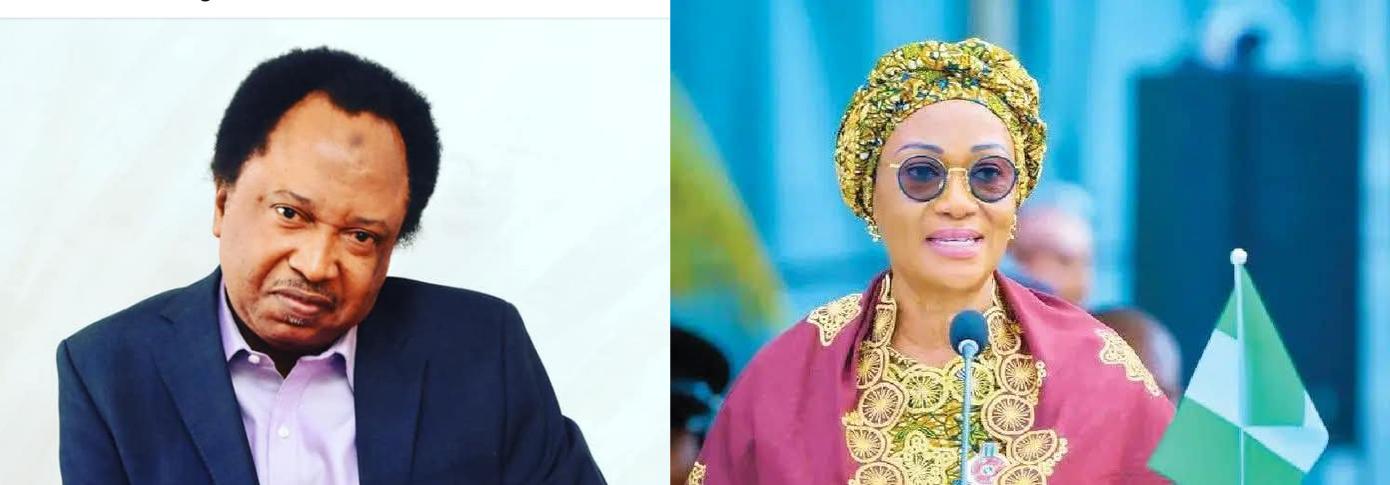

Former Kaduna Central Senator, Shehu Sani, has said that Nigeria has not had a First Lady like Senator Oluremi Tinubu in the Fourth Republic, in terms of public visibility and grassroots engagement.
Sani made the remark on his verified social media handle, where he defended the activities of the First Lady and drew comparisons with previous occupants of the office.
According to him, criticisms directed at the current First Lady often ignore how the office had been perceived and operated in past administrations.
He noted that in earlier years, First Ladies were largely less visible in public life, with limited direct engagement with ordinary citizens, as their roles were often confined to the presidential villa and elite social circles.
Sani also suggested that in some past administrations, First Ladies were more associated with high-level social events and behind-the-scenes influence, rather than structured nationwide outreach programmes.
In contrast, he described Senator Oluremi Tinubu as highly visible and accessible, noting that she frequently visits states and engages directly with women groups and communities across the country.
He said her office has supported interventions in key sectors including education, health, environment, skills acquisition and agriculture, with modest resources deployed to reach vulnerable groups.
Sani argued that even limited but visible contributions to social welfare should be acknowledged, adding that the current approach reflects a more people-oriented engagement compared to the past.
He further maintained that since the eras of former First Ladies such as Victoria Gowon, Maryam Babangida and Maryam Abacha, no First Lady in Nigeria’s Fourth Republic has, in his view, demonstrated similar levels of grassroots visibility and structured outreach as the current occupant of the office.
The comments have continued to generate mixed reactions on social media, with supporters commending Sani’s assessment as fair and contextual, while critics argue that it downplays the contributions of previous First Ladies.
The debate highlights ongoing public scrutiny of the evolving role of the First Lady in Nigeria’s democratic era and the expectations attached to the office.