

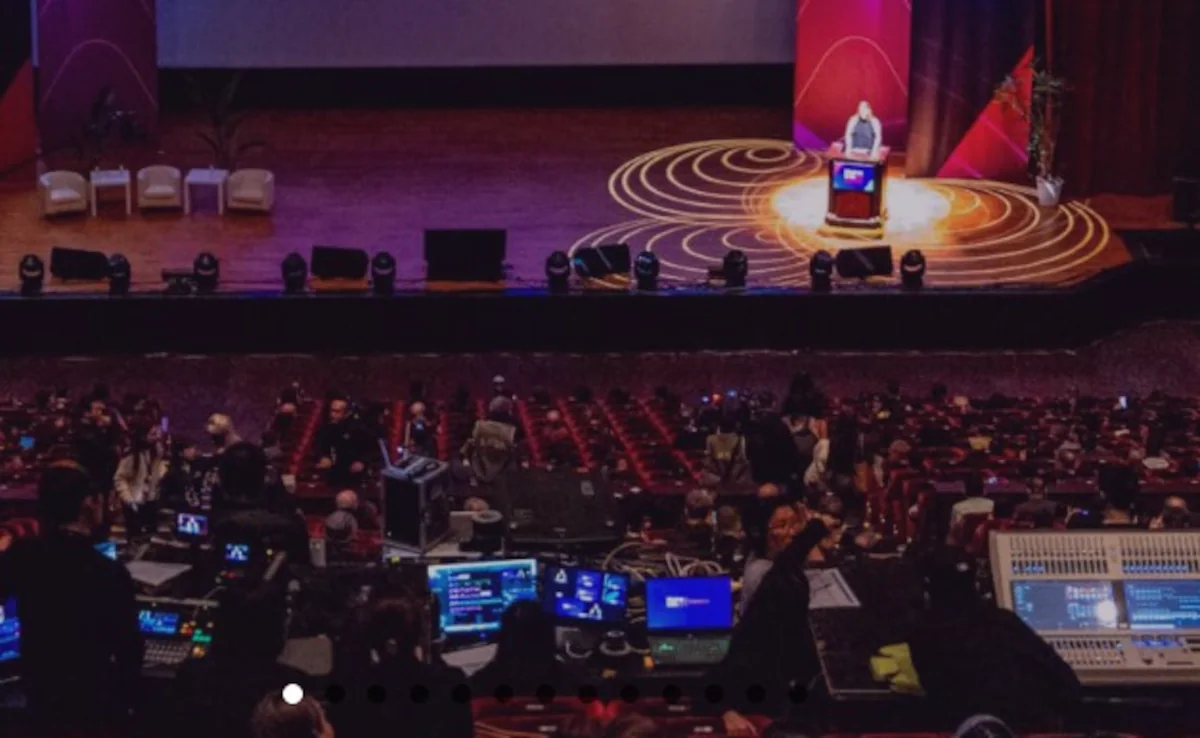
Advocacy group Access Now has said that a major human rights conference was cancelled after Chinese officials pressured the government of Zambia.
In a statement on Friday, Access Now said that the 2026 edition of RightsCon – a long-running conference devoted to digital rights due to kick off in the Zambian capital of Lusaka on Tuesday – was cancelled as Chinese diplomats “were putting pressure” on Zambia’s government over the presence of Taiwanese civil society figures due to attend the conference.
“This development was extremely concerning, and we immediately pushed back,” it said.
The group said that it had been “told informally from multiple sources” that continuation of the event would require having “moderate specific topics and exclude communities at risk, including our Taiwanese participants, from in-person and online participation.”
Following our April 29 announcement, we believe it’s important to be transparent about the context that led to the decision. We want to explain, where we can, why this was made on such short notice, only days before we were set to host RightsCon.
Read: https://t.co/NrQFiz5Ccb pic.twitter.com/JAzGWnDA8t
— RightsCon (@rightscon) May 1, 2026
Access Now co-executive director Arzu Geybulla said that concerns escalated after organisers became aware that Taiwanese participation had drawn attention from Chinese authorities.
“Chinese authorities were, apparently, trying to influence the Zambian government’s approach to Taiwanese participants’ movement across the border. Soon after, the Zambian government publicly referred to ‘diplomatic protocols’ and ‘pending administrative and security clearances’ of participants as reasons for their disrupting RightsCon,” Geybulla added.
A week before the planned conference dates, Zambian authorities announced the postponement, citing unresolved “administrative and security clearances” for some speakers and participants. The country’s technology and science minister later said “postponement was necessitated by the need for comprehensive disclosure of critical information relating to key thematic issues proposed for discussion during the Summit.”
The Open Culture Foundation, a Taiwanese civil society group expected to attend, said it was warned that Taiwanese participants could face entry issues into Zambia due to possible concerns raised by the Chinese Embassy. Delegates were advised to pause travel plans.
It is with heavy hearts that we share: RightsCon will not proceed in Zambia or online. pic.twitter.com/Ut9Y7ohytT
— RightsCon (@rightscon) April 29, 2026
The disruption also affected other rights-related programming. World Press Freedom Day, an annual UN-backed event planned to coincide with RightsCon in Zambia, has now largely been shifted to Paris or moved online.
Since 2011, RightsCon has grown into a key global forum on digital rights that draws thousands of participants. This year, organisers were expecting around 2,600 attendees from over 750 organisations along with participation from major companies like Meta, Microsoft and Alphabet.
The previous edition was held in Taipei, but according to Geybulla, this is the first time the organisers have faced “blatant pressure” from the Chinese government.
Zambia’s strong political and economic relationship with Beijing offers key context. According to WIRED, China is the country’s largest creditor and Chinese companies have been central to several major infrastructure projects. Just days before the conference was called off, the Zambia Development Agency signed a $1.5 billion agreement with a Chinese state-backed construction firm.