
ICPC Not a Tool for Political Witch-Hunting, Recovers ₦130bn from ₦35trn Projects — Chairman Aliyu

ICPC Not a Tool for Political Witch-Hunting, Recovers ₦130bn from ₦35trn Projects — Chairman Aliyu
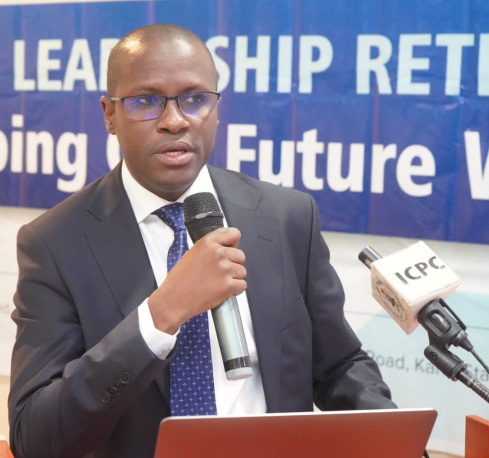
The Chairman of the Independent Corrupt Practices and Other Related Offences Commission (ICPC), Musa Adamu Aliyu, has firmly dismissed claims of political witch-hunting, insisting that the Commission operates strictly within the law, even as he revealed that it has recovered over ₦130 billion from public projects valued at more than ₦35 trillion.
Aliyu made the clarification during an interview with RFI Hausa, monitored by TimesNG, where he outlined the Commission’s achievements, addressed public concerns, and reaffirmed its commitment to impartiality in the fight against corruption.
According to him, ICPC’s activities are guided by evidence and judicial processes, not political considerations.
“It is not true that the ICPC is used to advance anyone’s political aims. Our duty is to present evidence; the court gives the final ruling. To suggest the Commission is a tool in that process is simply wrong,” he said.
₦35trn Projects Oversight, ₦130bn Recovered
Aliyu disclosed that the Commission has monitored constituency and other public-funded projects worth over ₦35 trillion, ensuring accountability and value for money.
“Without our oversight, it is impossible to say what would have become of these projects. We have also recovered funds that, but for our intervention, would have vanished,” he stated.
High-Profile Recoveries and Court Actions
The ICPC boss highlighted a major asset recovery in Abuja, involving land earmarked for 900 housing units, where a $64 million loan had been secured without any development.
“We arraigned the suspects, and the court has now ordered the property to be sold to private investors for development,” he explained, noting that such interventions are aimed at restoring public value.
No Sacred Cows in Anti-Corruption Fight
Responding to allegations of selective prosecution, including claims involving former Kaduna State Governor Nasir El-Rufai, Aliyu stressed that the Commission treats all cases based on merit.
“Where there is evidence, we investigate and, if warranted, bring charges. The ICPC wins some cases and loses others. That is the constitutional standard by which we operate,” he said.
Public Attitude to Corruption Improving
Aliyu also pointed to changing public behaviour, citing 2024 reports by the United Nations (UN) and the National Bureau of Statistics (NBS) which indicate increasing resistance to bribery.
“In the North-West, about 76 per cent refused to give bribes, while in the North-East, 60 per cent did the same. These figures suggest attitudes are shifting,” he noted.
He added that more citizens are now reporting corruption cases, contributing to increased investigations.
Technology, Not Constitutional Change, Key
Looking ahead, the ICPC chairman emphasised the importance of technology, particularly artificial intelligence, in strengthening anti-corruption efforts.
“We must embrace modern technology, especially artificial intelligence, in investigations. Used properly, it can transform how we detect, trace, and prove wrongdoing,” he said.
He, however, argued that the fight against corruption ultimately depends on individual choices rather than constitutional amendments.
“What is required, above all, is for Nigerians to look inward and choose to do what is right. If we do that, corruption will diminish,” he added.
Commitment to Rule of Law
Aliyu reiterated that ICPC remains committed to transparency, accountability, and due process, stressing that the Commission’s mandate is to uphold the rule of law and protect public resources without bias.
The ICPC continues to play a pivotal role in Nigeria’s anti-corruption framework alongside other agencies, as authorities seek to strengthen governance and public trust.
By TimesNG