

Private and non-private sector leaders within the agriculture and meals sector have indicated huge hole in meals safety in Nigeria, urging the governments in any respect ranges to take pressing steps to avert main crises forward.
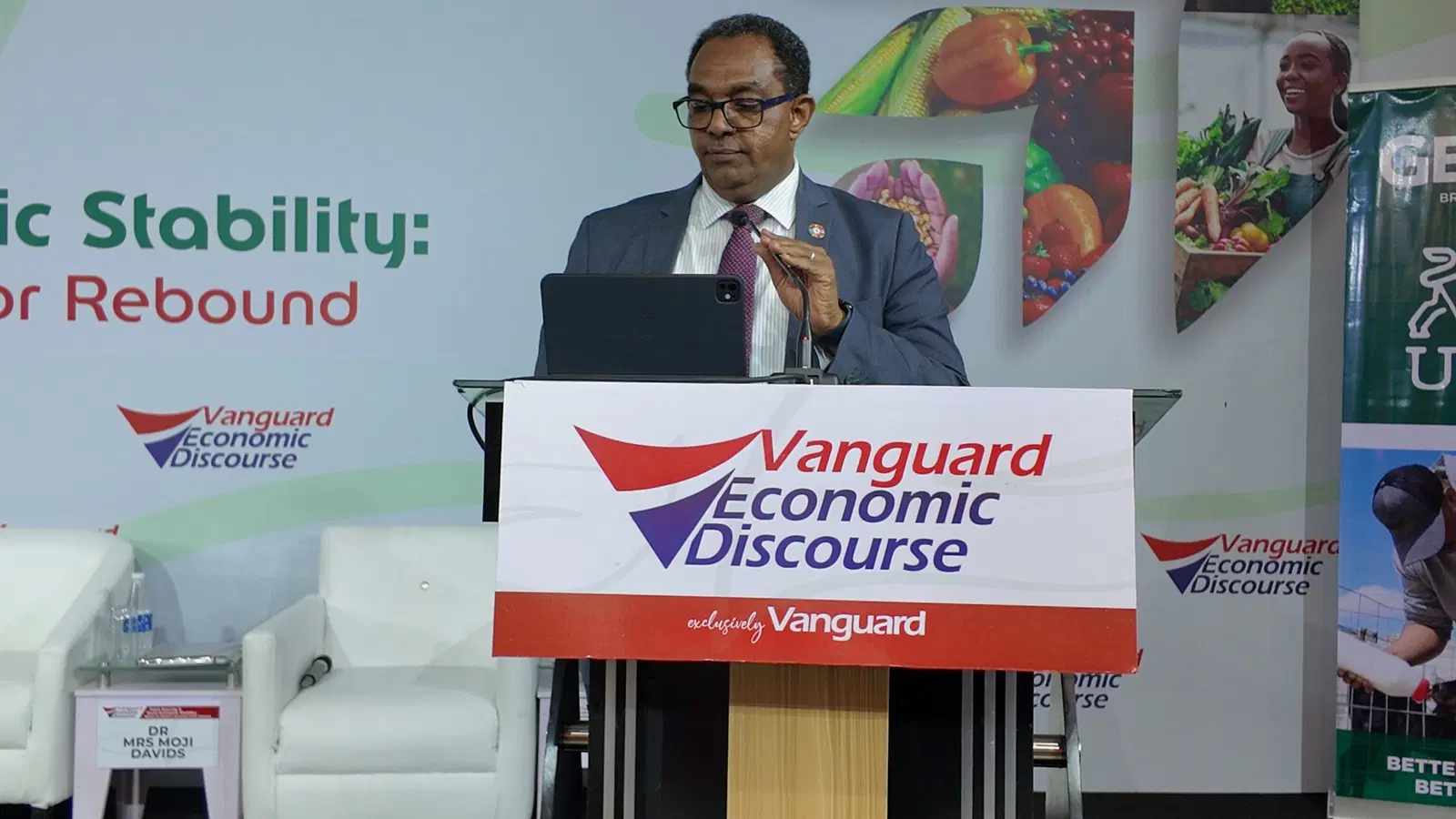
The leaders drawn from worldwide and native establishments and institutions spoke on the 2026 Vanguard {Economic} Discourse held yesterday in Lagos, themed, “Meals Safety and Socio-economic Stability: Choices for Nigeria’s Agriculture Sector Rebound”.
In the meantime, the United Nations’ Meals and Agriculture Organisation, UN-FAO, has already projected that the variety of Nigerians going through starvation may attain 35.7 million by August this yr.
However the Worldwide Fund for Agricultural Improvement, IFAD, has suggested that the youth and personal sector stay key to ending Nigeria’s meals disaster.
The Federal Authorities, FG, is saying that its new coverage set to develop livestock sector to $74billion, whereas all the agric worth chain is anticipated to file about $1 trillion within the subsequent 10 years, urging the youth and girls to key into the growth.
However the FAO issued a stark warning that Nigeria should urgently overhaul its agricultural financing and know-how adoption to avert a looming disaster for over 40 million farming households.
Talking on the Vanguard Newspaper {Economic} Discourse held in Lagos yesterday, themed, “Meals Safety and Socio-economic Stability: Choices for Nigeria’s Agriculture Sector Rebound”, the FAO Consultant in Nigeria and to ECOWAS, Dr. Hussein Gadain, acknowledged: “Meals safety is way over an agriculture consequence; it’s a pillar of nationwide safety, macroeconomic stability, social cohesion, and peace.
“In Nigeria, fragile meals methods—affected by battle, local weather shocks, and {economic} pressures—translate into family vulnerability, deepening poverty, rising social tensions, and inflationary pressures within the economic system.”
Addressing the speedy threat to the inhabitants, Gadain warned: “In Nigeria, between 27.2 and 35.7 million persons are experiencing acute meals insecurity in 2025 to August of 2026, concentrated within the North East, North West, and North Central zones, the place insurgency, banditry, farmer-herder conflicts, and competitors over land and water proceed to undermine crop and livestock production.”
On the huge structural commerce imbalance draining the nation’s international reserves, the FAO chief famous: “Between 2016 and 2019, Nigeria’s cumulative agricultural imports have been estimated at about N3.35 trillion—roughly 4 occasions greater than agricultural exports of about N803 billion throughout the identical interval. This imbalance alerts each demand pressures and missed alternatives for home worth addition, competitiveness, and export progress.”
To reverse this deficit, he argued that the main target should shift to the nation’s 40 million agricultural households.
He defined additional: “Nationwide knowledge point out greater than 40 million agricultural households, with the bulk engaged in crop production (about 36 million), alongside poultry (about 1.45 million) and fish production (about 600 thousand). Any significant rebound, due to this fact, have to be designed to work for smallholders—ladies and men—via improved productiveness, danger administration, inclusive markets, and powerful rural providers”.
Advocating for a “New Deal” for these farmers, Gadain emphasised, “A sector can not rebound with out entry to finance. Smallholder farmers, pastoralists, and agri-preneurs require inexpensive credit score, insurance coverage, and digital {financial} providers to take a position, develop, and handle danger. Scaling climate-smart agriculture, bettering entry to higher seeds, animal breeds, fertilizers, and water administration is important.”
Outlining the trail to international competitiveness, he acknowledged: “Precedence actions embrace upgrading market infrastructure, bettering logistics and chilly chains, imposing high quality and sanitary requirements, and increasing agro-processing to shift from uncooked commodity exports to value-added merchandise. Nigeria is nicely positioned to play a management position underneath the African Continental Free Commerce Space (AfCFTA) by scaling aggressive production, supplying regional worth chains, and serving as a processing and distribution hub for West and Central Africa.”
He concluded by stressing that the time for motion is now: “The rebound we search is inside attain whether it is intentional, inclusive, climate-smart, and people-centered. We should seize this second to show in the present day’s challenges into tomorrow’s alternatives, guaranteeing that agriculture as soon as once more turns into a driver of prosperity, dignity, and stability for all Nigerians.”
Youths, personal sector key to ending Nigeria’s meals disaster — IFAD
Talking on the occasion, the Nation Director of the Worldwide Fund for Agricultural Improvement (IFAD) in Nigeria, Mrs Dede Ahoefa Ekoue, recognized youth engagement and stronger personal sector participation as essential to ending Nigeria’s deepening meals disaster, urging an pressing and coordinated transformation of the nation’s agri-food system.
Ekoue mentioned Nigeria stands at a pivotal second that requires daring motion to unlock alternatives throughout the meals system.
In response to her, whereas meals insecurity stays a significant problem, it additionally presents a pathway for {economic} progress, job creation and funding if correctly harnessed.
Ekoue disclosed that IFAD has invested roughly $1.8 billion in Nigeria, supporting over 4 million households and enabling smallholder farmers to transition from subsistence agriculture to extra worthwhile participation in structured worth chains.
She confused that smallholder farmers stay central to the nation’s meals safety, noting that their contributions underpin nationwide agricultural output.
Highlighting the position of demographics, Ekoue described Nigeria’s massive youth inhabitants as a significant asset in remodeling agriculture, noting that younger folks possess the innovation, vitality and technological capability wanted to drive change throughout the sector.
She acknowledged: “The transformation we search won’t occur with out the youth. They’re key to constructing a food-secure future.” She additionally emphasised the indispensable position of the personal sector, calling for insurance policies and frameworks that scale back funding dangers and appeal to extra funding into agriculture.
“We should make the sector extra engaging and simpler for traders. With out sturdy personal sector involvement, reaching meals safety will stay troublesome,” she added.
Ekoue defined that agriculture ought to now not be considered narrowly as farming however as a broad worth chain that features processing, storage, transportation, advertising and waste administration. She famous that this method opens a number of entry factors for youth employment and enterprise growth past major production.
She cited IFAD-backed initiatives such because the Worth Chain Improvement Programme, which hyperlinks farmers in cassava and rice production on to markets, thereby decreasing post-harvest losses and bettering incomes.
As well as, she pointed to youth incubation programmes within the Niger Delta, which has educated over 26,000 younger folks in agribusiness, combining technical experience with entrepreneurship expertise.
Ekoue concluded by stressing the necessity for stronger alignment amongst authorities, traders, farmers and growth companions, noting that weak linkages stay a significant constraint to progress.
“To attain actual transformation, we should shut the gaps and work collectively. Connection and collaboration are important to constructing a resilient and productive agri-food system,” she acknowledged.
New coverage will develop livestock sector to $74bn — Livestock Minister
On the backdrop of those the Minister of Livestock Improvement, Alhaji Idi Muktar Maiha, has mentioned new insurance policies launched by the Federal Authorities will develop Nigeria’s livestock sector from its present worth of $32 billion to $74 billion throughout the subsequent 10 years.
Talking on the 2026 Vanguard {Economic} Discourse, Maiha who was represented by Engr. Maruf Ajenifuja, confused that livestock growth is central to addressing meals insecurity and stabilising the economic system.
He acknowledged: “At this time, the difficulty earlier than us is evident: how can we reposition Nigeria’s agriculture to, not solely feed our rising inhabitants, but in addition stabilise our economic system and unlock inclusive progress potentials?”
He added: “Meals safety have to be handled not simply as an agricultural precedence, however as a pillar of nationwide safety and socio-economic stability.”
Highlighting international pressures, the minister mentioned: “Throughout the globe, meals methods are present process profound stress. Climatic variability, inflationary pressures, and fast inhabitants progress are reshaping how nations produce, distribute, and eat meals.”
Sponsored
In response to him, Nigeria’s challenges are worsened by inside constraints.
He acknowledged: “In Nigeria, these international challenges are compounded by home structural points corresponding to low productiveness, weak worth chains, infrastructure deficits, and safety considerations in key farming areas.”
Maiha emphasised the {economic} significance of agriculture, noting: “Agriculture contributes about 24 to 26 % of our GDP and employs near 35 to 40 % of the labour power, making it one of many largest sources of livelihood within the nation. But, we nonetheless face persistent meals insecurity.”
He warned: “Over 25 million Nigerians are vulnerable to acute meals insecurity, whereas meals inflation has remained above 30 %, eroding buying energy and deepening poverty.”
On livestock, the minister mentioned the sector is essential to the transformation agenda. “Livestock contributes about 5 to eight % of Nigeria’s GDP and accounts for almost one-third of agricultural GDP. Past these figures, it performs a significant position in vitamin, notably in addressing protein deficiency.”
He famous that consumption ranges stay low: “Common per capita animal protein consumption in Nigeria is about 7 to 10 grams per day, far beneath the really useful minimal of 20 grams.”
Regardless of massive animal numbers, productiveness stays weak. “Nigeria has about 58.7 million cattle, 60.2 million sheep, 107.8 million goats, and 695 million chickens. But productiveness is low because of constraints in feed availability, genetics, animal well being methods, and market infrastructure.”
To deal with this, Maiha mentioned the federal government has launched a complete reform framework. “Now we have instituted the Nigerian Livestock Development Acceleration Technique with 10 pillars designed to remodel the sector from $32 billion to $74 billion by 2035.”
He defined key priorities: “Feed and fodder growth is essential as a result of feed accounts for about 70 % of production prices. We should spend money on cultivated pastures, silage methods, and built-in crop-livestock fashions.”
He additionally confused the necessity to strengthen worth chains. “Submit-harvest losses in Nigeria are estimated at 30 to 40 % for perishable commodities. This represents vital {economic} losses that have to be addressed.”
On financing and safety, he mentioned: “Entry to agricultural financing stays a significant problem, whereas farmers and pastoralists can not function successfully in insecure environments. These points have to be tackled urgently.”
The minister highlighted the position of know-how: “Digital options corresponding to precision farming, livestock identification methods, illness surveillance instruments, and digital extension providers can rework agriculture.”
Calling for funding, Maiha mentioned: “The dimensions of transformation required can’t be pushed by authorities alone. We’d like sturdy personal sector participation and large-scale funding in agriculture.”
He urged speedy motion: “It’s time to transfer from dialogue to motion. This should translate into investment-ready tasks, strategic partnerships, and measurable outcomes.”
With Nigeria’s inhabitants projected to exceed 250 million by 2030, he warned of rising demand pressures. “If we act decisively, agriculture can develop into a driver of {economic} diversification, mass employment, and nationwide safety. Failure to behave will lead to rising starvation, poverty, and social instability.”
Don’t miss $1trn agro growth, Agric Minister expenses youths, ladies
In the meantime, the Minister of Agriculture and Meals Safety, Senator Abubakar Kyari, has urged Nigerian youths and girls to not miss out on the $1 trillion agribusiness growth projected for Africa by 2030, calling on them to benefit from rising alternatives within the sector and place themselves for future wealth creation.
Talking on the occasion Kyari, who was represented by Prof. Eustace Iyayi, confused that “the longer term belongs to those that begin now,” including, “a nation with over 70 % youth inhabitants has an asset to deploy.”
He known as on younger Nigerians and girls throughout communities to key into agribusiness, insisting that “should you’re searching for the sector to spend money on, that’s agriculture.”
Highlighting the size of alternative, he mentioned: “It is a signal of a convincing projection that the dimensions of meals and agribusinesses in Africa by the yr 2030 will likely be over $1 trillion. The nation is advising the youths in the present day. The long run belongs to those that begin now.”
Nonetheless, the minister raised considerations concerning the sector’s weak financing construction, noting that “the estimated value of financing agriculture via {financial} establishments, which stands at about N3.4 million or N2 million, represents lower than 4 % of the sector’s contribution to GDP.”
He warned that “this shortfall highlights the huge deficits in agricultural financing, which proceed to hinder progress and funding within the business.”
Regardless of the challenges, Kyari maintained that the federal government is taking decisive steps to reposition agriculture as a significant driver of {economic} progress.
He disclosed that “the Federal Ministry of Agriculture and Meals Safety is implementing flagship tasks in collaboration with states, particularly a $538 million Particular Agro-Industrial Processing Zone initiative, the biggest in Africa.”
Elaborating on this effort through the panel session on the occasion, the minister mentioned, “The venture which is being at the moment applied in eight places will increase to 27 extra states, creating hubs the place traders can set up processing crops and seamlessly connect with markets.” He added that “to enrich these efforts, the ministry can be investing in rural infrastructure, together with street building to hyperlink farms with markets,” noting that “by offering catalytic funding and alluring personal sector participation, the federal government is constructing an funding platform that transforms agriculture right into a driver of business progress.”
Kyari described the initiatives as transformative, stating: “These initiatives mark a daring step towards meals safety, {economic} empowerment, and sustainable growth.
As coverage leaders, our position is to set a transparent course that empowers states to align with nationwide priorities and amplify impression on the grassroots stage.”
Putting sturdy emphasis on youth inclusion, he mentioned: “One essential space of focus is youth engagement. For the primary time in a decade, the minister has appointed a particular assistant devoted to youth and agribusiness, signaling a renewed dedication to harnessing the vitality, creativity, and potential of our younger inhabitants.”
He continued: “This step ensures that youth are usually not simply included however prioritized in shaping the way forward for meals safety and agricultural transformation,” including that “with over 70 % of our inhabitants made up of youth, the chance earlier than us is immense.”
Kyari additional famous: “By channeling their dynamism into agribusiness, we will rework this demographic into a strong asset—the heartbeat of our inexperienced revolution,” stressing that “this imaginative and prescient positions youth because the spine of sustainable progress, guaranteeing meals safety, {economic} empowerment, and a brighter future.”
On assist for farmers, Kyari revealed that “in response to rising enter prices threatening smallholder farmers, the Federal Ministry of Agriculture and Meals Safety has distributed over two million packs of fertiliser via state governments.”
He defined that “this partnership method acknowledges that land belongs to the states and agriculture falls underneath the concurrent legislative checklist.”
In response to him, “by empowering states, that are closest to the farmers, the ministry ensures that assist reaches those that want it most, strengthening meals production and rural livelihoods.”
Reiterating the broader imaginative and prescient, Kyari concluded: “If we succeed, this won’t simply be a coverage achievement however the circle of fortune that defines our nation’s prosperity for generations to come back.
SPONSORED