

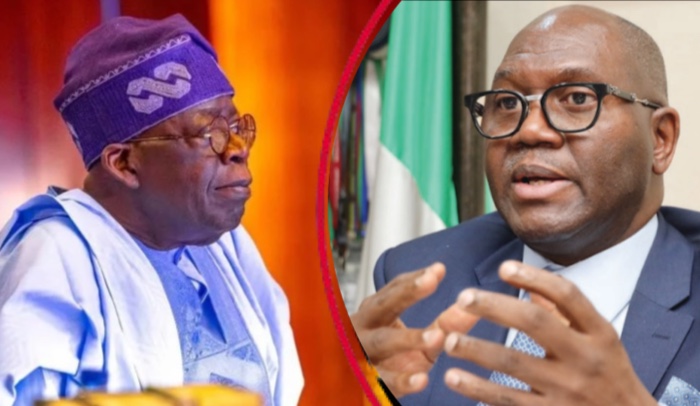
The Executive Chairman of the Lagos State Internal Revenue Service (LIRS), Dr. Ayodele Subair, has said the remarkable growth of tax administration and internally generated revenue in Lagos State can be traced to the bold reforms initiated by President Bola Tinubu during his tenure as governor of the state.
Subair stated this at the Gala night organised to close the 159th meeting of the Joint Revenue Board (JRB) held in Lagos, where tax administrators and revenue stakeholders from across the country gathered for four days to deliberate on ways to strengthen tax systems, improve compliance, and deepen revenue generation nationwide.
According to him, the decision by Tinubu to grant operational autonomy to the Lagos State Internal Revenue Service years ago laid the foundation for the success story that has since become a model for several states in Nigeria.
He said, “This story of taxation in Lagos was started seriously by our present President, Asiwaju Bola Ahmed Tinubu, who deemed it fit to give autonomy to the Lagos State Internal Revenue Service.
“From then on, things changed. Things are still evolving and changing because he handed over the baton to very serious governors thereafter. His model is copied in most of the states in Nigeria. I think the President deserves applause. We are seeing the benefits of that vision that this great Nigerian had, and we all pledge to continue.”
Subair noted that Lagos had sustained the momentum through successive administrations, with visible investments in transportation, urban renewal, and other public infrastructure funded largely through taxes paid by residents.
The LIRS chief also commended Governor Babajide Sanwo-Olu for delivering robust infrastructure development. He noted that in addition to significant investments in education, health, housing, and urban renewal projects, the multimodal transportation system, which includes rail, road, and water transport, is a key part of the current administration’s legacy.
He said, “Governor Sanwo-Olu is doing a great job. This administration is building the multimodal transport system, as witnessed by the JTB members. Apart from the rail, you also have road transport through the BRT, and then we have the ferry service.
“We launched all sorts of projects, and we are soon going to have electric ferries and boats that will move people all over. Also, the Red Line is supposed to be fully in place within one year.
“All this would never have been possible without the good people of Lagos paying their taxes. When you pay your taxes, there is a high level of correlation between the payment of taxes and development.
“In other countries, people pay a lot of taxes, some up to 50 to 60 per cent of their earnings, and it is a way of life for them. In Nigeria, they are trying, but the benefits of paying taxes can only come when everybody plays their own part.”
The LIRS chairman added that voluntary compliance in Lagos had continued to rise because taxpayers could clearly see how their contributions were being utilised.
He said, “In Lagos especially, tax compliance is moving at a much higher pace than that of the rest of the country. That is because people can see where their money is going. You can see the good projects that are coming. You can see the good works of the government of Lagos.”
The 159th meeting of the Joint Revenue Board, formerly known as the Joint Tax Board, ran from April 20 to April 23 in Lagos.
The board comprises the Executive Chairman of the Nigeria Revenue Service, chairmen of the 36 state internal revenue services, and the Federal Capital Territory and representatives of strategic government agencies, including the Federal Ministry of Finance, National Identity Management Commission, Revenue Mobilisation, Allocation and Fiscal Commission, Nigeria Customs Service, Nigeria Immigration Service, and the Federal Road Safety Corps
The meeting featured various activities, including a session of the Finance and General Purpose Committee, followed by meetings of the Education Committee on the second day. Delegates also took part in an excursion to inspect major infrastructure projects carried out by the Lagos State Government. They rode the Lagos Blue Line Rail from Marina to Mile 2 and visited the iconic Eko Atlantic City.
Dike Onwuamaeze
Follow us on: