

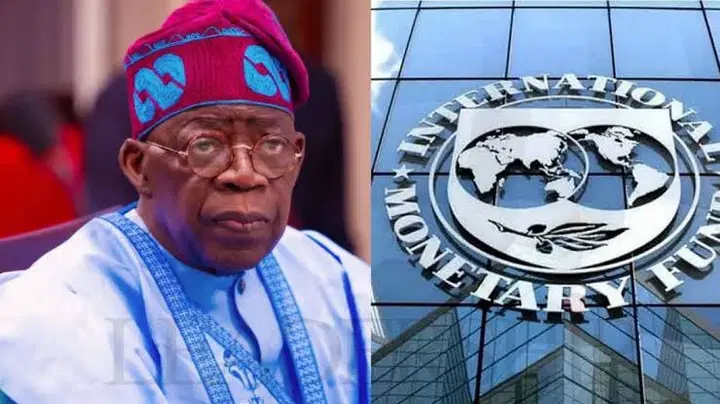
The Worldwide Financial Fund, IMF, has warned that Nigerians could face more durable {economic} situations within the close to time period as rising meals and transportation prices proceed to squeeze family incomes amid lingering world shocks.
The fund additionally warned of a rising debt burden for the nation, as Nigeria’s crude oil grades bought above $113 per barrel on the worldwide market, yesterday, elevating recent optimism over stronger authorities income.
The surge in oil costs comes as uncertainties proceed to characterise the peace talks between the USA and Iran over the Center East warfare, creating the potential of sustained excessive earnings for the nation.
On the present degree, Nigerian crude trades about $53 per barrel above the $60 benchmark within the 2026 Funds. Knowledge from the oil market confirmed that Brass River and Qua Iboe grades bought for $113.82 and $113.72 per barrel, respectively
Costs, which began the 12 months at about $64.85 per barrel and rose to $68.05 by the tip of January, have climbed sharply amid geopolitical tensions.
Analysts say Nigeria may earn vital oil income from the battle so long as hostilities persist.
Director of the African Division on the IMF, Abebe Selassie, at a press convention on the {Economic} Outlook for Sub-Saharan Africa, through the ongoing Spring Conferences of the World {Bank}/IMF in Washington DC, yesterday, stated the impression of the continued disaster was already being felt strongly throughout the area, together with Nigeria, with vital strain on the price of residing.
In line with him, “The speedy impact will probably be fairly a little bit of strain, together with on meals safety, both by means of the restricted availability of fertilizer, costly fertilizer, or much more instantly, as transportation prices have gone up, it’s going to lift the price of meals and so fairly a little bit of dislocation.
“We’re already seeing numerous enhance in transportation costs that individuals are dealing with already. Transportation prices are very excessive for individuals in city areas, rural areas much more so.”
Highlighting the rising pressure on households, Selassie stated: “We’re already seeing fairly a little bit of a pinch from the disaster on individuals. It’s making life troublesome for individuals.”
On how governments, together with Nigeria’s, ought to reply, he burdened the significance of sustaining reform momentum regardless of restricted fiscal house.
“What’s it that governments can do given the restricted fiscal house? First level I must make is we shouldn’t underestimate simply how a lot governments have completed to attempt to place themselves higher to climate extra of those shocks,” he stated.
He famous that current reforms have helped stabilise economies: “Steps have been taken to stabilise debt, to scale back fiscal deficits. In order that stabilization, I believe, helps now when one other shock like this comes, as a result of there’s a little bit extra scope to attempt to defray the fee.”
Nevertheless, he cautioned towards abandoning ongoing reforms, saying: “What we’re pleading is that these interventions are per the medium-term aims that nations have, and that they’re not thrown off beam by this as a result of that will be a double whammy for nations.”
On Nigeria’s debt profile, Selassie emphasised prudent administration fairly than a shift in borrowing technique.
“Whether or not they borrow externally or domestically must be seen in totality, what’s actually vital is making an attempt to maintain the extent of debt as manageable as doable relative to debt service capability.
“Nigeria has a improbable Debt Administration Workplace. It depends upon the macro context.”
On fiscal priorities, he suggested governments to deal with defending crucial spending: “Within the brief time period, the concept is to reprioritise spending, shield precedence spending and likewise to enhance the effectivity of spending.”
He additional burdened the necessity to increase revenues, noting: “Home income mobilisation, tax coverage, tax effectivity and the capability to elaborate coverage, but additionally implement coverage” are crucial.
Selassie additionally underscored the significance of public engagement, stating: “All of that can require troublesome discussions, and communication is vital. Partaking with stakeholders is vital.”
On broader structural reforms, he stated know-how and commerce may assist resilience. “We’re already seeing efforts by governments to make use of AI to enhance tax methods, to enhance service supply, managed nicely, [it] ought to assist the area converge quicker.”
He additionally pointed to commerce integration challenges, noting that whereas progress has been made underneath the African Continental Free Commerce Space, “there are key negotiations to be concluded and that limits the effectiveness of commerce as a shock buffer.”
Reaffirming IMF’s readiness to assist nations, he stated: “the IMF is the establishment that nations flip to at occasions like this. We’re geared as much as see how we are able to assist nations as shortly as doable.”
Flags rising debt burden, says debt-to-GDP seen at 33.1% by 2027
In the meantime, the IMF has additionally projected that Nigeria’s debt-to-GDP ratio will rise to 33.1 p.c in 2027, regardless of a modest downward revision from its earlier estimate of 35.3 p.c. The determine stays larger than the 32.3 p.c projected for 2026.
The projection is contained within the Fund’s newest Fiscal Monitor Report launched in Washington. It comes as Nigeria’s whole public debt rose to N159.27 trillion on the finish of the fourth quarter of 2025, based on the Debt Administration Workplace, from N153.29 trillion within the earlier quarter.
It warned of a deteriorating fiscal outlook globally, noting that rising geopolitical tensions, together with the Center East battle, may additional pressure public funds by means of larger gas and meals costs, tighter {financial} situations, and elevated defence spending.
“International debt-at-risk three years forward now stands close to 117 p.c of GDP, underscoring heightened draw back dangers,” the IMF stated.
Talking on the report, IMF Director of Fiscal Affairs, Rodrigo Valdés, urged governments to rebuild fiscal buffers and keep away from delaying robust choices.
“Disaster, in fact, require emergency assist and other people deal with the disaster, however the capacity to reply actually depends upon pre-existing fiscal house, and too typically, the wanted consolidation is postponed,” Valdes stated
He added that nations should strengthen income mobilisation and keep away from insurance policies that might worsen fiscal dangers.
“It will make simply tougher the central {bank} job by way of inflation management,” Valdes stated, warning towards broad-based subsidies which might be “fiscally pricey, regressive, and arduous to unwind.”
The contrasting developments spotlight Nigeria’s delicate fiscal place the place a possible oil windfall presents short-term reduction, whilst structural debt pressures proceed to construct.
Analysts/Specialists react
Reacting on the rising oil worth and Debt to GDP ratio, David Adonri, Analyst and Govt Vice Chairman of Highcap Securities Restricted, stated: “ Debt to GDP ratio is a vital metric for measuring sustainability however extra essential is the Debt Service Ratio. Nigeria’s Debt to GDP ratio of 33.1 p.c as projected shouldn’t be an overarching fear however will the economic system have the revenue capability to service debt at that degree?
“Nigeria is in debt lure. There could also be no profit from rising crude oil worth because the windfall could go into international debt servicing or expended on consumption. The windfall could also be diverted to expenditures not supplied for within the appropriation act. I will probably be completely happy if authorities utilises the windfall to finance production infrastructure for capital items and armament production however I’m very skeptical.”
Sponsored
Additionally reacting, Economic system & Communications professional, Clifford Egbomeade, stated: “The IMF’s projection of a 33.1 p.c debt-to-GDP ratio by 2027 will, in sure quarters, be cited as proof of fiscal prudence. In comparison with a worldwide common, the IMF warns is heading towards 100% of GDP by 2029, Nigeria’s numbers seem manageable. However that comparability, whereas reassuring, mustn’t obscure the extra vital home image.
“The extra instructive measure just isn’t the ratio itself however what underlies it. Nigeria’s GDP is considerably buoyed by an off-the-cuff economic system that contributes little to authorities income. Debt serviceability, due to this fact, depends upon a slender formal tax base. With whole public debt already at N159.27 trillion as of This fall 2025, a N14.6 trillion enhance year-on-year, and the administration in search of $6 billion in further exterior borrowing, the fiscal place warrants cautious administration going ahead.”
Persevering with, he stated: “The 2027 timeline can also be notable. It coincides with a basic election, a interval that traditionally exams fiscal self-discipline in lots of rising economies, Nigeria included.
Nigerian crude grades Brass River and Qua Iboe buying and selling above $113 per barrel towards a 2026 price range benchmark of $60 represents a big income alternative. Mixed with production restoration to 1.8 million barrels per day and rising demand from Asian consumers equivalent to Japan, who’re redirecting purchases away from Center East provide disrupted by the Iran-Israel battle, the situations for a significant fiscal increase are current.
“The precedence now could be guaranteeing that the windfall is deployed with self-discipline, channelled towards deficit discount, social spending, and infrastructure fairly than absorbed by recurrent expenditure.
Production consistency stays the underlying variable. Nigeria’s oil sector has traditionally underperformed its quotas as a result of pipeline infrastructure challenges and operational losses.
Addressing these constraints is what converts a beneficial worth surroundings into sturdy, people-centred {economic} outcomes.”
Additionally reacting, the Nationwide President of the Oil and Gasoline Companies Suppliers Affiliation of Nigeria, OGSPAN, Mazi Colman Obasi, stated: “There isn’t any doubt that Nigeria may witness a surge in oil income above projections within the 2026 price range, because the Center East battle continues to disrupt world provide and drive-up costs.
“Nevertheless, Nigeria must also be ready to pay extra for petroleum merchandise. Refiners, together with the Dangote Petroleum Refinery, which incur larger prices in procuring and refining crude oil, are prone to cross these prices on to shoppers by means of larger costs.
“This may impression inflation and worsen poverty, particularly because the Federal Authorities stays against subsidising petroleum merchandise. The price of transporting items and other people can also be anticipated to rise, additional deepening the hardship Nigerians are at present experiencing,” he added.
These assaults elevate
questions on intent and response. President Bola Tinubu should resist deciphering insecurity by means of a political lens, prioritizing lives over re-election. Concurrently, corruption inside the safety structure should be addressed. Past funding, strict transparency and accountability are important. A complete technique combining political will with institutional reform is the one manner to make sure lasting peace.
—Kingsley Chikwendu,Journalist
The killings in Jos are exhausting; it looks like a cycle that by no means ends. Whereas the President’s go to exhibits concern, Nigerians want greater than acknowledgment after the very fact. We want prevention, not simply reactions. Safety should be community-focused, with actual accountability for misplaced lives. Till security is assured, belief within the authorities’s progress will stay damaged.
—Eunice Omoruyi, Entrepreneur
The killings in Jos as soon as once more expose Nigeria’s safety failure to stop recurring violence. Whereas President Tinubu’s go to conveys symbolic concern, it stays a ritual of condolence unmatched by intelligence-driven motion. To cease additional bloodshed, the federal government should shift to proactive safety anchored on native intelligence, speedy response, and strict accountability for these failing of their duties.
—Okwy James Ezema, Writer
The killings in Jos and throughout Nigeria clearly display an absence of management with the braveness and capability to confront insecurity. This failure is a tragic results of taking part in politics with valuable lives. Till the suitable leaders are in place, an finish to those mindless killings stays out of attain, as management continues to fail the individuals.
—Olajide Ajana, Authorized practitioner
The current Jos killings symbolize Nigeria’s failing system. President Tinubu’s go to to Plateau State demoralized the endangered inhabitants, as he insultingly demanded victims’ households come to him fairly than visiting the difficulty zones himself. To revive hope and forestall future assaults, the federal government should prioritize arresting each the attackers and their sponsors to make sure lasting nationwide safety.
—Uche R. Ogbonnaya, Journalist
The Jos killings painfully remind us of Nigeria’s fragile peace. Whereas President Tinubu’s go to alerts concern, Nigerians demand swift, decisive motion over condolences. We want political will to guard lives, increase intelligence, and prosecute perpetrators. Prevention requires proactive safety, early warning methods, and federal-state collaboration. Addressing poverty and distrust by means of reform and dialogue is crucial to ending this cycle.
—Barnabas Akindele, Communications specialist
SPONSORED