

 1 / 10
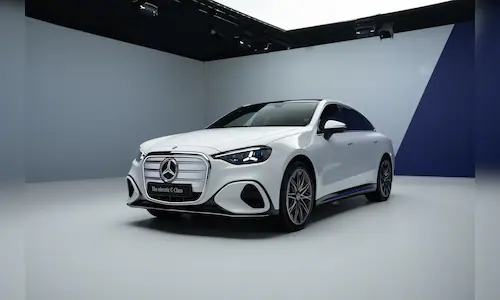
Electric Revolution Begins: Mercedes-Benz C-Class Electric has been revealed as the first fully electric version of the brand’s mid-size sedan, marking a shift to a dedicated EV platform. This replaces combustion-based underpinnings and introduces changes across performance, range, design, and software. The model reflects Mercedes-Benz’s broader transition strategy, positioning the C-Class as a key product in its next phase of electrification.
 2 / 10
All-New EV Architecture: The electric C-Class is built on the MB.EA platform, shared with the GLC EV, instead of adapting an internal combustion platform. This allows better battery integration, improved structural efficiency, and revised proportions. The architecture supports an 800V system and new drivetrain layouts, enabling higher efficiency, improved interior packaging, and compatibility with future software and hardware upgrades.
 3 / 10
US First, India Waits: The model will launch first in the United States, with other markets to follow based on regulatory approvals and charging infrastructure readiness. There is no official confirmation for India yet. The rollout strategy depends on regional EV adoption levels, compliance norms, and infrastructure development, which will determine when additional markets are added.
 4 / 10
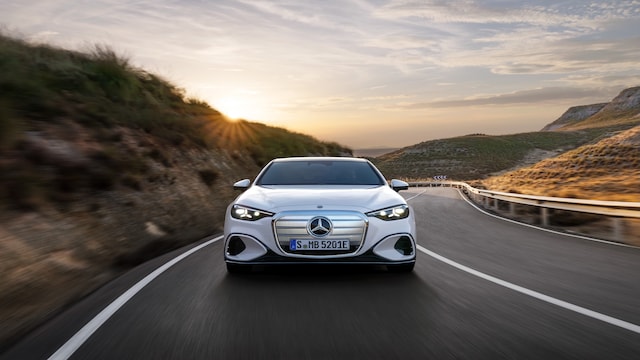
Big Battery, Big Range: The electric C-Class uses a 94kWh (usable) battery pack paired with an 800V electrical system. Mercedes-Benz claims a WLTP range of up to 762km. A rear-wheel-drive version with a higher claimed range of around 800km is expected later. The battery system is designed for sustained efficiency, supported by energy management systems and thermal control for consistent long-distance performance.
 5 / 10
0-100 in 4 Seconds: The C 400 4MATIC variant produces 360kW (483bhp) from a dual-motor all-wheel-drive setup. It accelerates from 0–100kph in 4.0 seconds. A two-speed transmission on the rear axle helps balance low-speed acceleration and high-speed efficiency, offering a broader operating range compared to conventional single-speed EV systems.
 6 / 10
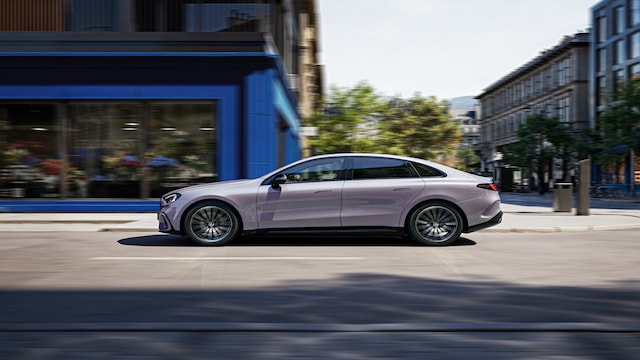
Charge 325km in 10 Min: The sedan supports DC fast charging at up to 330kW. Under WLTP conditions, it can add up to 325km of range in 10 minutes. The 800V system enables faster energy transfer and reduced charging times. It is also compatible with lower-voltage chargers through conversion systems, ensuring usability across different charging networks.
 7 / 10
Tech-Loaded Chassis Setup: Optional rear-axle steering reduces the turning circle to 11.2 metres, improving manoeuvrability. Air suspension with adaptive damping is also available for ride control. The car offers a 470-litre boot and a 101-litre front trunk. Towing capacity is rated at up to 1.8 tonnes, expanding its functionality beyond typical sedan use cases.
 8 / 10
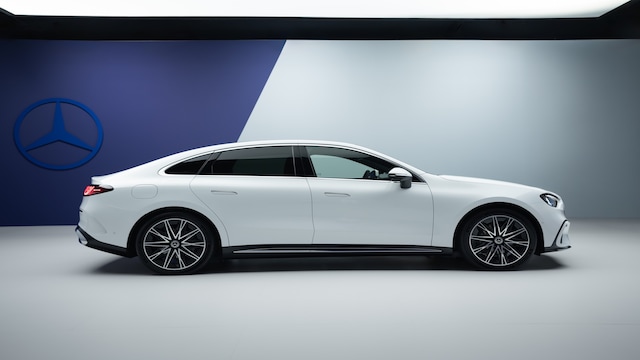
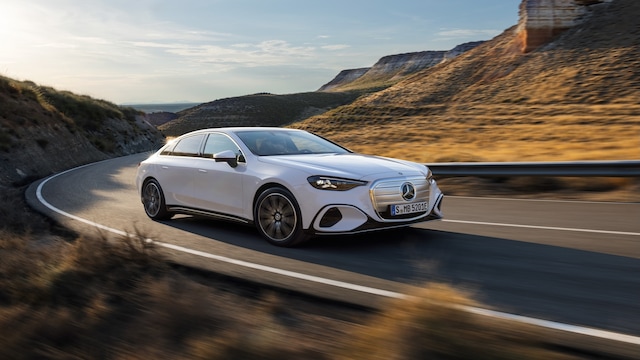
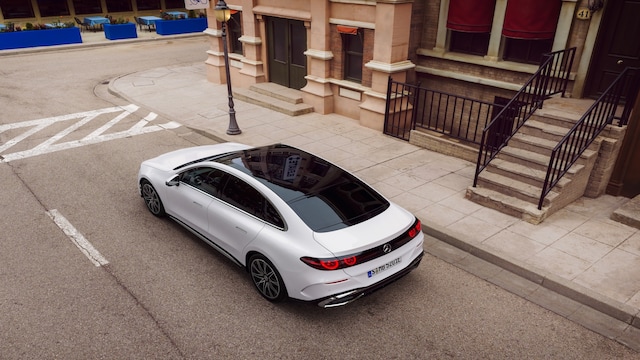
Looks Like a Coupe Now: The exterior design follows a coupe-like silhouette with a sloping roofline and fastback-style rear. The front features an illuminated grille panel with a central star and LED headlamps integrating multiple functions. Daytime running lights use star-shaped elements, consistent with newer Mercedes-Benz models such as the S-Class, CLA, EQS, and GLC EV.
 9 / 10
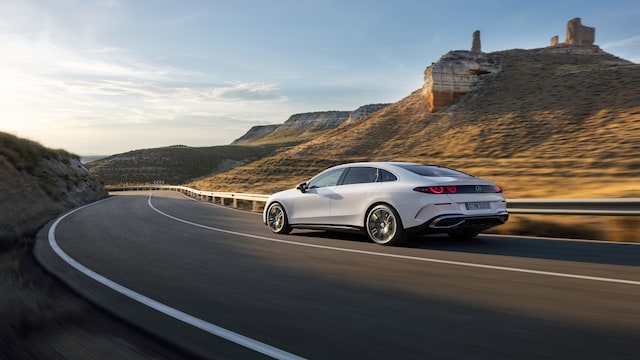
Slippery Shape Matters: At the rear, the car uses star-pattern tail-lamps and a rounded design to improve airflow. It achieves a drag coefficient starting at 0.22, contributing to efficiency and extended range. Aerodynamic optimisation includes smooth surfacing and airflow management to reduce resistance during high-speed driving.
 10 / 10
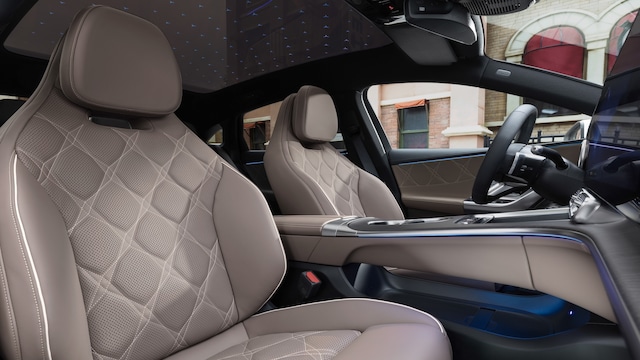
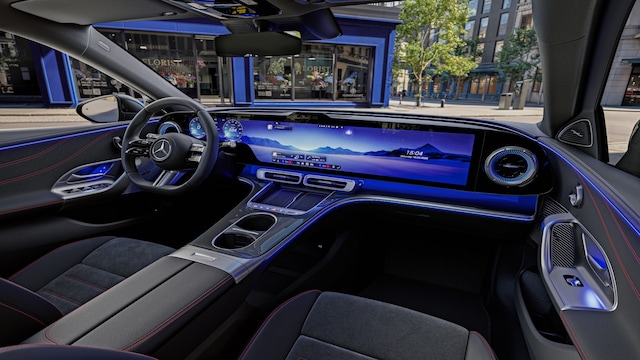
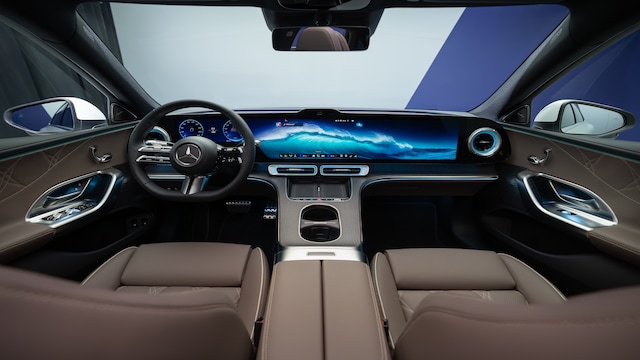
Screen-Filled Cabin: Inside, the electric C-Class features a redesigned cabin dominated by a 39.1-inch MBUX Hyperscreen. The system runs on MB.OS and supports over-the-air updates, AI-based virtual assistance, and navigation that factors in charging stops. Other features include a panoramic glass roof, ambient lighting, multi-zone climate control, electrically adjustable seats with memory, ventilation and massage, along with driver assistance systems supported by cameras and sensors.