

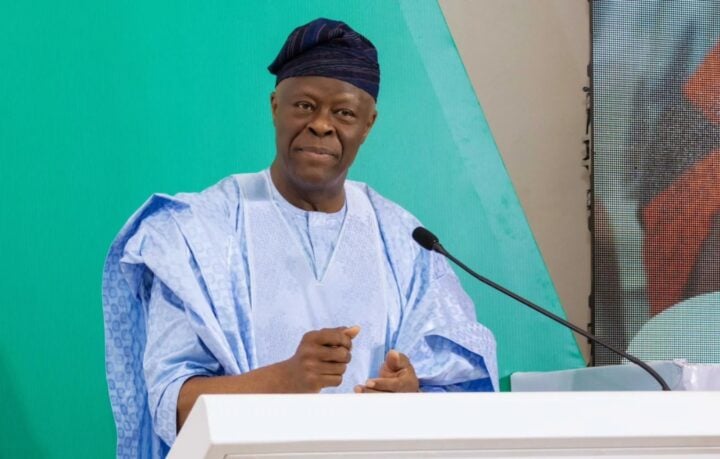
The Minister of Finance has stated the continued US–Israel–Iran battle has sparked vital exterior shocks, disrupting international power markets, tightening {financial} circumstances, and triggering contemporary inflationary pressures throughout economies.
He made this identified whereas talking after the IMF/World {Bank} Spring Conferences, noting that the scenario is unfolding at a time when Nigeria is implementing {economic} reforms aimed toward lifting tens of millions out of poverty.
In line with him, the disruptions have pushed up gasoline costs, elevated meals prices, and intensified inflationary strain on Nigerian households.
Edun, who led Nigeria’s delegation to the conferences, stated that regardless of these challenges, the federal government stays centered on strengthening macroeconomic stability and attracting investments wanted to help development and cut back poverty.
Addressing members of the Nigerian delegation, he defined that crude oil costs have proven sharp volatility because the battle started, rising by between 35 and over 50 per cent, largely as a result of disruptions across the Strait of Hormuz.
“Bonny Gentle, Nigeria’s form of oil, jumped from round $70–$73 a barrel to highs exceeding $110–$120.
“Volatility in international power markets is already influencing home energy-related commodities, with direct implications for costs and the usual of dwelling of Nigerians.
“Petrol costs rose by over 50%, from about N890–N900 to N1260–N1330. Diesel costs surged by over 70%, from N1,100 per litre to about N1,550 on the peak,” Edun stated.
Regardless of the pressures, he instructed IMF delegates that Nigeria entered the present interval of worldwide uncertainty on a stronger footing in comparison with earlier shocks comparable to COVID-19 and the Russia–Ukraine conflict.
He added that Nigeria would require elevated help throughout this {economic} transition part and can also be pushing for extra measures to ease fiscal strain and appeal to extra funding.