
In defence of Kayode Alabi: Why the deputy shouldn’t be made the scapegoat for the tragedy in Oro-In the past

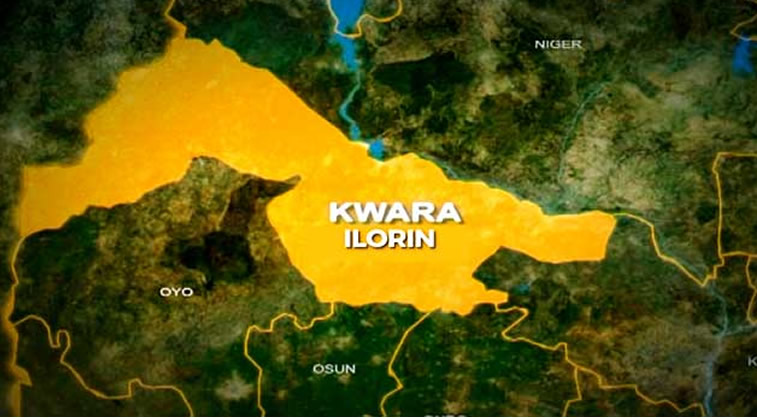
The ache in Oro-In the past is actual. The concern in Ifelodun is actual. The anger of a individuals watching bandits and kidnappers flip once-peaceful communities into theatres of sorrow is justified.
Certainly, reviews from Kwara state point out that insecurity has deepened throughout each the southern and northern flanks of the state, with assaults, abductions, displacement, and sustained concern in rural communities. In Ifelodun council, armed males not too long ago kidnapped worshippers throughout a church service in Omugo, whereas different components of Kwara have additionally suffered repeated violence, prompting the launch of a joint army operation, Operation Savannah Defend, to confront the threat.
However in the course of this respectable grief, there’s a severe hazard: the temptation to show Kayode Alabi into the image of failure for a disaster he doesn’t constitutionally management. That will fulfill emotion, however it doesn’t fulfill purpose. Beneath Part 193 of the 1999 Structure, the deputy governor solely performs duties assigned by the governor; the workplace shouldn’t be an unbiased command centre with autonomous government authority. In plain phrases, the deputy governor doesn’t possess a separate constitutional equipment to deploy troops, direct the police at will, or unilaterally execute statewide safety coverage.
In reality, if we’re to be trustworthy, even governors in Nigeria function inside a closely centralised safety construction. The police stay below the command of the Inspector-Basic, and state commissioners of police might refer a governor’s directives upward for federal clearance. The army is much more firmly below federal command. If the governor himself is institutionally constrained in safety operations, then it’s plainly unreasonable to fake that the deputy governor has some hidden unbiased arsenal of constitutional powers that he refused to make use of. Responsible Kayode Alabi alone for the bandit siege on Oro-In the past is subsequently not simply unfair; it’s analytically unsuitable and stands logic on its head.
This doesn’t imply public officers needs to be past criticism. It means criticism have to be correctly directed. A son of Oro-In the past could also be morally anticipated to point out empathy, presence, and advocacy for his individuals, however ethical expectation shouldn’t be the identical factor as constitutional capability. The general public can demand visibility, compassion, and louder inside advocacy from the deputy governor; what it mustn’t do is invent powers for him that the structure doesn’t give him. A good-minded society should distinguish between the official who can affect and the official who can command. Kayode Alabi belongs much more to the primary class than the second.
It’s also inaccurate to color him as somebody detached to safety issues. In an official federal authorities report, Kayode Alabi represented Governor AbdulRahman AbdulRazaq at an occasion with troops and high safety chiefs in Kwara, the place he referred to as for stronger inter-agency collaboration towards terrorists, kidnappers, and different violent actors. One might argue that this isn’t sufficient—and communities below assault are entitled to say so—however it clearly contradicts the lazy narrative that he’s wholly indifferent from the safety problem. The proof suggests a person working inside a subordinate constitutional workplace, taking part the place delegated, not a person wielding unrestricted government command and easily refusing to behave!
The strident cries from Oro Land themselves point out one thing necessary: the neighborhood’s enchantment is directed broadly to authorities and related authorities for extra troops, stronger safety, and emergency response. Each affordable critic acknowledges that troop deployment can solely occur on the behest of the Federal authorities, far past anyone deputy governor. That’s precisely the purpose. The disaster in Oro-In the past shouldn’t be the product of 1 man’s silence; it’s the results of a wider structural failure in rural safety, intelligence protection, forest policing, and state-federal coordination.
Requires Kayode Alabi’s resignation might sound dramatic, however they’re politically simplistic. In Nigeria’s tough political terrain, resignation by a deputy governor not often strengthens a neighborhood’s voice; extra usually, it removes one of many few insiders who can nonetheless foyer, persuade, warning, and press for intervention behind the scenes. Individuals might not like that actuality, however it stays actuality. Politics shouldn’t be solely about public theatre; additionally it is about preserving channels of affect. To insist that resignation is the one proof of loyalty to Oro-In the past is to mistake symbolism for technique. No grieving neighborhood needs to be inspired to commerce its attainable entry for emotional spectacle.
What Kwara wants now shouldn’t be scapegoating, however seriousness. The state authorities should deepen and maintain safety interventions in weak communities. Federal authorities should be sure that present operations don’t turn into photo-op responses however enduring safety for villages below siege. Safety businesses should examine the drivers of those assaults, whether or not they relate to forest criminality, cross-border bandit motion, kidnapping syndicates, or any {economic} pursuits thriving below instability. And political actors should cease weaponising a neighborhood’s ache for factional benefit.
So let the document be clear: Kayode Alabi will be requested to talk extra, go to extra, and advocate extra strongly for Oro-In the past. However he shouldn’t be falsely portrayed because the principal architect of a safety disaster that lies inside a bigger, centralised, and deeply troubled safety system.
The individuals of Oro-In the past deserve safety, not propaganda. They deserve trustworthy prognosis, not handy blame. And in that trustworthy prognosis, the deputy governor shouldn’t be the commander who deserted his individuals; he’s a restricted constitutional actor caught inside a failing construction that requires broader state and federal motion to repair.
The time to behave is now!