

New Delhi:
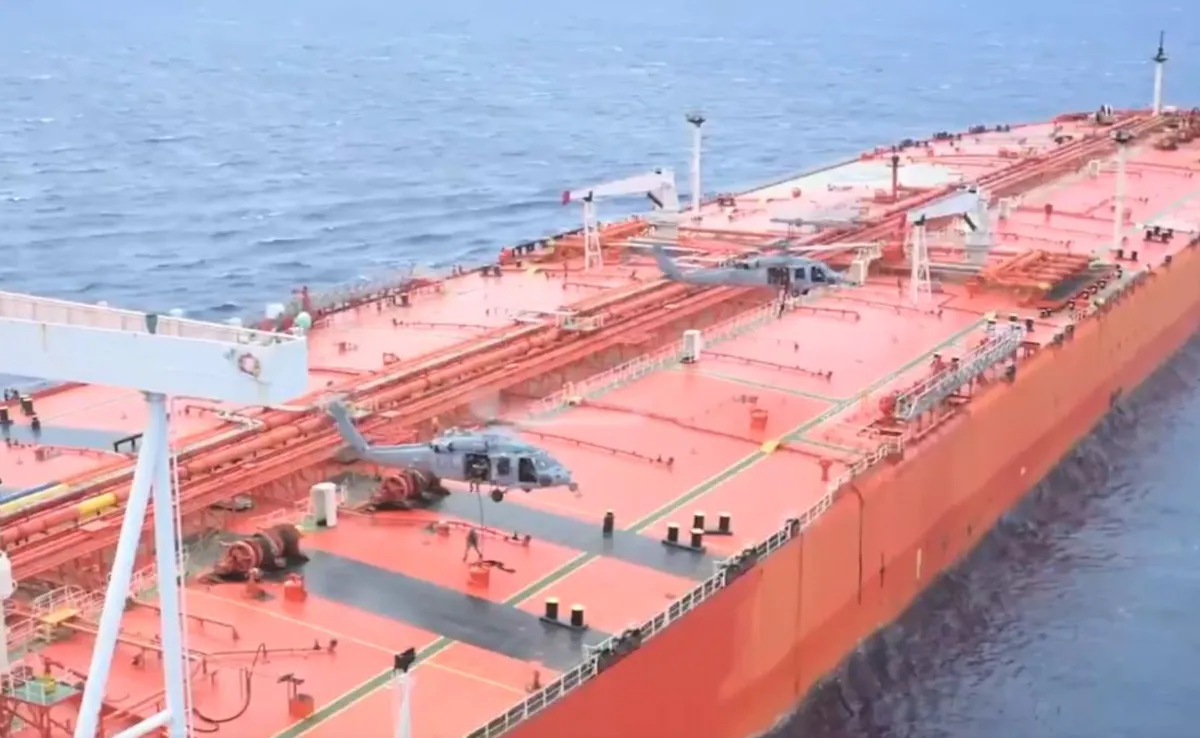
The US military on Tuesday seized a sanctioned oil tanker in the Indian Ocean. The vessel, identified as the M/T Tifani, was carrying Iranian crude when it was intercepted, according to a statement from the Pentagon. The action comes amid heightened tensions after the US and Israel unilaterally declared a war on Iran.
“We will pursue global maritime enforcement efforts to disrupt illicit networks and interdict sanctioned vessels providing material support to Iran – anywhere they operate,” the Defense Department said, while releasing footage that appeared to show Navy SEALs descending onto the tanker from a helicopter. It added that it would “continue to deny illicit actors and their vessels freedom of maneuver in the maritime domain.”
US officials said the ship was transporting around 1.9 million barrels of oil at the time of the seizure. The operation has effectively extended the confrontation with Iran far beyond the Persian Gulf, into Indo-Pacific waters.
Overnight, U.S. forces conducted a right-of-visit, maritime interdiction and boarding of the stateless sanctioned M/T Tifani without incident in the INDOPACOM area of responsibility.⁰⁰As we have made clear, we will pursue global maritime enforcement efforts to disrupt illicit… pic.twitter.com/EGwDe3dBI3
— Department of War 🇺🇸 (@DeptofWar) April 21, 2026
A report by CNN sheds light on the tanker’s movements in the months leading up to the seizure. According to the report, the M/T Tifani had repeatedly travelled between Iran and a maritime zone off Malaysia over the past year. This area lies not far from Singapore, a major global shipping hub.
During these journeys, the tanker frequently slowed down or remained stationary in a particular area. CNN, citing MarineTraffic data, reported that the vessel would often anchor and turn off its Automatic Identification System (AIS), a tracking mechanism required for ships. After remaining untraceable for hours or even days, it would reappear on tracking systems.
The same region, commonly referred to as the Eastern Outer Port Limits (EOPL), has drawn attention as a key transit and transfer point. Located near the eastern approach to the Singapore Strait, the zone sits within Malaysia’s exclusive economic area and is known for heavy maritime traffic. Satellite imagery reviewed by CNN shows that at times, large numbers of ships gather in this area.
As per the report, the region “acts as a floating gas station” where Iran’s shadow fleet stores and trades oil that help bring in much-needed money amid war.
“It’s a very convenient place for hiding activities. Malaysian authorities basically look elsewhere,” said Farzin Nadimi, a senior fellow at the Washington Institute.
The analysis also linked the M/T Tifani to at least one ship-to-ship transfer. In August last year, the tanker was seen transferring cargo to another vessel, the Macho Queen. Following the exchange, that ship briefly activated its tracking system before heading towards China and later going dark again after being sanctioned by the US.