

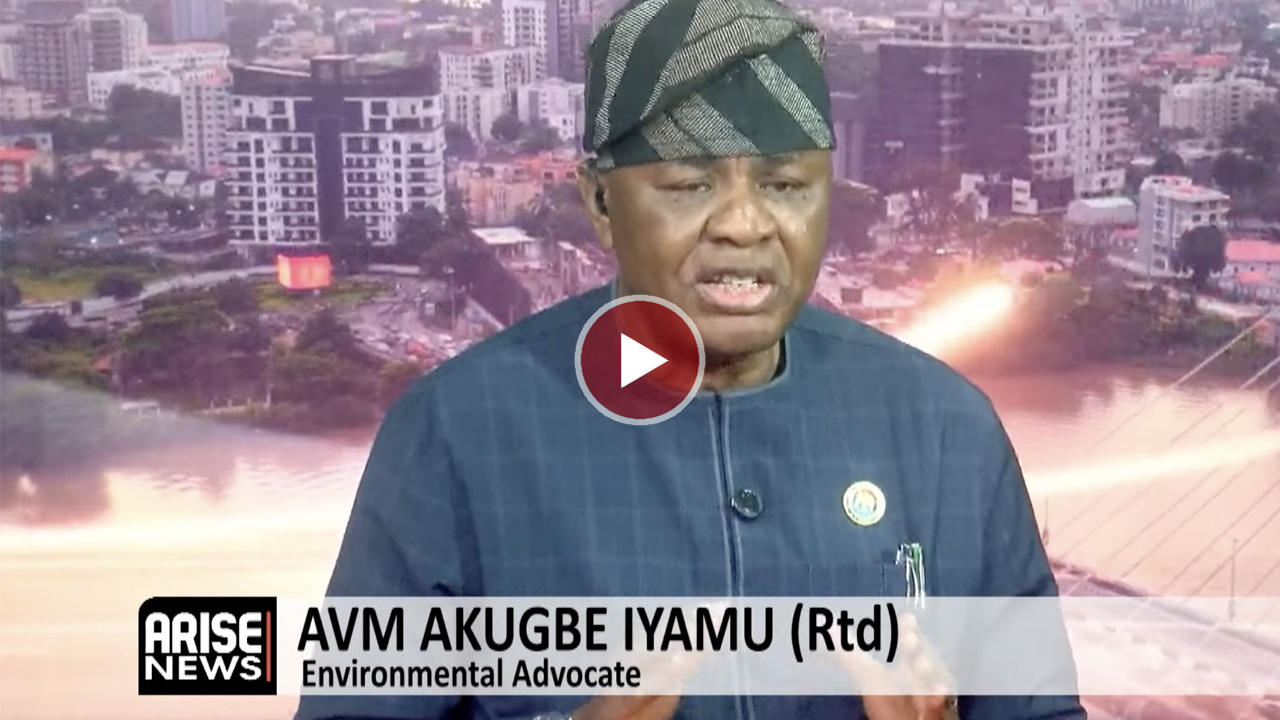
President, Affiliation of Environmental Safety and Local weather Change Practitioners, Akugbe Iyamu has asserted that Nigeria should urgently undertake structured, government-led evacuation and shelter techniques to cut back the rising influence of flooding throughout the nation, warning that present responses to climate-related disasters stay fragmented and ineffective.
Talking throughout an interview with ARISE NEWS on Friday, Iyamu stated Nigeria can not depend on reactive catastrophe responses, insisting that local weather dangers are already well-known and predictable throughout affected areas whereas additionally stating that step one required from authorities was direct intervention in evacuation processes.
“Initially, you will need to have a state-sponsored evacuation. State-sponsored shelter and take away IDP administration from line gadgets of the tasks. Make use of sturdy options.”
He argued that authorities already possess enough information figuring out flood-prone communities. “We can’t cease local weather change. We can’t cease excessive climate, Now, these 33 states and 144 communities that have been recognized, they aren’t new. They’ve been there. We all know them. Everyone is aware of them that that is the place the flooding will go.”lIt has been there. Everyone knows the excessive spots. Everyone knows the place the catastrophe will open.The place to begin is the catastrophe threat evaluation.This isn’t the time that you will be telling folks to maneuver. This could have been achieved over time. In 2024, the NEMA got here up with a catastrophe threat evaluation, Every thing is contained there.”
He additional defined that evacuation shouldn’t be left to people or casual preparations. “You don’t go away folks to their discretion, and that’s what brought about all of the life misplaced and every little thing.As a result of if folks transfer, they’re going to transfer to their comfort. They will transfer to the place their assets will take them to, They will transfer to no matter they’re doing will take them to.”
In response to him, Nigeria’s present method to Internally Displaced Individuals (IDPs) administration has turn out to be inefficient. “They don’t know every other life. They don’t know every other life. That’s why you might have sturdy options. Sturdy options inform you that, relocate this IDP to their ancestral residence, create a brand new residence for them, or make them settle the place they’re.”
He warned that catastrophe response have to be built-in into governance planning, not handled as annual emergency spending. “In addressing excessive climate now, we now have to re-evaluate every little thing. We’ve got to weigh every little thing towards the assets that’s out there.”
Iyamu additionally confused that relocation methods have to be non permanent however structured. “In addressing excessive climate now, we now have to re-evaluate every little thing. We’ve got to weigh every little thing towards the assets that’s out there.They consider that, look, after that, what occurs subsequent? What occurs to their very own lives?”
“They don’t consider within the statements once more, they consider that, look, after that, what occurs subsequent?”The place to begin is the catastrophe threat evaluation.Every thing is contained there. After 2024, every little thing went silent.”
He added that catastrophe response techniques should embody a transparent exit plan for affected populations. “Sturdy options inform you that, relocate this IDP to their ancestral residence, create a brand new residence for them, or make them settle the place they’re.After September, we’re going to take you again to your ancestral residence, if that’s nonetheless possible, take you to new websites, if that turns into very, very expedient, or settle you to the place you might be. IDPs are usually not meant to remain within the camp without end.”l There are some individuals who have been there since 2012.”
He acknowledged that IDP administration must be faraway from fragmented project-based budgeting. “take away IDP administration from line gadgets of the tasks, Make use of sturdy options.The place to begin is the catastrophe threat evaluation, every little thing is contained there.”
Past evacuation and shelter, he warned that flooding can’t be addressed successfully throughout peak wet seasons. “However to say you might be dredging a river contained in the wet season, it’s like Pennywise’s palm foliage. That won’t work.This yr, we already know the challenges of flooding, which we now have identified since 2020.”
He argued that lots of Nigeria’s flood-prone areas are already well-known to authorities. “These 33 states and 144 communities that have been recognized, they aren’t new. They’ve been there, we all know them. Everyone is aware of them that that is the place the flooding will go. And it’s turning into very, very precarious as a result of geography is future.”
Iyamu additionally linked Nigeria’s flood disaster to broader socio-economic challenges. “Now, the World {Bank} has informed us that poverty has elevated since 2023 from 56% to 63%. That’s 140 million Nigerians are poor, Most of them are multidimensionally poor. Now, 800 of them, which incorporates Nigeria, 140, in an space that might be affected by one out of the 4 local weather points, which is flooding, air pollution, ecosystem, and others.
Now, should you put all this in perspective now, 30.5 million persons are going into extreme, acute starvation. One thing adjustments within the economic system. One thing adjustments within the safety.”
He stated local weather change is now inseparable from nationwide safety and {economic} stability. “What is occurring now could be Nigeria should reside with its personal threat. Dwelling with your personal threat implies that you will need to cope with this concern of local weather change. Local weather change and the flooding.
Now, local weather change is now by the hands, it’s on the sizzling buttons of nationwide safety. One thing adjustments within the economic system. One thing adjustments within the safety, And what you maintain as priorities earlier than turns into negotiated. It turns into negotiated since you don’t negotiate starvation. You don’t negotiate safety. You don’t negotiate well-being. You don’t negotiate life and livelihood.”
Iyamu additional highlighted the dimensions of inside displacement already recorded in Nigeria. “Now, you see, should you go round the place flooding has occurred everywhere in the years, as I converse to you now, we nonetheless have 3.7 million folks in IDP camps, not state-sponsored shelter, not state-sponsored evacuation.They’re simply there residing on their very own then they’re residing in 3,900 spots, together with households which can be sheltering them and all.IDPs are usually not meant to remain within the camp without end.”
In response to him, sturdy options should embody relocation choices comparable to returning displaced individuals. “Sturdy options inform you that, relocate this IDP to their ancestral residence, create a brand new residence for them, or make them settle the place they’re. After September, we’re going to take you again to your ancestral residence, if that’s nonetheless possible, take you to new websites, if that turns into very, very expedient, or settle you to the place you might be.”
Iyamu maintained that with out structured intervention flooding will proceed to provide cyclical humanitarian crises yearly. “We all know the areas to have dredged, and we all know the areas, the gutters to have cleared, and you aren’t going to be doing it contained in the wet season. This yr, we already know the challenges of flooding, which we now have identified since 2020. We all know them. Everyone is aware of them that that is the place the flooding will go.”
He concluded that Nigeria already has enough information and predictive data on flood threat areas. “The problem is that we can’t cease local weather change. We can’t cease excessive climate.”
Erizia Rubyjeana
Times Nigeria