

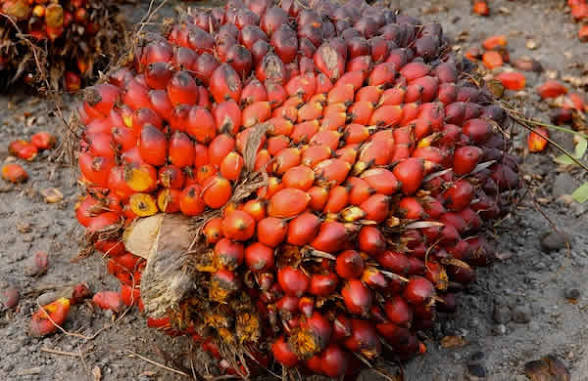

The federal authorities has introduced a complete plan to revive Nigeria’s beleaguered palm oil business.
As much as the Sixties Nigeria was the worldwide chief in palm oil production. Malaysian officers got here to Nigeria in 1965 and picked up oil palm seedlings for cultivation.
The Malaysians turned so environment friendly in palm oil production that their streets have been lined with oil palm timber. Malaysia displaced Nigeria in palm oil production.
Nigeria now imports most of its palm oil from Malaysia and Indonesia.
Asserting the revival plan just lately, the Minister of Agriculture and Meals Safety, Abubakar Kyari, stated that the plan will probably be applied in two phases.
Section one of many plan will contain the institution of 10,000 hectares of palm plantations throughout collaborating states. The estates will combine cultivation with fashionable milling and refining services, storage techniques, logistic infrastructure and residential communities able to accommodating 2,000 households per location.
The second part of the programme will deal with downstream processing and manufacturing of palm-based merchandise with emphasis on worth addition and export competitiveness.
Sturdy home demand and entry to regional market will make sure that funding within the programme is recovered between 5 and 7 years.
The minister stated Nigeria is blessed with 3 million hectares of land appropriate for the cultivation of oil palm timber and that many of the land is underutilised.
Production in current plantations is hampered by ageing timber and restricted entry to improved seedlings. The ageing timber produce grudgingly as a result of they’re on the mercy of windfall. A lot of the timber weren’t planted, they grew on their very own and can’t produce like these developed from fashionable seedlings.
A lot of the timber are so tall that harvesting their fruits pose grave risks to the boys who climb them with primitive ropes. Malaysia has developed the expertise to reap the fruits from comparatively tall timber from the bottom. Nigeria is gentle years behind in that expertise.
The minister known as on state governors to cultivate the brand new coverage, facilitate entry to land, mobilise the agricultural communities to take part within the scheme and supply infrastructure for the programme. He assured that funding within the scheme will increase the internally generated income of collaborating states and enhance the usual of dwelling of rural dwellers.
The sum of $500 million (N180 billion) will probably be invested within the scheme to spice up palm oil production in Nigeria from 600,000 to five million tonnes each year by 2027.
The scheme is to be executed in collaboration with Mass Industrial Growth and Logistics Restricted and different stakeholders.
The federal authorities won’t make investments cash within the scheme. It should solely present coverage and logistic helps. Authorities will due to this fact not borrow to put money into the public-private sector scheme.
The scheme is designed to bridge the provision hole in palm oil and different oil palm-based merchandise. It should additionally stimulate agro-industrial growth and create jobs.
Nigeria at present produces 600,000 metric tonnes of palm oil yearly, however consumes 2.4 million metric tonnes of the produce yearly. The shortfall between demand and provide is supplemented with large imports from Malaysia and Indonesia.
The federal authorities spends $600 million yearly on palm oil imports. The brand new initiative is designed to reverse the development and to reposition Nigeria’s palm oil business as a significant {economic} driver.
“Nigeria should take deliberate steps to maneuver from intention to implementation”, stated the minister in obvious conviction that the brand new scheme will work and remodel the nation’s palm oil business.
The Managing Director of Mass Industrial Growth and Logistics, the key collaborator within the new scheme, Mr. Emmanuel Anyaralu stated the programme will remodel Nigeria’s palm oil ecosystem, increase farmers revenue and strengthen Nigeria’s competitiveness in home and export markets.
The initiative will probably be common after Calaro Oil Palm Property in fashionable Cross River state. Calaro Property was constructed by the colonial masters round 1955.
It sits on a stretch of land measuring 10 miles in size from Mbarakom to Uwet and 5 miles in width. It had the biggest and most fashionable palm oil processing mill in West Africa.
4 camps every with capability for accommodating 2,000 households have been constructed across the property. All of them had working water.
Large Bedford vans from the fields laden with palm fruits will drive down the mill, empty their content material right into a gap and begin a processing chain that finally ends up pouring palm oil into tankers at one finish whereas palm kernels are loaded into luggage on the different finish.
The produce have been pushed to Calabar, some 40 miles from the mill and exported to Britain. Calaro Property contributed immensely to Nigeria’s management place in international palm oil production.
Blueprint.ng commends the federal authorities for the initiative to revive palm oil production. It’s our hope that the scheme will probably be pursued to a logical conclusion.