

•To deliver verdicts on four appeals•Lower court bars INEC from recognising Mark-led ADC congresses •Mark’ leadership hijack plot has collapsed — Kachikwu
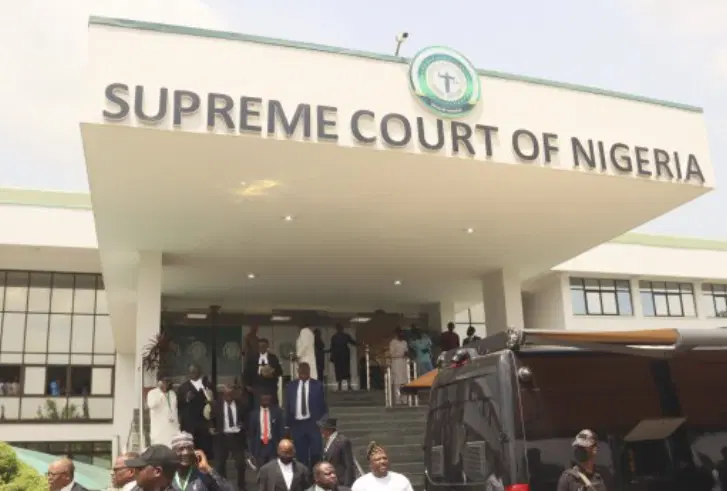
ABUJA — THE Supreme Court will today deliver judgments that will shape the fate of the Peoples Democratic Party, PDP, and the African Democratic Congress, ADC, ahead of the 2027 general elections.
The apex court, in notices it sent out, yesterday, indicated that it will deliver verdicts in four separate appeals bordering on leadership crises rocking the two opposition parties.
While the appeals involving the PDP are seeking validation of the outcome of the national convention held in Ibadan, Oyo State, on November 15 and 16, 2025, that of the ADC is challenging the interference of courts in alleged domestic affairs of the party, and ascertain who among the trio of Senator David Mark, Nafiu Bala Gombe, and Temitope Ogga is the authentic national chairman of the party.
This is coming as an Abuja Federal High Court, yesterday, barred the Independent National Electoral Commission, INEC, from recognising the recent congresses conducted by the Mark-led National Executive Committee, NEC.
The lower court’s decision elicited mixed views in the polity. While the 2023 presidential candidate of the ADC, Mr Dumebi Kachikwu, who is backing Ogga hailed the decision, saying it had collapsed the alleged hijack of the party by the Mark-led exco, Mallam Bolaji Abdullahi, National Publicity Secretary of the Mark’s team, told Vanguard that they would study the ruling and take appropriate action.
However, an Abuja-based policy think tank, Heritage Centre, said the verdict is evidence of state capture as a lawyer, Idris Falo, said the judgment could impact ADC’s ability to mobilise support for its candidates at the 2027 polls.
Supreme Court’s awaited verdicts
A five-member panel of the apex court, headed by Justice Mohammed Lawal Garba, had on April 22, reserved judgment on the cases after all the parties involved adopted their respective briefs of argument.
In one of the appeals marked SC/CV/164/2026, which was by the Tanimu Turaki-led factional national executives of the PDP, the appellants sought the setting aside of judgments of the Court of Appeal and the Federal High Court in Abuja, which faulted the conduct of the Ibadan convention.
The appellate court had berated the Turaki-led PDP for defying the November 14, 2025, judgment of Justice Peter Lifu of the high court, which stopped the Ibadan convention.
The high court had specifically barred INEC from supervising, monitoring or recognising any convention held without including former Jigawa State governor, Sule Lamido, as a contestant.
The restraining order followed a suit filed by Lamido, a foundation member of the PDP, alleging he had been arbitrarily denied the chance to contest for national chairman.
He cited the PDP and INEC as the first and second defendants, respectively.
The trial court found that Lamido had been unjustly denied a nomination form, contrary to the PDP Constitution and guidelines, and held that the party must create opportunities for members to aspire to positions.
As a consequential order, Justice Lifu halted the convention to allow Lamido obtain the form, mobilise supporters and campaign.
Dissatisfied with the decision, the Turaki-led PDP filed an appeal to set it aside.
The appeal was dismissed by the appellate court which held that the appellants resorted to self-help and contemptuous conduct by proceeding with the convention, despite the restraining order.
It ruled that the party should have sought suspension of the judgment from a higher court, rather than obtaining a favourable order from another court of coordinate jurisdiction.
The appellate court described the PDP’s action as a direct affront to judicial authority and a gross abuse of court process.
Meanwhile, the second appeal, which was also filed by the Turaki-led group, is seeking to void the court order that barred INEC from monitoring the contentious Ibadan convention.
The appellants in the matter—PDP, its National Working Committee, NWC, and National Executive Committee, had, in a motion filed on April 8 through their team of lawyers, led by Chief Chris Uche, SAN, prayed for a departure from the Supreme Court Rules and the abridgement of time for all respondents to file their briefs of argument.
They challenged the judgment of the Court of Appeal, which upheld judgments barring the PDP from proceeding with the Ibadan convention.
The appellate court had held that the convention, which produced the Turaki-led factional leadership, lacked legal backing as it disobeyed two Federal High Court judgments in Abuja delivered on October 31 and November 14, 2025.
The Justice Mohammed Danjuma-led panel dismissed the appeal marked CA/ABJ/CV/1613/2025, filed by the PDP faction aligned with Governors Seyi Makinde of Oyo State and Bala Mohammed of Bauchi State.
It found no reason to overturn Justice James Omotosho’s verdict of the high court, which had barred INEC from validating the Ibadan convention outcome.
According to the appellate court, evidence showed that statutory conditions precedent were not met before the convention.
It found merit in the substantive suit by three aggrieved members, including Austin Nwachukwu (Imo PDP Chairman); Amah Abraham Nnanna (Abia PDP Chairman), and Turnah Alabh George (PDP Secretary, South-South), aligned with Wike’s faction.
The high court had in its judgement that precipitated the appeal, faulted the PDP for failing to conduct valid state congresses in 14 states before the convention.
It held that the convention could not proceed without congresses to produce voting delegates for national officers in those states.
The court also noted that notices for the convention were signed only by the national chairman, excluding the national secretary, rendering them a nullity.
Justice Omotosho ruled that the PDP’s failure to follow procedures had jeopardised the convention.
Therefore, he directed the party to conduct proper meetings and congresses with 21 days’ statutory notice to INEC for monitoring.
Cited as defendants were INEC; PDP; National Chairman Ambassador Umar Iliya Damagum; National Secretary Senator Samuel Anyanwu; National Organizing Secretary Umar Bature; national officers Ali Odefa and Emmanuel Ogidi; and the PDP’s NWC and NEC.
ADC’s case
In the case of the ADC, the apex court will deliver judgment in an appeal marked SC/CV/180/2026, which was filed by Senator David Mark.
The appellant, who leads a faction backed by frontline opposition figures, seeks to set aside a March 12 Court of Appeal judgment, which he said was against the interest of justice.
He argued that the appellate court exceeded its jurisdiction by ordering maintenance of the status quo ante bellum in a suit filed by aggrieved party members led by Nafiu-Bala Gombe.
Mark contended that the dispute involved a political party’s domestic affairs, in which courts lacked jurisdiction to intervene.
Besides Gombe, other respondents in the appeal include the ADC, the National Secretary Rauf Aregbesola, INEC, and the immediate past national chairman of the party, Chief Ralph Nwosu.
Mark sought, among other reliefs, an order restraining INEC from recognising anyone other than him and the current national officers, pending determination of the appeal.
He also requested orders barring INEC from altering the party’s leadership structure as currently constituted and staying proceedings in Suit No. FHC/ABJ/CS/1819/2025 before Justice Emeka Nwite at the Federal High Court, Abuja, until the appeal is heard.
While adopting their brief of argument, Mark’s legal team, led by Mr. Jubril Okutepa, SAN, insisted the dispute is a non-justiciable internal party matter, as previously held by the Supreme Court.
Although INEC did not file any process to either support or counter the appeal, however, all the other respondents except Gombe, urged the apex court to allow the appeal.
They maintained that the trial court was properly seized of facts of the case that is still pending before it.
INEC had removed Mark and Aregbesola from its portal and website as ADC National Chairman and Secretary, respectively, on April 1, citing the Court of Appeal’s judgment.
The electoral body said it would, in line with the order for maintenance of the status quo ante bellum, not recognise any of the warring factions until the legal dispute is determined.
Sponsored
However, despite INEC’s action, which the Mark-led faction had asked the Supreme Court to nullify, the ADC vowed to and proceeded with its scheduled national convention.
Justice Nwite of the Federal High Court had on April 14, adjourned sine die (indefinitely), hearing of the substantive case that Gombe filed to sack the Senator Mark-led leadership of the ADC.
Justice Nwite said he could not proceed with the matter, in view of the related issue before the Supreme Court.
He ruled that proceeding will amount to “judicial rascality” with the related appeal pending before the Supreme Court.
Court bars INEC from recognising ADC congresses
Unlike Justice Nwite, the Federal High Court sitting in Abuja, yesterday, barred the electoral commission from recognising or participating in any congress organised by committees appointed by the Senator Mark-led caretaker leadership of the ADC.
The court, in the judgment delivered by Justice Joyce Abdulmalik, also restrained the Mark-led group from interfering with the tenure and functions of elected state executives of the party.
It held that the responsibility for conducting state congresses rests with state executive committees and not the national leadership of a political party.
According to the court, the four-year tenure of the ADC’s State Working Committees and State Executive Committees remained valid and subsisting, pending the conduct of properly constituted congresses and the convocation of a national convention.
The judgment followed a suit marked: FHC/ABJ/CS/581/2026, which was lodged before the court aggrieved members of the ADC.
Those behind the suit are Don Norman Obinna, Johnny Tovie Derek, Obah C. Ehigiator, Olona Yinka, Dr. Charles Idowu Omideji, Samuel Pam Gyang, and Obianyo Patrick, who told the court that they sued for themselves and on behalf of all State Chairmen and State Executive Committees of the African Democratic Congress, ADC.
Listed as defendants in the matter are the ADC; David Mark; Sen. Patricia Akwashiki; Mallam Bolaji Abdullahi; Ogbeni Rauf Aregbesola; Prof. Oserheimen Osunbor (sued on behalf of the Caretaker/Interim National Working Committee) and INEC.
The plaintiffs had, among other things, challenged the decision of the Senator Mark-led leadership of the ADC to constitute a congress committee for the purpose of conducting state congresses.
They challenged the validity of any appointments made by the Mark-led caretaker committee and argued that the planned state congress slated for April 2026, if conducted under the supervision of the said caretaker committee, would constitute a gross violation of the party’s constitution.
It was the position of the plaintiffs that only duly elected party organs recognised under the party’s constitution possessed the power to conduct congresses.
While agreeing with the plaintiffs, Justice Abdulmalik held that neither the 1999 Constitution, as amended, nor the Constitution of the ADC, empowered the caretaker/interim National Working Committee, led by Mark, to appoint committees for the purpose of conducting state congresses.
The court held that claims brought before it by the plaintiffs were valid and deserving of judicial consideration, citing alleged breach of constitutional and statutory provisions.
She held that Section 223 of the 1999 Constitution, as amended, mandates political parties to conduct periodic elections based on democratic principles, adding that Article 23 of the ADC Constitution also provides that national and state officers shall hold office for a maximum of two terms spanning eight years.
Justice Abdulmalik stressed that although courts were generally reluctant to interfere in domestic affairs of political parties, it however intervenes where there was a clear allegation of violation of constitutional or statutory provisions.
“The law is settled so that courts will not interfere. However, where there is an allegation of breach of constitutional or statutory provisions, the court has a duty to intervene.
“Where a party alleges that its constitution has been violated, the court is bound to adjudicate. Any argument that this court lacks jurisdiction on that basis fails,” the trial judge ruled.
She held that evidence before the court established that the tenure of the state executive committees of the ADC remained valid and must be allowed to run its full course without interference.
The court held that only those elected structures had the authority to organise state congresses and accordingly nullified any process initiated by the Senator Mark-led caretaker leadership.
Plot to hijack ADC has failed — Kachikwu
Reacting to the verdict, Kachikwu told journalists in Abuja that the decision of the court has vindicated his long-standing warning that some individuals were bent on hijacking the party for selfish interests.
He said: “The ADC is not for sale. Those who tried to hijack our party have been shown the way out through the same back door they came in.
“Today, a Federal High Court in Maitama nullified the kangaroo congresses and convention conducted by the David Mark-led group.
“In her judgement, which could be classified as a stinging rebuke, Justice Joyce Abdulmalik held that even though this group didn’t have any locus, they proceeded to conduct, in her own words, ‘kangaroo congresses and convention,’ which she proceeded to nullify.
“She also held that, with the lacuna within the leadership of the ADC, the state chairmen of the party who make up the NEC of the party are the rightful body to conduct a national convention and congresses at the different levels and that INEC should recognise them as such.
“I had long warned that the ADC is not for sale and that these political buccaneers would be shown the way out through the same back door they came in from.’’
We’ll study ruling and take action — Bolaji Abdullahi
On its part, the Mark-led ADC, in a statement by its National Publicity Secretary, Mallam Bolaji Abdullahi, said its attention had been drawn to the reports and outlined its immediate response.
“The African Democratic Congress has noted media reports suggesting that the Federal High Court, presided over by Hon. Justice Joyce O. Abdulmalik, has sacked the party’s duly elected, but yet-to-be inaugurated, state chairmen,” Abdullahi said.
He pointed to the party’s earlier position on the tenure of its officials.
“For clarity, the party had earlier stated, immediately after the congresses, that the process did not in any way truncate the tenure of the current State Executives, who will serve out their mandates before the newly elected officials are inaugurated,” the ADC said.
The part added that it is now seeking legal guidance on the implications of the ruling.
“The ADC leadership has, however, directed its legal team to obtain and review the judgement in detail and advise the party on the appropriate course of action,” he added.
Court barring ADC congresses evidence of State capture- Heritage Centre
Dr. Katch Onanuju, Director-General of the Abuja-based policy think tank, Heritage Centre, said the Federal High Court ruling blocking INEC from recognising the ADC state congresses was evidence of state capture and had the imprint of the APC and presidency.
Onanuju, who is one of the founding leaders of the Obidient movement, said: “If you are looking for evidence of state capture, you don’t need to look any further than this judgment.
“The judgment I learnt also barred the election management body from recognising the Senator David Mark leadership of the ADC. All this coming at a time this matter is pending before the Supreme Court has all the trappings of a President and a ruling party which are hell-bent on continuing the ‘grab it, snatch it and run with power’ tradition which brought it to power.”
ADC may not take part in polls – Faro, Arogundade
Also reacting, a lawyer, Idris Faro, said: “The implication of the judgment is that INEC will not recognise the officials who emerge from the congresses conducted by the Committee elected by the Mark leadership. Since the setting up of the Congress committee has been adjudged illegal, it cannot birth any legality
“The judgment could likely impact the ADC’s ability to gather support for its candidates in the 2027 elections If the party doesn’t resolve its internal crises. There is a need for certainty on who the leaders of the party are.
“Political parties must comply with the provisions of the Constitution, Electoral Act and other statutes. They have obligations to comply with their own constitution as well apart from the Constitution of Nigeria.”
In another reaction, the Executive Director, International Press Centre, IPC, Mr. Lanre Arogundade, said: “The implication is that ADC as a party may not be able to participate in the forthcoming elections as the odds seem stacked against it especially in the context of electoral guidelines and timelines.”
On the impact of the judgment, he said “the impact will likely be determined by the subsequent actions of the ADC political gladiators and the perception that observers have about their political ordeal.”
SPONSORED