

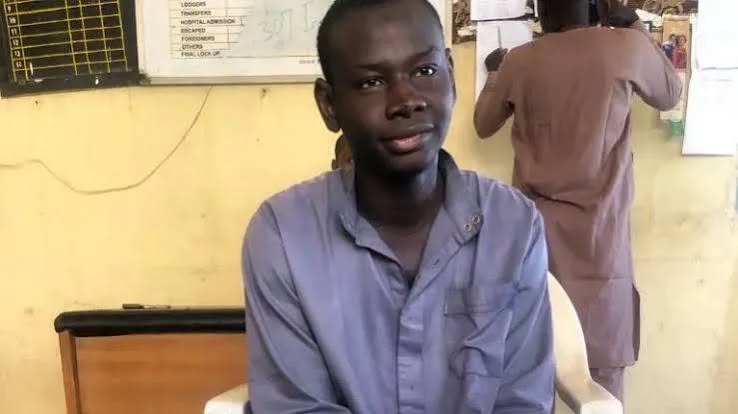
The United States has called on the Nigerian government to release Sufi musician Yahaya Sharif-Aminu, who has been imprisoned since 2020 over a blasphemy case in Kano State.
The appeal was made by Riley Barnes, the US Assistant Secretary of State for Democracy, Human Rights and Labour, during a hearing of the Africa Subcommittee of the US House Foreign Affairs Committee on Thursday, November 12, 2026.
Barnes said the US government was actively engaging Nigerian authorities over Sharif-Aminu’s case and urging the country to stop enforcing blasphemy laws.
“We are actively pressing the Government of Nigeria and calling for the release of Sufi singer, Yahaya Sharif-Aminu, who sits on death row over blasphemy charges. We continue to urge the government to cease enforcement of blasphemy laws,” Barnes said in his testimony.
He added that Washington’s broader objective remained ending attacks and violence in Nigeria, stressing that progress would be measured by a reduction in attacks and improved accountability for perpetrators.
Sharif-Aminu was arrested in March 2020 after sharing a song he had composed through WhatsApp. The lyrics were considered offensive to the Prophet Muhammad by some members of the Muslim community, triggering protests and the destruction of his family’s home by a mob.
On August 10, 2020, a Sharia court in Kano convicted him of blasphemy and sentenced him to death by hanging.
However, the Kano State High Court overturned the conviction in January 2021 on procedural grounds and ordered a retrial. The retrial order was subsequently upheld by an appellate court in August 2022.
Sharif-Aminu has remained in detention while challenging the case at the Supreme Court. His appeal, filed in November 2022, was allowed to proceed following a preliminary hearing in September 2025.
The case has attracted international attention, with human rights organisations and United Nations experts raising concerns about the application of blasphemy laws and their implications for freedom of expression and religion.
The United States Commission on International Religious Freedom has also documented his detention and called attention to the legal proceedings against him.
In his testimony, Barnes said Washington would continue pressing Nigerian authorities to address religious freedom concerns, including the prosecution of individuals over alleged blasphemy.
The US government is also urging Nigeria to repeal its blasphemy laws or, at a minimum, stop enforcing them.