

Oil & Gas
LIQUEFIED natural gas (LNG) has turned natural gas from a regional fuel into a globally traded commodity. It accounts for more than half of internationally traded gas to support diverse energy needs. However, geopolitical tensions have caused supply-side disruptions to LNG trade. The Iran conflict has compounded these challenges by disrupting shipping through the Strait of Hormuz, a critical maritime chokepoint for LNG and broader energy trade. The US is set to benefit the most from the reshaping global LNG trade resulting from the conflict, says GlobalData, a leading intelligence and productivity platform.
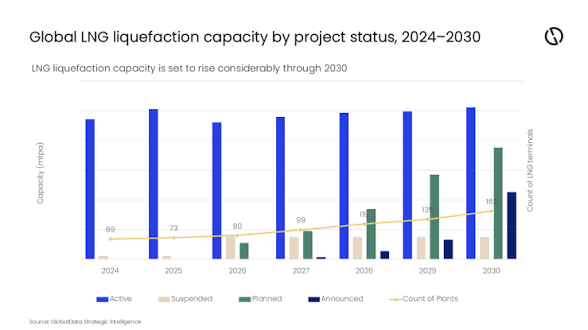
GlobalData’s Strategic Intelligence report, “LNG Industry Landscape,” highlights that the global LNG liquefaction capacity is expected to rise from 482 million tonnes per annum (mtpa) in 2024 to around 874mtpa by 2030, considering projects in advanced stages of construction, while regasification capacity is set to grow from 59,378 billion cubic feet (bcf) to over 77,800bcf, led by Asia and Europe.
Ravindra Puranik, Oil and Gas Analyst at GlobalData, comments: “Geopolitical tensions are materially reshaping the global LNG landscape by tightening supply options, re-routing trade flows, and elevating price volatility across key consuming regions. The war in Ukraine has been the central shock, accelerating Europe’s structural pivot away from Russian pipeline gas and toward seaborne LNG, which in turn has increased Europe’s reliance on global spot cargoes and reduced supply flexibility for price-sensitive importers.”
While Iran is not a large LNG exporter, the conflict has sharply reduced regional output and disrupted shipping continuity. Markets are pricing these disruptions into freight rates, charter availability, and spot procurement costs, contributing to higher volatility. These developments have accelerated a bifurcation of the LNG market into more security-driven procurement strategies, with buyers prioritizing portfolio suppliers, destination flexibility, and diversified shipping routes.

The US is the biggest beneficiary of the Iran conflict, which has suspended Qatar’s LNG capacity equivalent to around 12.5% of global liquefaction and exposed Hormuz as a critical chokepoint for global energy trade. North America, led by the US, holds the largest operational liquefaction base at 132mtpa, with 159mtpa of capacity in advanced development, and a further 151mtpa in early stages, some of which could come online by 2030.
US Henry Hub-linked volumes sit outside Hormuz and carry flexible destination terms, making the country the largest swing supplier to Europe and a growing source of LNG for Asia. In the aftermath of the conflict, European regasification terminals would likely see higher utilization by securing divertible cargoes at premium prices, whereas price-sensitive South Asian and some Southeast Asian markets would underutilize capacity due to demand destruction and affordability limits.
Puranik concludes: “Overall, the combined effects of the Ukraine and Iran conflicts are reinforcing a more risk-aware LNG market characterized by higher premiums for reliability, greater competition for marginal cargoes, and a continued emphasis on policy-aligned, resilient supply chains.”
A.I
Nov. 2026
Tags: Ravindra Puranik