

Women
THE National Agency for the Prohibition of Trafficking in Persons (NAPTIP) has warned that human traffickers increasingly use social media to groom children, urging students to report suspicious approaches.
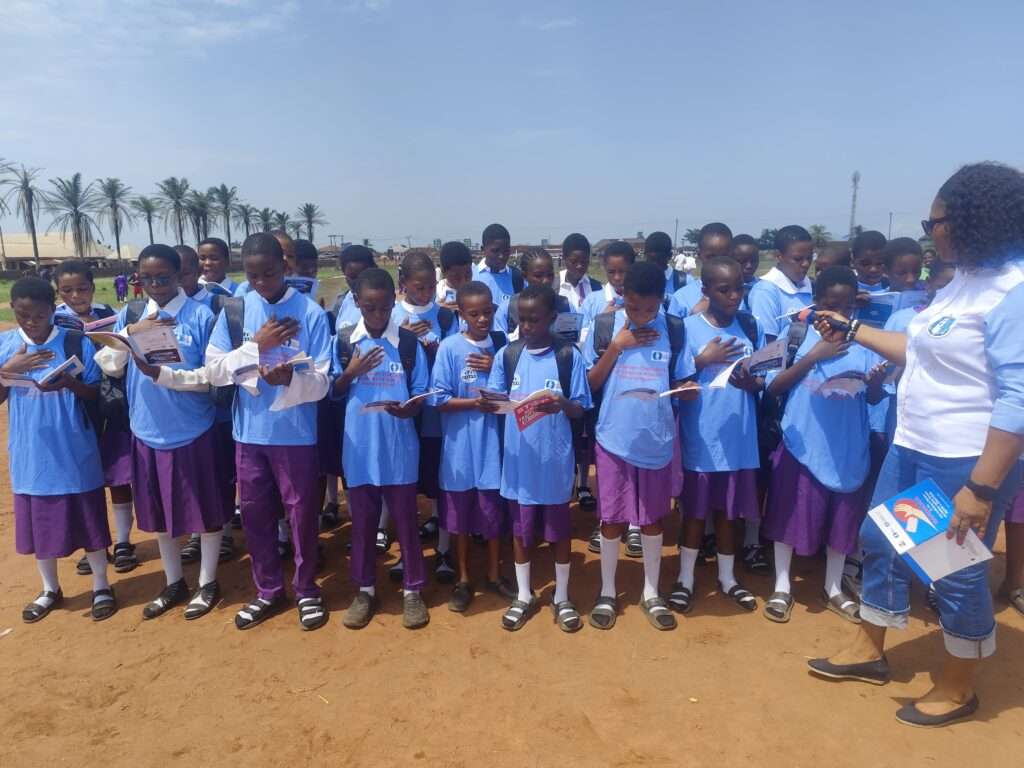
The agency gave the warning during the inauguration of Anti-Human Trafficking Vanguard Clubs at Eyaen Secondary School and Umagbae Secondary School in Edo.
The initiative, implemented under the School Anti-Trafficking Education and Advocacy Project (STEAP) of the International Centre for Migration Policy and Development (ICMPD), seeks to equip students to identify trafficking risks and educate peers.
Mrs Tonia Mgbemeje, Assistant Director, Legal and Prosecution Unit, NAPTIP Benin Zonal Command, said prevention remained one of the agency’s key strategies for combating human trafficking.
She said the clubs would make students ambassadors who could identify trafficking risks and sensitise their colleagues before they became victims.
“Prevention is proactive. We want to stop the issue of trafficking before it is even carried out. How do we do it? We go to schools and sensitise the children,” she said.
Mgbemeje said traffickers exploited social media platforms, including Facebook and Instagram, to establish relationships with children before luring them into exploitation.
She explained that some victims were threatened with the exposure of their private pictures after being manipulated into sharing them online.
“Traffickers can traffic somebody from here to Italy without you meeting the trafficker personally. The person will be talking to you through social media,” she said.
She identified promises of attractive jobs or scholarships abroad, demands for secrecy from parents and teachers, and pressure to swear oaths before traditional or spiritual authorities as warning signs.
Mgbemeje said trafficking could result in sexual and labour exploitation, organ harvesting, diseases and death, particularly when victims undertook dangerous journeys across deserts and seas.
She urged students to discuss suspicious offers with trusted adults rather than keep them secret.

Daniella Ige, Junior Project Officer, ICMPD, Edo, said the project was expanding its school-based advocacy programme, with 37 schools expected to be covered across its three phases.
Ige said the first phase covered 10 schools, while the second covered 15, with another 12 schools included in the current phase.
She said the project initially targeted 50 schools, with about 30 students expected to join each club, translating to a target of 1,500 student advocates.
According to her, the response from students, teachers and parents had been encouraging, with some schools recording growing interest beyond the initially selected club members.
She said the project was also extending sensitisation beyond classrooms to churches, markets and communities through parent-teacher associations.
Ige said the next phase would focus on monitoring club activities, strengthening students’ capacity and promoting peer-to-peer advocacy.
She added that students would be encouraged to organise debates, address fellow learners during school assemblies and lead awareness campaigns.
Mr Ernest Osarenkhoe, Head of Programme and Research, Edo State Migration Agency, urged the inaugurated students to become advocates for safe migration and the prevention of human trafficking.
He said the agency was responsible for mitigating trafficking and promoting safe and regular migration channels.
Osarenkhoe warned students against believing that visas could simply be purchased, emphasising that legitimate travel documents must be processed through appropriate channels.
Mercy Isibor, STEAP Desk Officer at the Edo Ministry of Education, urged students to share the knowledge acquired through the clubs with other learners and their communities.
Representing the Commissioner for Education, Dr Washington Usifo, she said the state’s investments in education would be undermined if children remained vulnerable to trafficking.
“If you see something, say something,” she advised, urging students to report suspicious offers to teachers, guidance counsellors, club coordinators and school principals.
Isibor said NAPTIP and the Ministry of Education would continue to monitor the clubs and provide support to sustain their activities.
Mrs Philomena Ogbewe, Vice-Principal of Umagbae Secondary School, commended the organisers, saying the programme would benefit both students and teachers.
The STEAP project is implemented by ICMPD in partnership with NAPTIP and relevant state institutions, with funding from the Government of the Netherlands.
It seeks to prevent human trafficking among school-age children through education, awareness and community advocacy across Edo, Delta, Ogun, Benue and Enugu states.(NAN)
A.I
Nov. 9, 2026
Tags: NAPTIP