
THEY SET THE TRAPS; HE COLLECTS THE LAURELS: THE ONOJA ATTAH PARADOX By Abdullahi O.Haruna

THEY SET THE TRAPS; HE COLLECTS THE LAURELS: THE ONOJA ATTAH PARADOX
By Abdullahi O.Haruna
There is something almost paradoxical about this man. Every trap laid in his path seems to become another occasion for him to demonstrate an uncommon capacity to survive, adapt and move on. Some would call it grace. I am inclined to call it something less mystical and considerably more instructive: hindsight, tempered by emotional intelligence, strategic restraint and an instinctive respect for the limits of the law.
Consider last week’s curious episode involving the House of Representatives committee chaired by Hon. Gaza Gabfwi. The committee reportedly issued a 24-hour ultimatum for the Nigeria Security and Civil Defence Corps (NSCDC) to appear before it over matters relating to the Mining Marshals. The language and circumstances surrounding the summons appeared unusually adversarial, raising questions about whether parliamentary oversight was being exercised or whether a public narrative was being carefully constructed.
The story quickly found its way into major news outlets. The optics were hardly flattering to the Mining Marshals. Before the facts could be properly interrogated, the public had been presented with a narrative that risked casting the operatives as subjects of institutional reprimand. It was a familiar feature of contemporary political theatre: sometimes the publicity surrounding an allegation travels considerably faster than the evidence required to sustain it.
Then came the moment of inconvenient reality.
Fully kitted, professionally turned out and apparently prepared to discharge their institutional obligations, officers of the Mining Marshals arrived at the National Assembly venue for the purported hearing. What they encountered was an empty stage. The venue was locked, the committee members were nowhere in sight, and the much-publicised engagement had dissolved into an unexplained absence.
It was an awkward spectacle. A committee that could issue a 24-hour ultimatum had apparently found it difficult to sustain the corresponding institutional presence.
The episode naturally invited questions, none of which should be dismissed as frivolous. What informed the urgency of the summons if the committee was not prepared to proceed with the hearing? Why create an atmosphere of public confrontation only for the anticipated engagement to end in an empty room? Was the exercise driven entirely by institutional concerns, or were other political calculations at play?
There are also questions about the wider political context. Hon. Gaza Gabfwi’s gubernatorial ambition in Nasarawa State has inevitably become part of the conversation. Could the political dynamics surrounding that ambition have any bearing on the unfolding controversy? Is there a risk that the authority of parliamentary oversight is being drawn into a local political contest? And, perhaps most importantly, are the Mining Marshals becoming collateral damage in a struggle whose interests extend beyond the stated subject of the inquiry?
These are questions, not established conclusions. But they deserve answers, particularly in a democracy where public institutions must be protected from the suspicion that their authority can be deployed for purposes other than those for which it was created.
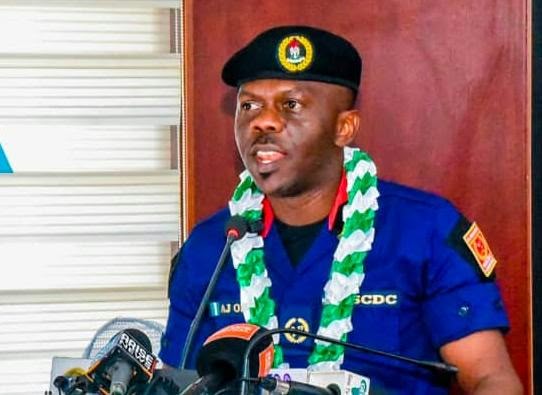
At the centre of this unfolding drama is ACC John Onoja Attah, the officer whose uncompromising campaign against illegal mining appears to have attracted an unusual measure of controversy. Yet, in what is becoming an increasingly curious pattern, the man who might have been expected to spend the week defending himself against an unfavourable public narrative has found himself receiving recognition for the very work that has made him controversial.
Yesterday, journalists under the Association of Corporate Online Editors (ACOE) chose to honour him for his sustained campaign against illegal mining and his contribution to efforts aimed at improving government revenue.
The timing was striking. Just days after a parliamentary controversy threatened to dominate the headlines, a professional media association was recognising his operational commitment and contribution to the fight against economic sabotage.
There is an irony here that should not be lost. While the politics of accusation was attempting to occupy the public space, the politics of recognition was quietly writing a different story.
Of course, an award is not a judicial verdict, just as an empty hearing room does not, by itself, establish the motives of those who convened the hearing. The allegations, questions and institutional disagreements must ultimately be settled by evidence, procedure and the law. But public perception is also shaped by the contrast between what institutions announce and what they actually do.
And this is where Onoja Attah’s curious story becomes interesting.
He appears to understand a lesson that is often lost on public officials: not every provocation deserves a response, not every accusation requires a media war, and not every political trap should be entered on the terms set by its architects. Sometimes, the most effective defence is disciplined conduct, institutional loyalty and an unwavering commitment to one’s mandate.
Perhaps that is the real explanation for his seeming ability to navigate one controversy after another. Not supernatural protection, but the calculated restraint of a man who understands that the law is not merely an instrument to be invoked against opponents; it is also a boundary that must govern one’s own conduct.
In the end, the episode presents a curious case of political pursuit and professional resilience. The more the controversy gathers around him, the more his supporters point to the operational record of the Mining Marshals. The more the accusations dominate the headlines, the more the question of evidence becomes unavoidable.
It is, in the language of popular culture, a peculiar game of *catch me if you can*.
They may set the traps. He appears determined not to walk into them. And while the political drama continues, the fight against illegal mining remains the business that should matter most.
Abdullahi O.Haruna Haruspice, Editor, Author & Global Leader