

Environment
… As $50bn Lagos Investment Target, Ondo’s Coastal RescueTake Centre Stage
Sterling Bank is deepening its support for sustainable development
through targeted partnerships with the Lagos and Ondo State Governments at the 31st
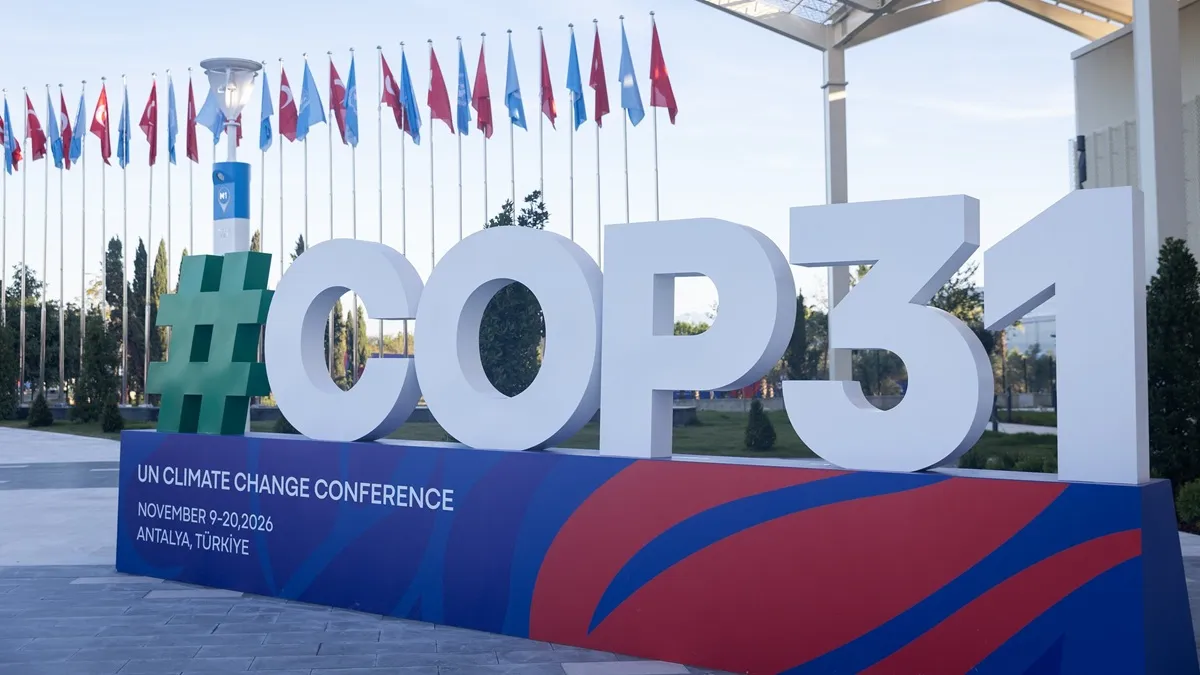
United Nations Climate Change Conference (COP31), holding from 9 to 20 November
2026 in Antalya, Türkiye.
The Bank’s involvement will centre on unlocking climate
investment opportunities, expanding access to sustainable finance and linking state-
driven development agendas with global investors and development finance institutions.
The partnerships highlight the increasingly central role of subnational governments in
Nigeria’s climate response, especially as states grapple with the twin task of building
climate-resilient infrastructure while safeguarding communities already counting the cost
of environmental damage.
Although funding remains vital to speeding up Nigeria’s energy
transition and infrastructure growth, the escalating effects of coastal erosion, flooding and
other climate risks have made it more pressing to channel capital into practical adaptation
solutions.
At COP31, Sterling Bank will take part in the Lagos State Government’s programme,
which aims to drive an estimated US$25–50 billion climate investment opportunity across
more than 300 prospective projects. Under the leadership of the Office of Climate
Change and Circular Economy (OCCE), the initiative will convene international investors,
financial institutions and strategic partners to examine opportunities in renewable energy,
sustainable transport, waste management, climate-resilient infrastructure, agriculture and
green enterprise.
A highlight of the State’s participation will be Lagos Climate Investment Day, scheduled
for 13 November 2026. The event will provide a platform to present the State’s
investment pipeline, engage prospective financing partners and explore structures
capable of moving priority projects towards implementation. Sterling Bank will contribute
its financing expertise to discussions on project bankability, sustainable investment and
opportunities for private-sector participation in Lagos’s climate development agenda.
On Ondo, Sterling Bank is supporting the Ondo State Oil Producing Areas Development
Commission (OSOPADEC) in drawing international attention to the growing
environmental crisis affecting Aiyetoro and other coastal communities in Ilaje Local
Government Area.
The COP31 sideline engagement, organised under the theme ‘Saving
the Vanishing Coast,’ will highlight the impact of rising sea levels, coastal erosion and
environmental degradation while seeking partnerships to support long-term coastal
protection, infrastructure development and economic recovery.
The urgency of the intervention is underscored by research into shoreline changes along
the Ilaje coast, which found that approximately 86% of the coastline studied had
experienced erosion. Aiyetoro, once a thriving fishing community, has suffered extensive
land loss, damage to residential and public infrastructure, and disruption to traditional
livelihoods.
The situation illustrates the increasing economic and social costs of climate
inaction, particularly for communities with limited resources to withstand repeated
environmental shocks.
Through its programme at the Nigeria Pavilion, OSOPADEC will present a coastal-
resilience roadmap covering shoreline protection and land reclamation, climate-resilient
infrastructure, clean water and energy access, restoration of fisheries and blue-economy
livelihoods, and early-warning systems.
Sterling Bank’s involvement will support engagements aimed at identifying potential financing structures and development
partnerships for these priorities, including proposed discussions with institutions such as
the Green Climate Fund and the World Bank, particularly its West Africa Coastal Areas
programme.
Commenting on the Bank’s participation, Dele Faseemo, Group Executive, Corporate
and Investment Banking at Sterling Bank, said:
“Climate change is already changing the way our cities function and how communities
earn a living. Lagos has identified significant opportunities to invest in infrastructure that
will support its long-term growth, while the situation in Aiyetoro shows what happens
when vulnerable communities are unable to protect themselves against environmental
threats. These are different challenges, but both require financing, credible projects and
sustained collaboration. Our focus at COP31 is to work with the states and development
partners to identify practical financing arrangements that can support implementation.
The measure of progress will be what we are able to deliver beyond the conference.”
Sterling Bank’s participation builds on its HEART strategy, which prioritises investment in
Health, Education, Agriculture, Renewable Energy and Transportation. Through the
strategy, the Bank continues to support sectors central to Nigeria’s economic
development and climate transition, including clean energy adoption, sustainable
agriculture and low-emission mobility.
This commitment was recently reinforced through a US$30 million senior credit facility
signed with Proparco, the private-sector subsidiary of the Agence Française de
Développement (AFD) Group, to expand financing for renewable energy projects and
small and medium-sized enterprises across Nigeria’s agricultural value chain.
The
arrangement reflects Sterling’s efforts to work with development finance partners to
increase access to capital in sectors where financing can support both economic growth
and environmental sustainability.
Beyond COP31, the Bank’s engagement with OSOPADEC is expected to support
continued dialogue on the Ilaje coastal-resilience agenda, including preparations for an
international conference proposed for March 2027. The conference is intended to build
on discussions in Antalya and advance potential partnerships and financing commitments
for coastal interventions.
Tags: Push for global climate financing Sterling Bank