

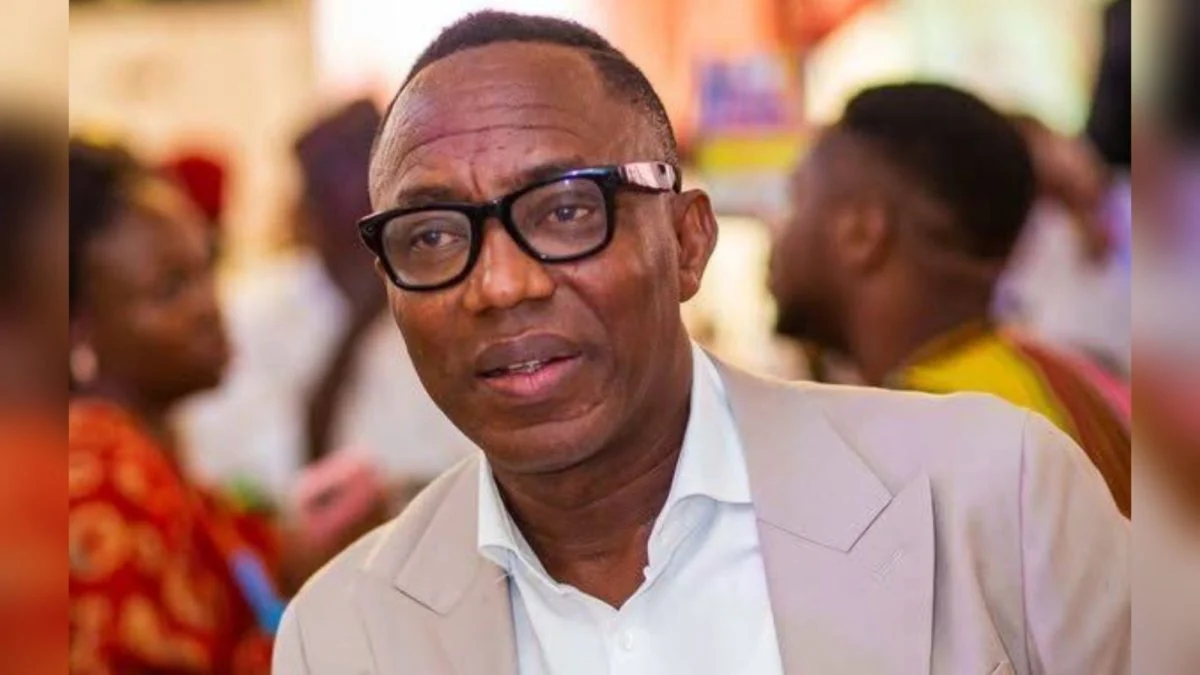
Omoyele Sowore and the Chairman of the Independent National Electoral Commission (INEC), Joash Amupitan, were involved in a legal disagreement on Monday during proceedings in the cybercrime trial of the African Action Congress (AAC) presidential candidate at the Federal High Court in Abuja.
The disagreement centred on a subpoena issued to Amupitan at the request of Sowore, who wants the INEC chairman to appear in court and produce documents relating to President Bola Tinubu’s academic records submitted to the electoral commission.
The proceedings were delayed after Sowore’s legal team failed to complete the filing of its response to an application by Amupitan seeking to cancel the subpoena.
The development led to an exchange between lawyers representing both parties before the court eventually fixed another date for hearing.
Sowore is facing prosecution by the Department of State Services (DSS) over comments he made about President Tinubu in August 2025.
The agency accused him of committing cybercrime through publications on his Facebook and X accounts, where he described the President as a “criminal” and accused him of making false claims about the level of corruption in Nigeria.
At Monday’s sitting, Sowore’s lead counsel, Adeyinka Olumide-Fusika (SAN), informed the court that the defence team was experiencing difficulties completing the filing of its counter-affidavit at the court registry.
He explained that his colleagues had encountered problems generating the necessary Remita payment details required to complete the process.
The senior lawyer therefore requested a brief stand-down to allow his team to resolve the issue and ensure that the documents were properly filed.
However, Alex Izinyon (SAN), counsel to the INEC chairman, expressed dissatisfaction with the delay.
He questioned why the defence team waited until Monday to submit its response when it had earlier undertaken to do so before the scheduled hearing.
Izinyon reminded the court that during the November 17 proceedings, Reuben Adakole, who previously represented Sowore, had assured the court that the defendant’s response would be filed before the next hearing.
He argued that the defence had failed to honour that commitment and instead served him with a notice of preliminary objection on Friday.
According to him, receiving the objection late on Friday forced him to work throughout the weekend to prepare a response on behalf of his client.
Izinyon told the court that he had already completed and filed his reply before Monday’s proceedings began.
He also confirmed that a copy had been served on the defence team.
The exchange continued as both legal teams considered how to proceed with the pending applications.
Justice Mohammed Garba Umar, who presided over the matter, initially suggested that the case be moved to November 24 to allow the parties adequate time to prepare.
However, the situation changed when one of Sowore’s lawyers returned to the courtroom with the documents that had just been filed at the registry.
Olumide-Fusika subsequently handed a copy of the documents to Izinyon, who examined them and confirmed that they contained a counter-affidavit and a written address.
After reviewing the documents, the INEC chairman’s lawyer informed the court that he would need additional time to study the defence’s arguments and prepare an appropriate response.
He indicated that he could file his reply either before the court registry closed on Monday or early on November 24, before the court commenced sitting.
Following the development, Justice Umar adjourned the matter until November 24 for hearing.
The adjournment was made without objection from Akinlolu Kehinde (SAN), who represented the DSS prosecution team.
The legal dispute arose from an application filed by Amupitan seeking to have the subpoena issued to him set aside.
Sowore had requested the court to compel the INEC chairman to appear as a witness and produce certain documents in the commission’s possession.
Among the documents he wants presented are academic credentials submitted to INEC by President Tinubu.
However, the INEC chairman is challenging the subpoena, with his lawyer arguing that the process contained irregularities that should be addressed before it could be enforced.
During the previous proceedings, Izinyon questioned an attempt by Sowore’s former lawyer, Reuben Adakole, to introduce an application seeking to amend the subpoena.
He argued that the defence could not proceed with an amendment without first addressing the alleged defects in the original court process.
The INEC chairman’s lawyer also insisted that the defence needed to clarify its position on the existing subpoena, particularly whether Sowore intended to withdraw the original process or pursue an amendment.
Izinyon maintained that the subpoena could not be changed unilaterally without the necessary approval of the court.
Recall that POLITICS NIGERIA had earlier reported on the prosecution’s disagreement with Sowore over his demand that the Director-General of the Department of State Services (DSS) appear as a witness in the same cybercrime trial.
The prosecution had faulted the defence’s insistence on the DSS director-general’s testimony, raising questions about the relevance and necessity of the proposed witness to the proceedings.
The case will continue on November 24, when the court is expected to hear arguments on the pending applications.