

The National Economic Council (NEC) has approved an additional ₦130 billion for the rehabilitation of police training institutions across Nigeria and endorsed two development programmes involving proposed World Bank financing of $850 million.
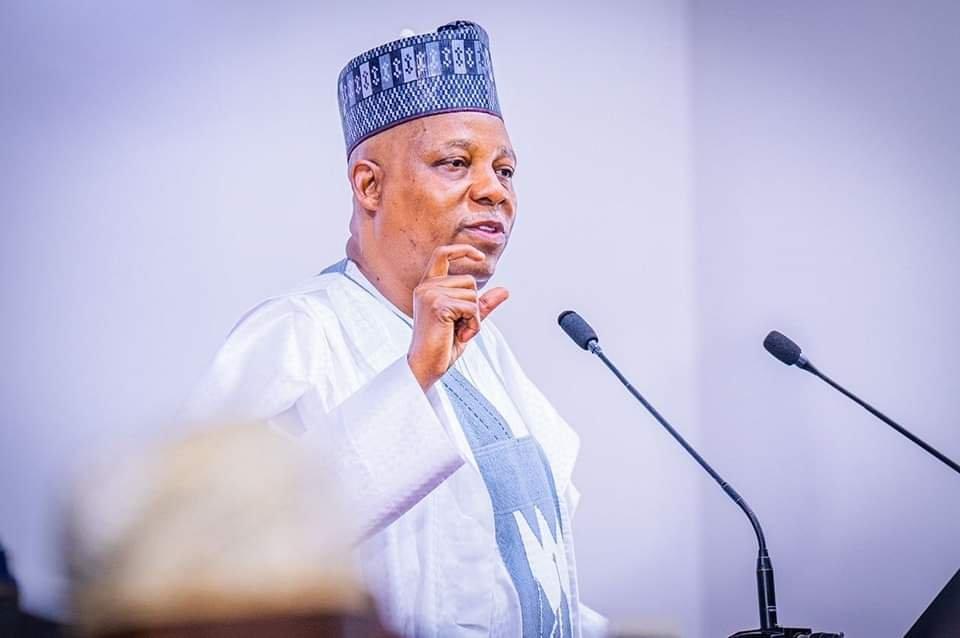
The decisions were reached on Monday, November 23, during the council’s 162nd meeting, held virtually and chaired by Vice President Kashim Shettima.
The latest allocation brings the total funding commitment for the rehabilitation programme to ₦230 billion, as the Federal Government prepares to expand police recruitment and strengthen training infrastructure ahead of the proposed introduction of state policing.
The council also considered Nigeria’s economic performance, pension administration and efforts to expand the national identity registration system.
Police training rehabilitation funding rises to ₦230bn
Presenting an update to the council, Enugu State Governor Peter Mbah, who chairs the NEC Ad-Hoc Committee on the Rehabilitation of Police Training Institutions, disclosed that construction and rehabilitation work was ongoing at 13 locations nationwide.
.
advertisement
According to the committee, approximately 30 per cent of the work had been completed.
The additional ₦130 billion is expected to accelerate ongoing projects, improve facilities and increase the capacity of police training institutions to accommodate more recruits.
The intervention is also expected to support preparations for the planned recruitment and training of 50,000 police personnel as discussions on state policing continue.
NEC had earlier approved ₦100 billion for the programme in December 2025, following the establishment of the ad hoc committee in October of that year on the recommendation of President Bola Tinubu.
Council endorses $850m World Bank-backed projects
In a separate decision, the council endorsed two development programmes involving proposed World Bank financing worth a combined $850 million.
The memoranda were presented by the Minister of Budget and Economic Planning, Senator Atiku Bagudu.
The first is the $350 million Accelerating Resilience through Investment Systems and Engagement (ARISE-Nigeria) Project, a six-year programme designed to strengthen Nigeria’s ability to prepare for and respond to natural disasters, including floods, droughts and fires.
The initiative is expected to improve disaster management capacity at federal and state levels, with between five and 10 states expected to participate in its initial phase.Selection will be based on exposure to disaster risks and institutional readiness.
The second proposal is the $500 million State-Led Early Childhood Development Programme, which aims to improve access to healthcare, childcare and preschool services across Nigeria’s 36 states and the Federal Capital Territory.
The programme is also expected to attract a potential additional $30 million grant from the Global Financing Facility.
Its proposed approach involves connecting primary healthcare services with childcare and early learning facilities to improve support for young children.
Nigeria records 4.43% GDP growth in Q2 2026
Briefing the council on the state of the economy, Minister of Finance and Coordinating Minister of the Economy Taiwo Oyedele reported improvements in several key economic indicators.
He said Nigeria’s real Gross Domestic Product grew by 4.43 per cent in the second quarter of 2026, compared with 4.23 per cent recorded in the corresponding period of 2025.
Headline inflation also declined for the fifth consecutive month to 14.06 per cent in October 2026, which the minister described as the lowest level since September 2020.
The country’s external reserves stood at $54.87 billion as of November 12, according to the minister.
Oyedele further disclosed that Nigeria’s trade surplus increased from ₦10.2 trillion in the first half of 2025 to ₦20.1 trillion during the corresponding period of 2026.
He added that net revenue distributed through the Federation Account Allocation Committee (FAAC) rose by 44 per cent, from ₦15.2 trillion in 2024 to ₦21.9 trillion in 2025.
Despite the improvements, the minister cautioned that households and businesses were yet to experience sufficient relief from economic pressures.
He identified food inflation, which stood at 19.13 per cent in October, alongside high lending rates and energy costs, as continuing challenges.
NEC pushes NIN registration and pension reforms
The council also discussed improvements to Nigeria’s identity management system, urging state governments to work more closely with the National Identity Management Commission (NIMC).
Members called for faster citizen registration and wider integration of the National Identification Number (NIN) into public services to improve administration and reduce fraud involving government payrolls and pension records.
The proposed NIMC Act 2026 was also considered as part of efforts to strengthen the country’s identity management framework.
On pension administration, National Pension Commission (PenCom) Director-General Omolola Oloworaran presented a proposal advocating the full implementation of the Contributory Pension Scheme across the states.
Following the presentation, NEC urged state governors to establish clear timelines for implementing the scheme and encouraged their administrative and finance teams to work with PenCom on the necessary arrangements.
Shettima calls for stronger institutions
Earlier in his opening remarks, Vice President Kashim Shettima urged federal ministries and state governments to strengthen cooperation and build institutions capable of sustaining the economic reforms introduced by President Tinubu.
He also emphasised the importance of involving citizens in development programmes, particularly initiatives designed to protect vulnerable households and businesses from economic shocks.
Speaking about the proposed ARISE-Nigeria project, Shettima said investments in disaster preparedness should help reduce the impact of disruptions on livelihoods, enterprises and public services.
“The capacity to recover should never depend entirely on the resources a person already possesses,” the Vice President said.
He added that people affected by development interventions should have an opportunity to contribute to decisions shaping those projects, noting that their experiences could reveal weaknesses in proposed solutions.
Shettima maintained that the success of development programmes depended partly on the institutions and communities responsible for implementing and sustaining them.