

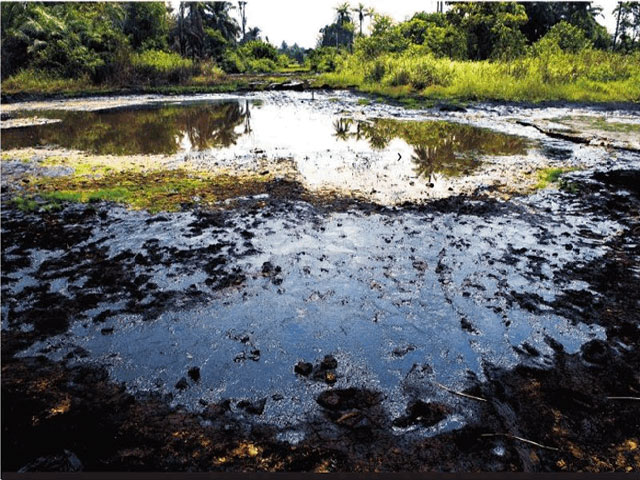
Amnesty International has called on the Federal Government to conduct a comprehensive audit of oil pollution and environmental damage across the entire Niger Delta, warning that focusing cleanup efforts solely on Ogoniland would leave other affected communities without adequate attention.
The organisation made the demand during the presentation of a report titled Nigeria: Lifting the Lid, released in collaboration with Nigerian and international environmental and human rights organisations.
Speaking in Port Harcourt, Rivers State, Amnesty International Nigeria’s Director, Isa Sanusi, said the government must investigate all environmental incidents linked to oil operations across the region rather than limit its attention to Ogoniland.
“We want the Nigerian government to audit all environmental incidents, not only in Ogoniland but also in the whole of the Niger Delta. If you do it only in Ogoniland without doing it in the whole of the Niger Delta, you’re just doing it the wrong way,” Sanusi said.
He also called for stronger government oversight of the oil and gas industry and a sustained cleanup programme capable of restoring polluted communities to acceptable environmental standards.
Sanusi urged oil and gas companies operating in Nigeria to contribute to a properly funded environmental restoration fund, or superfund, to finance the cleanup of contaminated areas across the Niger Delta.
He said the organisation would formally engage the Federal Government and send its report to President Bola Tinubu, urging the government to implement its recommendations.
The report examines internal Shell documents, including emails, audits and confidential company assessments, which Amnesty International and its partner organisations say raise serious questions about infrastructure maintenance, oil spill monitoring and corporate accountability in the Niger Delta.
Among the issues highlighted are allegations of inadequate maintenance of pipelines and oil facilities, weaknesses in spill detection and concerns about possible collusion involving oil company personnel and operators engaged in illegal oil bunkering.
Amnesty has called for these allegations to be investigated and for companies responsible for environmental damage to be held accountable.
A campaigner with ReCommon, Eva Pastorelli, said the report presented evidence that could raise questions about responsibility at different levels of Shell’s operations in Nigeria.
She argued that multinational oil companies should be held accountable for environmental degradation and human rights concerns associated with their activities.
The report has also renewed debate about the environmental responsibilities of multinational oil companies leaving Nigeria’s onshore oil business.
Dr Celestine Akpobari, Team Lead of the Miideekor Environmental Development Initiative, urged Amnesty International to scrutinise the environmental consequences of oil asset divestments, particularly the transition of Shell’s former Nigerian onshore business to Renaissance Africa Energy Company.
He argued that companies should not be allowed to transfer their assets without addressing pollution and other environmental liabilities arising from their operations.
Akpobari said communities across the Niger Delta remained connected by waterways and ecosystems, making it necessary for environmental restoration to extend beyond individual locations.
Oil pollution has affected communities across the Niger Delta for decades, damaging waterways, farmland, fisheries and other sources of livelihood.
A 2011 assessment by the United Nations Environment Programme documented extensive contamination in Ogoniland, including pollution of groundwater, soil and mangrove ecosystems. The assessment recommended a long-term restoration programme and stronger environmental monitoring.
Amnesty International’s latest call seeks to broaden the scope of environmental investigations and remediation to cover the wider Niger Delta.
The organisation maintains that affected communities deserve access to clean water, safe land and restored livelihoods, while companies and government agencies must be held responsible for their respective obligations.
Shell has previously disputed aspects of Amnesty International’s characterisation of its operations, saying the organisation’s portrayal does not reflect the challenging operating environment in the Niger Delta at the time. The company’s response is included in the report.
The latest appeal adds to calls for greater transparency, independent environmental assessments and accountability as Nigeria continues to address the legacy of oil pollution in its major oil-producing region.