
Nigerian Army Honours Major General Ibrahim Ali, 19 Other Generals at Armoured Corps Reunion

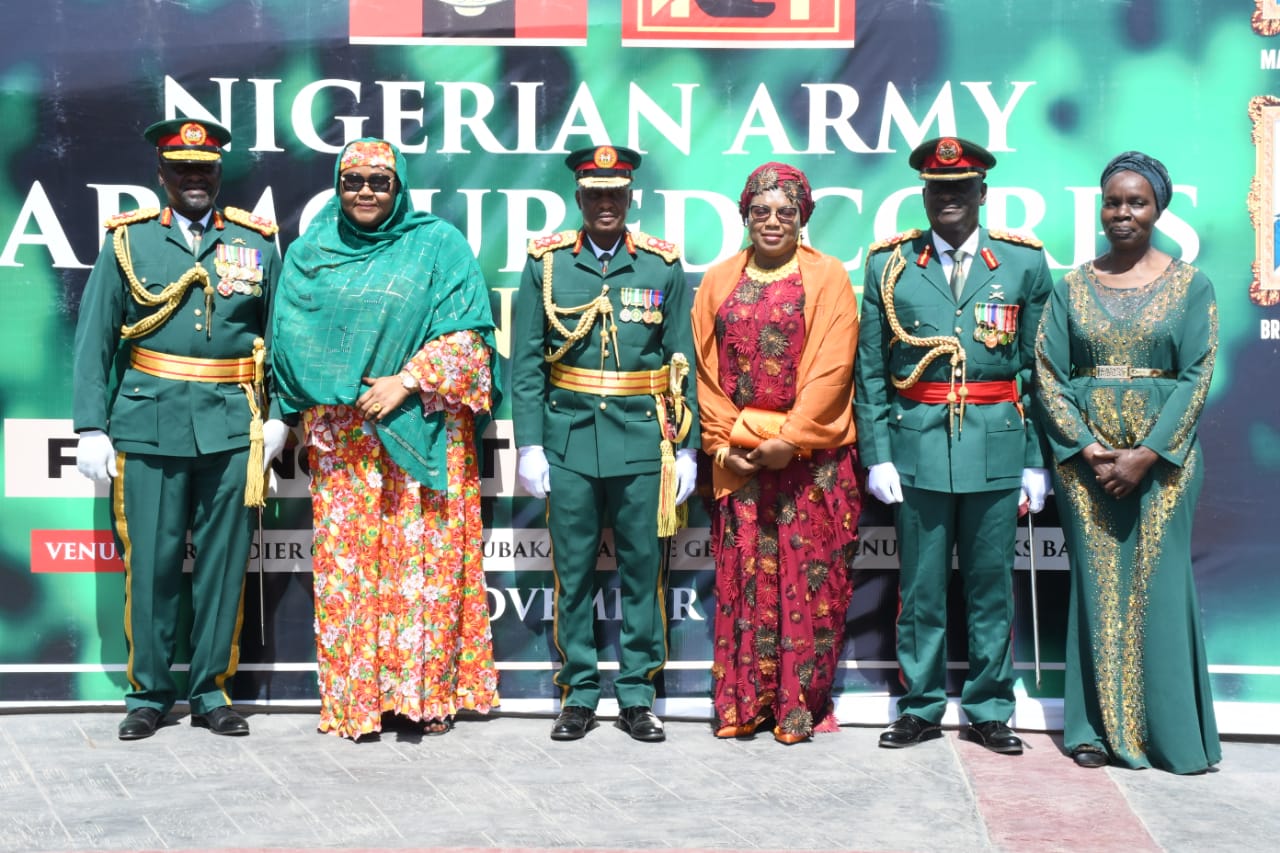
Nigerian Army Honours Major General Ibrahim Ali, 19 Other Generals at Armoured Corps Reunion
Retired commander distinguished himself in peacekeeping, counterinsurgency, multinational operations and defence diplomacy
The Nigerian Army Armoured Corps has honoured Major General Ibrahim Sallau Ali and 19 other retired senior officers in recognition of their decades of military service, leadership and contributions to national security.
The ceremony, held during the Corps’ biennial conference and reunion at Obienu Barracks, Bauchi, featured the formal pulling-out of 20 senior officers, comprising 12 Major Generals and eight Brigadier Generals who retired from active service between 2024 and 2026.
Among the honourees, Major General Ali stood out for his extensive operational experience, having served in peacekeeping missions, counterinsurgency operations, multinational military commands and defence diplomacy.
His military career spanned several challenging security environments, from Sierra Leone and Nigeria’s North-East to Plateau State and the wider Lake Chad Basin.
Born in Kano, Ali began his military career at the Nigerian Defence Academy (NDA) as a member of the 39 Regular Course. He subsequently attended the prestigious Royal Military Academy Sandhurst in the United Kingdom, where he completed Course 922.
Commissioned into the Nigerian Army Armoured Corps, he rose through the ranks and held several operational, command and staff appointments, establishing a career that combined battlefield experience with strategic leadership and international engagement.
One of his earliest major operational assignments was in Sierra Leone in 1997, where he participated in peacekeeping operations, including Operations Sandstorm and Tiger Tail.
During the mission, Ali sustained injuries in combat, earning him the Purple Heart Award in recognition of his sacrifice.
Between 1998 and 2000, he participated in Operation Flush Out I with the Multinational Joint Task Force (MNJTF) in Baga, Borno State.
He was subsequently wounded in action for a second time during Operation Restore Order III, further demonstrating the dangers and sacrifices associated with his frontline military assignments.
Beyond combat operations, Ali also served Nigeria in a diplomatic capacity in Brazil, where he gained experience in international relations, defence cooperation and diplomatic engagement.
The assignment broadened his professional exposure to the role of international partnerships in addressing security challenges and advancing national interests.
Another significant milestone in his career was his appointment as the 41st General Officer Commanding (GOC), 3 Division Nigerian Army, Jos, and Commander of Operation SAFE HAVEN.
He assumed the responsibility amid persistent security challenges in Plateau State and neighbouring communities, where communal tensions, violent attacks and other threats required coordinated military and civilian responses.
During his tenure, Ali combined security operations with non-kinetic initiatives aimed at promoting peaceful coexistence and rebuilding trust among communities.
His approach involved engagements with traditional rulers, community leaders, religious stakeholders and other security agencies, alongside sporting and cultural activities designed to encourage dialogue and reduce tensions.
Under his command, troops also sustained operations against criminal elements, while efforts were made to strengthen cooperation between security agencies and local communities.
At the conclusion of his assignment, Ali expressed satisfaction with the improvements recorded in the security situation in Plateau State.
He subsequently served as Theatre Commander of Operation HADIN KAI in the North-East, where he oversaw military operations against Boko Haram and the Islamic State West Africa Province (ISWAP).
The appointment placed him at the centre of Nigeria’s counterinsurgency campaign in one of the country’s most demanding operational theatres.
His leadership emphasised intelligence sharing, inter-agency collaboration, operational coordination and cooperation with neighbouring countries in confronting terrorist threats.
Ali later served at the Headquarters of the Multinational Joint Task Force in N’Djamena, Chad, contributing to regional military efforts against terrorism and insecurity in the Lake Chad Basin.
Working with troops from different countries, he helped coordinate multinational operations requiring cooperation across national, linguistic and military boundaries.
During his involvement in the regional security campaign, operations such as Lake Sanity II sustained military pressure on insurgent groups.
These efforts were complemented by non-kinetic interventions, including Operation NASHRUL SALAM and Quick Impact Projects aimed at supporting stabilisation, restoring livelihoods and facilitating the return of displaced families to their communities.
His operational experience reflected the importance of combining military action with humanitarian support, community engagement and post-conflict recovery.
Beyond his command responsibilities, Ali was also recognised for his commitment to troop welfare, mentorship and professional development.
Officers and soldiers who served under him regarded him as a commander who placed considerable emphasis on discipline, teamwork, mutual respect and the morale of personnel.
His leadership style also reflected an understanding that effective military command required not only operational competence but also the ability to inspire confidence and develop younger officers.
In recognition of his contributions, Ali received several honours, including the Nigerian Army Innovation and Invention Medal, the National Order of Chad and the Purple Heart Award.
His retirement has also renewed attention to the importance of retaining the expertise of experienced military officers in addressing Nigeria’s evolving security challenges.
With decades of experience in peacekeeping, counterinsurgency, multinational operations and defence diplomacy, retired senior officers such as Ali possess institutional knowledge that could support military training, strategic research, security policy development and mentorship.
Their continued engagement through military educational institutions, advisory assignments and professional development programmes could also contribute to strengthening Nigeria’s defence and security architecture.
For Ali, the formal pulling-out ceremony marked the conclusion of an eventful military career characterised by frontline deployments, senior command responsibilities and international assignments.
It also signalled the beginning of a new chapter after years of demanding service to the nation.
Although he has retired from active military duty, his experience in operational leadership, regional security cooperation and peacebuilding remains relevant to Nigeria’s continuing efforts to address insecurity.
The Armoured Corps reunion provided an opportunity to celebrate not only the careers of the 20 retired generals but also their collective contributions to military professionalism, national defence and the development of successive generations of officers.
For Major General Ibrahim Sallau Ali, the occasion represented a recognition of a career shaped by battlefield sacrifice, strategic command, international service and mentorship, leaving a legacy that extends beyond the military formations he commanded.
By TimesNG