

…promises startups 10% procurement share
The Lagos State Government has unveiled plans to more than double its fibre-optic infrastructure to 6,000 kilometres and reserve 10 per cent of public procurement for startups, in a sweeping push to slash the cost of doing business, deepen broadband penetration, and unlock fresh private-sector investment.
The state is partnering with telecommunications operators and private investors to expand its existing 2,400-kilometre fibre-optic backbone to roughly 6,000 kilometres.
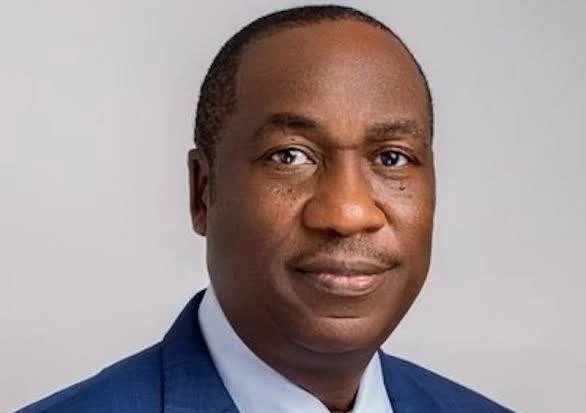
Deputy Governor, Dr. Obafemi Hamzat, disclosed this on Friday at a high-level fintech town hall in Lagos, where he challenged industry giants, investors, and academic institutions to forge tighter alliances to accelerate commercial innovation.
The forum, themed “The Lagos Digital Economy Blueprint: Co-Authoring the Lagos Digital Economy Agenda,” drew top executives from Nigeria’s financial and technology ecosystem, including Flutterwave, Paystack, PiggyVest, Kuda, PalmPay, Interswitch, OPay, Moniepoint, Paga, Meristem, as well as global players Mastercard, Visa, and Oracle.
According to the Deputy Governor, the rollout will drastically lower operational overheads for businesses while expanding high-speed internet across public institutions.
Addressing stakeholders, Hamzat revealed that 680 of the state’s 1,028 public schools have already been connected, with work underway to link the remaining 348 schools.
In a major boost for emerging enterprises, Hamzat announced that Lagos is working toward dedicating 10 per cent of all government procurement to startups, backed by a strict 15-day payment window to protect small businesses from cash-flow bottlenecks.
He disclosed that women-led ventures already account for roughly 54 per cent of the startups executing projects under the framework.
Beyond physical cables, the Deputy Governor said Lagos is building an enterprise architecture powered by Application Programming Interfaces (APIs) to link ministries, departments, and agencies. The integration will eliminate bureaucratic duplication and stop government offices from repeatedly requesting data already stored in state databases.
He also stressed the urgency of closing the state’s identity gap, noting that only about eight million residents are currently captured in the state’s database—well below Lagos’ estimated population. Comprehensive resident data, he said, remains vital for accurate infrastructure planning and resource allocation.
Bridging Research and Capital
Hamzat decried the disconnect between Nigerian universities and venture capital, noting that brilliant local ideas often stall before reaching the market.
Urging corporations to fund targeted academic research, he cited his own doctoral research in the United Kingdom—sponsored by an oil firm—which successfully cut energy consumption in oil production by 33 per cent.
Earlier, the convener of the town hall and Executive Director of MyCard Global, Ms. Aderemi Fagbemi, said the forum—organised in collaboration with the Fintech Association of Nigeria (FintechNGR)—was designed to align state policy with private-sector realities.
She urged the government to prioritise tax harmonisation, municipal digital payment integration, and dedicated innovation corridors to sharpen Lagos’ edge as a global tech hub.
Speaking for operators, Flutterwave Co-Founder, Gbenga Agboola, warned that capital commitment depends heavily on policy consistency and regulatory predictability.
Agboola called for mutual recognition among regulatory bodies so that licences and approvals granted by one agency streamline processes at others, reducing compliance fatigue and allowing startups to scale seamlessly within clear regulatory guardrails.