

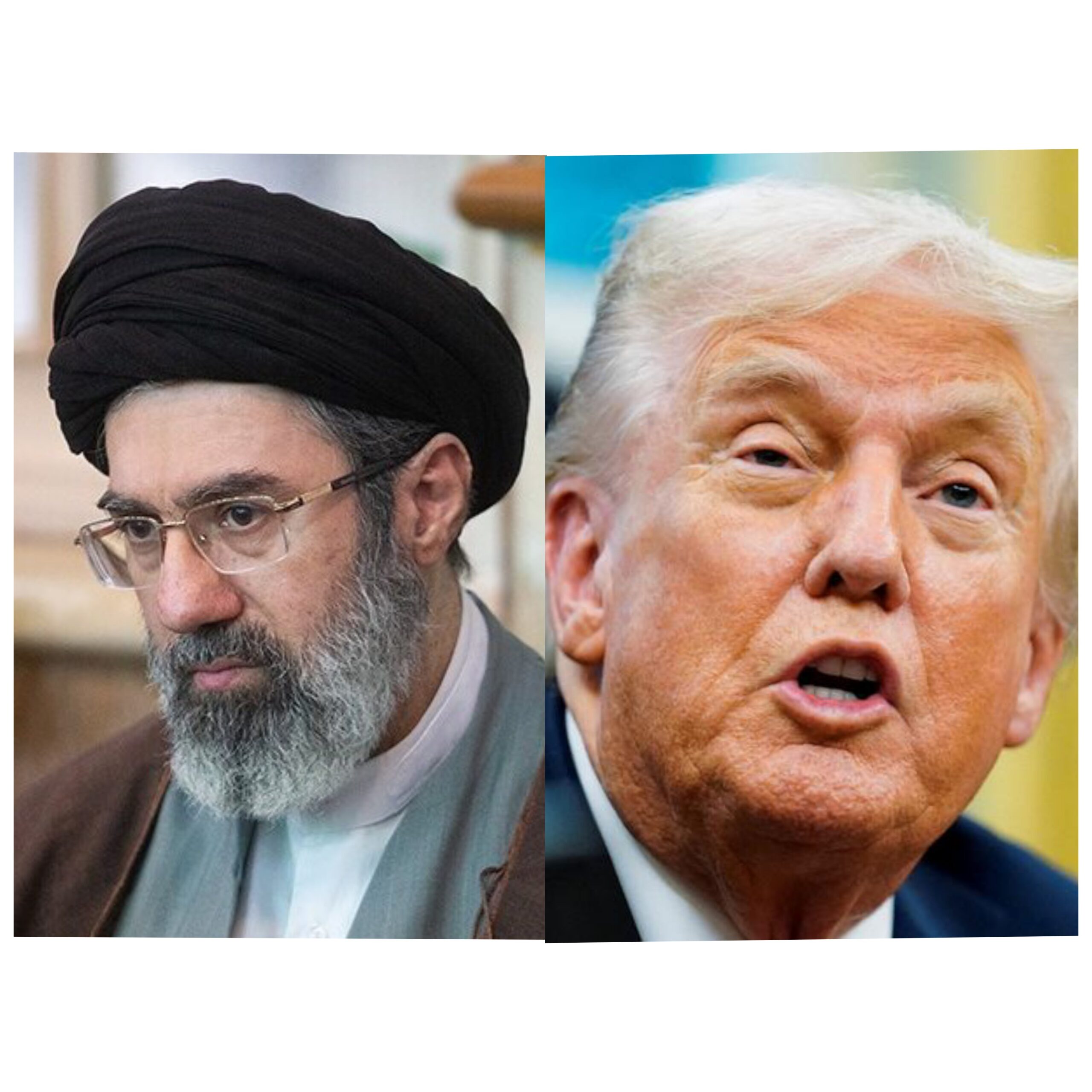
Iran Demands US Concessions to End War, Abandons 2,000km Missile Range Limit
Iran has urged the United States to accept its conditions for ending the ongoing war, while reportedly scrapping its longstanding 2,000-kilometre restriction on guided missile ranges, in a development that could significantly heighten security concerns across Europe, Asia and the Middle East.
Iranian Foreign Minister Abbas Araghchi said on Tuesday that the conflict could not be resolved through military action or increased economic sanctions, insisting that Washington must engage Tehran through diplomacy and address its demands.
In remarks to the Iranian state news agency, IRNA, Araghchi said the proposed reopening of the strategically important Strait of Hormuz was tied to the acceptance of conditions presented by Tehran.
“The only solution is to adopt a language of respect, engage in diplomacy, and address Iran’s demands and conditions — which were outlined in the two-day proposal and remain on the table,” he said.
Iran has proposed reopening the Strait of Hormuz, which it has blockaded since the outbreak of the war, within 48 hours, provided Washington agrees to a series of conditions.
The demands include an end to hostilities across all fronts, the unfreezing of Iranian assets, the lifting of oil sanctions and the termination of the US counter-blockade of Iranian ports.
The diplomatic push comes as US President Donald Trump expressed optimism about efforts to end the eight-month conflict following a meeting with Qatar’s Prime Minister at the White House.
In a social media post on Monday, Trump said there was “positive momentum” towards ending the war, while indicating that further US military strikes against Iran were increasingly unlikely if diplomatic efforts continued to progress.
He, however, maintained that Washington remained prepared to defend its interests, declaring that the United States was “locked and loaded”.
Diplomatic efforts led by Qatar and Pakistan are reportedly underway to secure a resolution to the conflict, which began in late February following US-Israeli strikes that killed Iran’s then Supreme Leader, Ayatollah Ali Khamenei.
However, Iran’s security chief, Mohsen Rezaei, adopted a more confrontational position, urging Washington to surrender to Tehran’s demands and dismissing reports of negotiations as fabricated.
Meanwhile, a separate report by The Nation Thailand on Monday indicated that Iran’s Islamic Revolutionary Guard Corps (IRGC) had formally announced the removal of its longstanding 2,000-kilometre cap on guided missile ranges.
The report, citing IRGC spokesman Major General Hossein Mohebbi, said the policy shift could pave the way for the development and deployment of missiles with ranges extending between 2,500 and 3,000 kilometres or more.
Such an expansion could significantly extend Iran’s potential strike reach, bringing additional parts of Europe, South Asia, Central Asia and Africa within the range of its missile capabilities.
Countries potentially affected include the United Kingdom, France, Germany, Italy, Spain, Poland, India, Kazakhstan and several other states, while major Russian cities, including Moscow and Saint Petersburg, could also fall within the projected range.
The report further indicated that the expanded capability could increase the potential vulnerability of strategic US military installations in parts of the Indian Ocean and South Asia.
The reported removal of the missile-range restriction comes amid heightened military confrontation between Tehran and Washington and could complicate efforts to de-escalate the conflict.
International security concerns are likely to focus on whether Iran will proceed with the development, testing and operational deployment of longer-range missile systems, as well as the implications for regional and international military balances.
The combination of Iran’s diplomatic demands, the strategic importance of the Strait of Hormuz and its reported missile policy shift underscores the complex security calculations surrounding efforts to end the war.
By TimesNG