

Economy
A Tax Consultant, Mr Philip Orji, has called for the establishment of the Independent Revenue Inspectorate Agency of Nigeria (I-RIAN) to curb tax revenue losses.
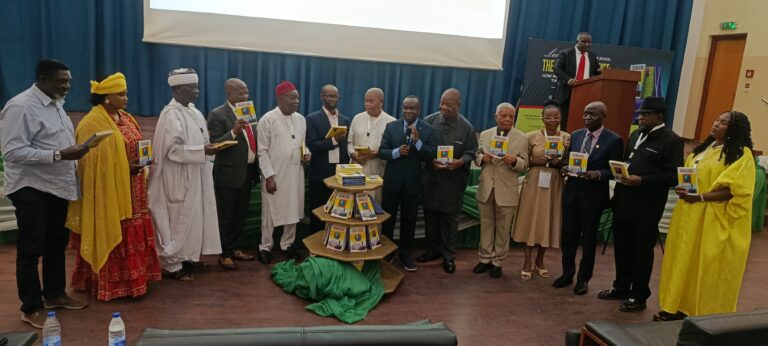
Orji made the call on Wednesday in Abuja during the unveiling of his book, entitled “The Global Tax Heist: How Multinationals Undermine the Wealth of Nations”.
The tax expert said Nigeria was losing more than 50 billion dollars annually due to the absence of independent tax oversight.
Orji said establishing an independent tax inspectorate was critical to plugging revenue leakages, curbing illicit financial flows and addressing security challenges linked to revenue losses.
“In this book, you may go to Chapter 26, where you will see the need for Nigeria to establish the Independent Revenue Inspectorate Agency of Nigeria (I-RIAN).
“I-RIAN will enable Nigeria to join the Organisation for Economic Co-operation and Development (OECD) and United Nations Development Programme (UNDP) Tax Inspectors Without Borders for automatic information sharing against illicit financial flows and terrorist financing.
“Nigeria loses over 50 billion dollars per annum, coupled with security involvement and international citizen taxes, because we do not have an independent revenue inspectorate agency,” he said.
He recalled how his group, the Association of Concerned Citizens of Nigeria on Revenue and Economy (ACCNRE), sponsored a bill proposing the establishment of I-RIAN.
He said the bill passed second reading in the 9th National Assembly and achieved the same milestone in the 10th Assembly.
He said the bill is currently before the House Committee on Finance.
Orji explained that the initiative aimed to institutionalise independent oversight of the Nigeria Revenue Service (NRS) to guarantee accountability.
He added that it also sought to promote tax education in secondary and tertiary school curricula.
“Tax education is not about telling someone to pay taxes to prove citizenship; it is teaching them about accountability and the benefits that come with paying taxes.
“The NRS cannot continue to be a judge in its own case. The hallmark of a good taxation system is transparency and accountability, which requires both a revenue collector and an independent inspectorate agency,” Orji said.
He disclosed that the motivation to write the book came to him in a dream after returning from the diaspora more than 10 years ago.
“Over 10 years ago, when I returned from Singapore, where I studied tax law, the jurisdiction I focused on was tax inspectorate.
“It is usually not easy to preach transparency and accountability in any country’s taxation system, particularly in Nigeria.
“My friends in the diaspora discouraged me initially, but God always told me to go ahead,” Orji said.
Reviewing the book, Prof. Wale Joseph, Director of the Institute of Capital Market Studies, Nasarawa State University, Keffi, commended the publication.
He said it highlighted the sophisticated financial arrangements used by multinational corporations to evade tax obligations.
Joseph, who served on the Presidential Tax Reforms Committee, said proper tax collection and transparent application of revenue would significantly reduce Nigeria’s reliance on external borrowing.
“If Nigeria gets its tax system right and applies the proceeds well, we will rely less on borrowing.
“Taxation is everybody’s business. Citizens have their responsibility to fulfil their legitimate tax obligations.
“On the other hand, government also has an equally important responsibility to ensure that public revenue is transparently and prudently utilised.
“While the Nigerian Tax Act 2025 introduced measures such as a 15 per cent minimum effective tax rate for multinationals under OECD Pillar Two guidelines, legislation alone cannot solve the problem.
“Effective implementation requires independent oversight and early civic education,” he said.
Joseph described the book as intellectually stimulating and central to national economic survival, noting that it addressed three interconnected pillars.
He said the publication captured the systematic depletion of national wealth through tax avoidance and illicit financial flows.
“Multinationals undermine nations through transfer pricing, base erosion, profit shifting and cryptocurrency transactions,” Joseph said.
He added that the book also highlighted the “Catch Them Young” initiative, which advocates integrating taxation, civic responsibility and public accountability into the educational curriculum.
He said the initiative covered secondary and tertiary institutions.
The Chairman of the Occasion and Chief Executive Officer of Sheiks and Bishops Ltd., Sir Chikwendu Udensi, decried widespread tax evasion by corporate entities.
He urged governments to take tax collection seriously.
“Some of the advanced countries are living on tax. In America, where many of us have passed through, tax is a number one thing.
“I want to appeal to the government to take tax seriously. Our tax collection is so fraught with fraud that if they are able to collect even 30 per cent of the tax, what they will get will be far bigger than oil,” Udensi said.
In his remarks, the Chairman of the Planning Committee, Mr Raymond Nnah, emphasised the importance of public awareness of tax deductions and civil rights.
Nnah said many salary earners and government contractors experienced significant deductions from their payments without understanding how the money was utilised.
He said the “Catch Them Young” initiative educated citizens on when they should be taxed and when they should not, empowering them to demand accountability. (NAN)
M.P
Tags: Revenue inspectorate